
Monday, July 19, 2010


Wednesday, July 14, 2010
Is it Safe to Bring Your Kids to Church? Here's How You Can Tell.
The media thinks that child molestation in the church is a new problem - it isn't. This horrible crime has been going on for a very long time in churches, schools, and any other place where adults work with kids. But the good news is that in our day and age you can find churches where your children will be safe from predators.
Here are the questions you should ask when visiting a church:
How many volunteers will be with my kids?
Any respectable church has at least two adults with any child (or group of children) at any time. At my church, it's simply not possible for a kid to be alone with an adult worker. And if there are not enough workers on any given day to ensure this then the children's minister simply cancels that class and the kids just sit in the sanctuary with their parents (which is how we did it all the time when I was a kid). The same goes for camps and outings - many adults are with the children at all times and these adults are people who are known by the church rather than random volunteers who showed up that day. Of course, anyone could be a child predator - which brings us to...
 Do you perform criminal background checks on your volunteers?
If a church isn't doing this you should go somewhere else. Of course, there are some small churches who simply lack the budget for this sort of thing, but there really shouldn't be any excuse for it. A church should be willing to sell its own pews if necessary to find out about its workers. Also, make sure this is going on with EVERY worker. I'm friends with the children's minister at my church, and when I told him I was willing to help out (we were running low on volunteers) he did a background check on me and made clear to me all of the rules and guidelines - even though he knew I already knew them. He treated me the same way he would treat a stranger who just walked into the church. This is how every church should do things - no one can be trusted.
Who is allowed access to the children?
At a well run church, anyone in the children's area who is not a volunteer worker or a parent of one of the kids is treated like a hostile intruder. It doesn't matter if it's the music minister headed for the water fountain to wet his whistle - it's unacceptable for anyone to be there unless they are part of the children's ministry that day. And no one can accompany young people on a retreat of any kind unless they are a volunteer who was invited. Sometimes adults like to visit the nursery or the children's room just to see the kids, but that cannot be allowed.
Who is allowed to pick up my child?
No brainer. No one should be allowed to pick up your kid except you (unless you give expressed permission). Ever. Only an incredibly stupid church would just give kids away to anyone. Still, it's a good question to ask.
Can I look at the children's area?
A church should have no problem showing you where the children will be. Are there a lot of exits? Is it difficult for someone to sneak in? Take a look. Some of these areas are designed with windows on the doors so the children's minister can patrol the halls and keep an eye on every kid. Others don't have doors at all. It's pretty easy to setup child friendly environments and a church should be trying to do this.
Can I help out with the children's ministry?
The best way to see how the kids are being treated is to be a part of the regular rotation of workers. You can see for yourself if there are any security leaks and you'll know what's going on with your kids (and you'll be able to check on them more easily). If you are part of a healthy children's ministry for your kids then you really won't have much to worry about.
As you can see, if a church is doing things right then it is pretty difficult for a child predator to get away with anything. It's certainly more safe then a public school or a private music lesson where teachers and principles are often alone with students.
Churches that find child molestation going under their roofs are never doing these things correctly. When I hear about a minister abusing a child I wonder, "How on earth that minister manage to be alone with a kid?" That really shouldn't be possible when good organization is in place, and what kind of church (or parent) allows that sort of thing? There's no excuse for this problem being so widespread - the simple truth is that some churches just aren't doing their job.
The good news? Most churches are doing their job, and it's easy to find a church with a responsible children's ministry if you do a little homework.
UPDATE: I realize that I left something out - referrals. In order to serve in any children's ministry a referral should be required (actually, two) from people who can recommend you as a person of good and trustworthy character who can be given the responsibility of handling children. That's very important, and I appreciate my friends in the comments who reminded me of this glaring omission.
Here are the questions you should ask when visiting a church:
How many volunteers will be with my kids?
Any respectable church has at least two adults with any child (or group of children) at any time. At my church, it's simply not possible for a kid to be alone with an adult worker. And if there are not enough workers on any given day to ensure this then the children's minister simply cancels that class and the kids just sit in the sanctuary with their parents (which is how we did it all the time when I was a kid). The same goes for camps and outings - many adults are with the children at all times and these adults are people who are known by the church rather than random volunteers who showed up that day. Of course, anyone could be a child predator - which brings us to...
Do you perform criminal background checks on your volunteers?If a church isn't doing this you should go somewhere else. Of course, there are some small churches who simply lack the budget for this sort of thing, but there really shouldn't be any excuse for it. A church should be willing to sell its own pews if necessary to find out about its workers. Also, make sure this is going on with EVERY worker. I'm friends with the children's minister at my church, and when I told him I was willing to help out (we were running low on volunteers) he did a background check on me and made clear to me all of the rules and guidelines - even though he knew I already knew them. He treated me the same way he would treat a stranger who just walked into the church. This is how every church should do things - no one can be trusted.
Who is allowed access to the children?
At a well run church, anyone in the children's area who is not a volunteer worker or a parent of one of the kids is treated like a hostile intruder. It doesn't matter if it's the music minister headed for the water fountain to wet his whistle - it's unacceptable for anyone to be there unless they are part of the children's ministry that day. And no one can accompany young people on a retreat of any kind unless they are a volunteer who was invited. Sometimes adults like to visit the nursery or the children's room just to see the kids, but that cannot be allowed.
Who is allowed to pick up my child?
No brainer. No one should be allowed to pick up your kid except you (unless you give expressed permission). Ever. Only an incredibly stupid church would just give kids away to anyone. Still, it's a good question to ask.
Can I look at the children's area?
A church should have no problem showing you where the children will be. Are there a lot of exits? Is it difficult for someone to sneak in? Take a look. Some of these areas are designed with windows on the doors so the children's minister can patrol the halls and keep an eye on every kid. Others don't have doors at all. It's pretty easy to setup child friendly environments and a church should be trying to do this.
Can I help out with the children's ministry?
The best way to see how the kids are being treated is to be a part of the regular rotation of workers. You can see for yourself if there are any security leaks and you'll know what's going on with your kids (and you'll be able to check on them more easily). If you are part of a healthy children's ministry for your kids then you really won't have much to worry about.
As you can see, if a church is doing things right then it is pretty difficult for a child predator to get away with anything. It's certainly more safe then a public school or a private music lesson where teachers and principles are often alone with students.
Churches that find child molestation going under their roofs are never doing these things correctly. When I hear about a minister abusing a child I wonder, "How on earth that minister manage to be alone with a kid?" That really shouldn't be possible when good organization is in place, and what kind of church (or parent) allows that sort of thing? There's no excuse for this problem being so widespread - the simple truth is that some churches just aren't doing their job.
The good news? Most churches are doing their job, and it's easy to find a church with a responsible children's ministry if you do a little homework.
UPDATE: I realize that I left something out - referrals. In order to serve in any children's ministry a referral should be required (actually, two) from people who can recommend you as a person of good and trustworthy character who can be given the responsibility of handling children. That's very important, and I appreciate my friends in the comments who reminded me of this glaring omission.
Thursday, July 8, 2010
Why Environmentalism is So Difficult
I try to take care of my planet. I pick up other people's trash and it infuriates me to see people cutting down trees when they should just leave them alone. Needless to say, I try to do my part.
But it's hard. In the old days, you just tried not to use more than you needed, and you put your trash where it belonged. Simple enough. But these days the environmental movement has grown in many directions and these different factions of environmentalists don't agree on things. They all drag scientific claims into their corner and try to appeal to our emotions with pictures of animals and children, but their methods disagree with one another which leaves me scratching my head.
---
For example: what are we to do with paper towels? It sounds simple, but it can be complicated. For example:
 While cleaning a spill with a paper towel, I suddenly hear my cat making a fuss. I assume it's nothing, but as I turn around I see a hippie standing behind me dressed as a Native American with a single teardrop in his eye. I'm moved as he tells me that throwing away the paper towel creates landfill waste that breaks his heart. I think that a thin paper towel covered in biological substances from my kitchen is going to biodegrade in a landfill rather efficiently, but the hippie who just broke into my kitchen says no and sheds a second tear.
Sooo, I need another solution. Cloth towels! Just like Little House on the Prairie! I get out my cloth towel and do the extra work of washing it afterward just to keep my paper towels out of landfills. Suddenly, I'm visited by another environmentalist who is crying great tears. She points to my washing machine and my dishwasher and says that I'm hurting wildlife by dumping soap into the rivers. In her hands is a dead fish that choked on Palmolive. She is soon joined by a dehydrated fellow who tells me that I'm depleting our supplies of water when I wash my towel. Unable to deal with the emotions they have heaped upon me I agree to stop.
Recycling - that's the key! The woman holding the dead fish and her dry friend both smile and leave so I can employ my new plan: use paper towels again - but I'll recycle them this time! It's so simple, why didn't I think of this before? But, predictably, I am visited by yet another environmentalist with a terrible sunburn and a breathing mask. What's wrong? He tries to tell me, but his coughing gets in the way, so he shows me some research that shows that recycling paper emits more greenhouse gases than simply creating new paper. My great idea is actually hurting the ozone layer and killing the planet by releasing more carbon - I was better off just buying new ones and throwing the old ones away. According to many, our planet won't last another generation or two due to global warming, so I shouldn't do anything to contribute to that. Running out of trees is terrible, but the effects of global warming are said to be far worse!
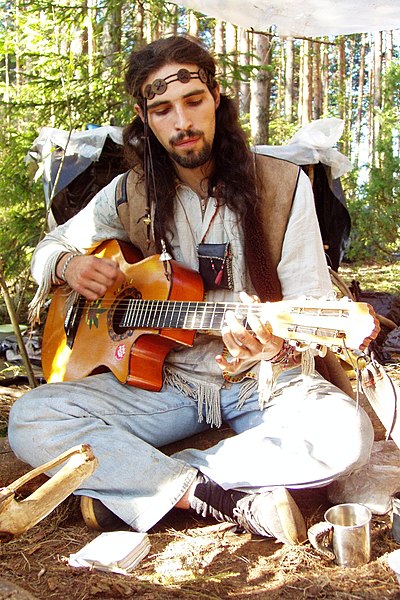 How about those wipes that come with cleaning substance on them, already? I head to the store to buy some of these, but the first two environmentalists I met, the smelly one and the crying one, are in the cleaning isle of the store shaking their heads. This product contributes to landfills and pollutes the ground and rivers. Back to normal paper towels.
I head to the paper goods aisle and see another environmentalist standing in between me and the jumbo pack of paper towels. He's holding a small sapling of a tree and asking me if I want to take away its future so I can clean up my kitchen. I have to admit that at this point that pizza sauce on my kitchen floor is getting pretty rank, so I take some paper towels and rush home to clean up my mess. Naturally, all of the environmentalists and their friends protest my decision by holding hands and surrounding my house singing Peter, Paul, and Mary songs (which I like, but they keep insisting I'm not allowed to sing along).
---
Now, you see, there are competing theories of environmentalism that don't work together. Some tell me to just do something and it will help, but, as you can see, plenty of popular ideas are useless or counter-productive. I've even been told recently to recycle paper in order to stop global warming, which I think makes no sense. (Of course, asking me to recycle paper to save trees would make more sense, but I think people like to say "global warming" whenever they mean "something bad is going to happen to the environment.")
So, I'm stumped. Do I care about the environment? Of course I do. It matters that we take care of our planet, but we don't have unified and well understood goals for doing so. The answer should come from science, but that community spends its time defending the words of politicians so they can continue to receive grants and, as such, is not helping us do anything but muddy the waters. Responsible environmentalism is hard.
But it's hard. In the old days, you just tried not to use more than you needed, and you put your trash where it belonged. Simple enough. But these days the environmental movement has grown in many directions and these different factions of environmentalists don't agree on things. They all drag scientific claims into their corner and try to appeal to our emotions with pictures of animals and children, but their methods disagree with one another which leaves me scratching my head.
---
For example: what are we to do with paper towels? It sounds simple, but it can be complicated. For example:
Sooo, I need another solution. Cloth towels! Just like Little House on the Prairie! I get out my cloth towel and do the extra work of washing it afterward just to keep my paper towels out of landfills. Suddenly, I'm visited by another environmentalist who is crying great tears. She points to my washing machine and my dishwasher and says that I'm hurting wildlife by dumping soap into the rivers. In her hands is a dead fish that choked on Palmolive. She is soon joined by a dehydrated fellow who tells me that I'm depleting our supplies of water when I wash my towel. Unable to deal with the emotions they have heaped upon me I agree to stop.
Recycling - that's the key! The woman holding the dead fish and her dry friend both smile and leave so I can employ my new plan: use paper towels again - but I'll recycle them this time! It's so simple, why didn't I think of this before? But, predictably, I am visited by yet another environmentalist with a terrible sunburn and a breathing mask. What's wrong? He tries to tell me, but his coughing gets in the way, so he shows me some research that shows that recycling paper emits more greenhouse gases than simply creating new paper. My great idea is actually hurting the ozone layer and killing the planet by releasing more carbon - I was better off just buying new ones and throwing the old ones away. According to many, our planet won't last another generation or two due to global warming, so I shouldn't do anything to contribute to that. Running out of trees is terrible, but the effects of global warming are said to be far worse!
How about those wipes that come with cleaning substance on them, already? I head to the store to buy some of these, but the first two environmentalists I met, the smelly one and the crying one, are in the cleaning isle of the store shaking their heads. This product contributes to landfills and pollutes the ground and rivers. Back to normal paper towels.I head to the paper goods aisle and see another environmentalist standing in between me and the jumbo pack of paper towels. He's holding a small sapling of a tree and asking me if I want to take away its future so I can clean up my kitchen. I have to admit that at this point that pizza sauce on my kitchen floor is getting pretty rank, so I take some paper towels and rush home to clean up my mess. Naturally, all of the environmentalists and their friends protest my decision by holding hands and surrounding my house singing Peter, Paul, and Mary songs (which I like, but they keep insisting I'm not allowed to sing along).
---
Now, you see, there are competing theories of environmentalism that don't work together. Some tell me to just do something and it will help, but, as you can see, plenty of popular ideas are useless or counter-productive. I've even been told recently to recycle paper in order to stop global warming, which I think makes no sense. (Of course, asking me to recycle paper to save trees would make more sense, but I think people like to say "global warming" whenever they mean "something bad is going to happen to the environment.")
So, I'm stumped. Do I care about the environment? Of course I do. It matters that we take care of our planet, but we don't have unified and well understood goals for doing so. The answer should come from science, but that community spends its time defending the words of politicians so they can continue to receive grants and, as such, is not helping us do anything but muddy the waters. Responsible environmentalism is hard.
Tuesday, July 6, 2010
Why "Turning Back to God" Will Not Fix the Economy
In late antiquity, the nation of Rome knew economic depression. The gory days of Julius Caesar were over and the population was dwindling - taking the economy with it. In 313 a.d., Roman Emperor, Constantine, issued the famous Edict of Milan which allowed Christians to practice their religion legally. The persecution was ended and the Roman nation embraced Christianity with open arms. All government leaders were Christian and Constantine had Pagan centers burned down or converted into churches. A few generations later, Theodosius would officially make Christianity the religion of Rome (In school, you were probably taught that Constantine did that) and everyone in the empire proclaimed a Christian faith. The church worked hand-in-hand with the government to bring order and to worship God.
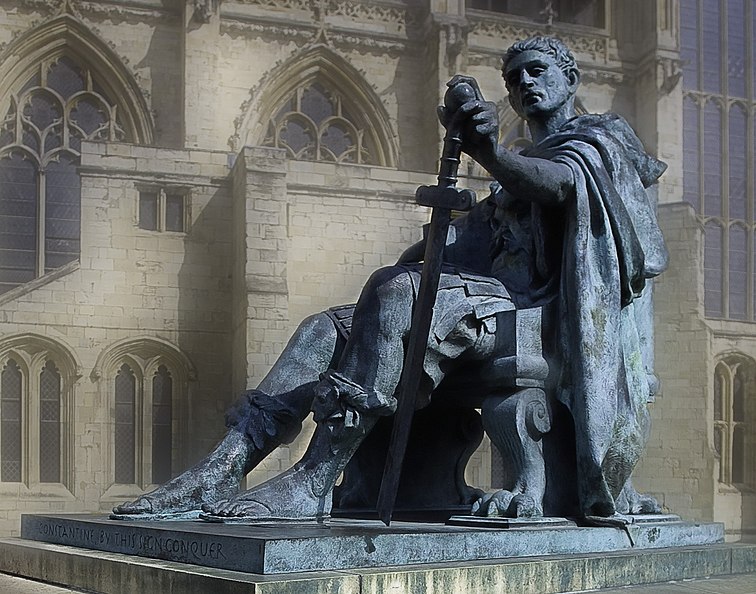
And it didn't help the economy. Rome dwindled away even faster than before and was soon a memory to most of the people who had known it as their home. Barbarians took up where Rome had left off and the empire would never be the same.
Previously, Armenia had been facing economic downturn and had made Christianity their official religion (before Rome) only to be conquered (by Rome). They found their independence and forged a strong legacy over many centuries, but their small country has known great hardship.
The United States (which is nothing like Rome - despite the many crude comparisons made by TV pundits) is certainly having trouble, today. And some say that the answer is Jesus. As a Believer, I can't recommend anything that benefits a person better than to pursue a relationship with Him. No matter how bad things get, His hand will lead us on. But this is not a recipe for economic recovery.
The very people who struggled with disease and poverty in the early middle ages prayed every day and never missed church (and, no, no one was forcing them at the time). They were Christian societies that did their best to honor God while wearing rags and never knowing prosperity. Of course, their consolation was found in scripture; the Bible tells us stories of people who did everything right and still did not have a rich life. The very apostles they adored so much received nothing but murder and torture for their troubles, and for many Old Testament prophets each trial just led the way to another.
Personal devotion is always important for the Believer, however, the motivation for it should not be money. Let's remember our devotion in order that we may know Him - no matter what the word around us brings.
And it didn't help the economy. Rome dwindled away even faster than before and was soon a memory to most of the people who had known it as their home. Barbarians took up where Rome had left off and the empire would never be the same.
Previously, Armenia had been facing economic downturn and had made Christianity their official religion (before Rome) only to be conquered (by Rome). They found their independence and forged a strong legacy over many centuries, but their small country has known great hardship.
The United States (which is nothing like Rome - despite the many crude comparisons made by TV pundits) is certainly having trouble, today. And some say that the answer is Jesus. As a Believer, I can't recommend anything that benefits a person better than to pursue a relationship with Him. No matter how bad things get, His hand will lead us on. But this is not a recipe for economic recovery.
The very people who struggled with disease and poverty in the early middle ages prayed every day and never missed church (and, no, no one was forcing them at the time). They were Christian societies that did their best to honor God while wearing rags and never knowing prosperity. Of course, their consolation was found in scripture; the Bible tells us stories of people who did everything right and still did not have a rich life. The very apostles they adored so much received nothing but murder and torture for their troubles, and for many Old Testament prophets each trial just led the way to another.
Personal devotion is always important for the Believer, however, the motivation for it should not be money. Let's remember our devotion in order that we may know Him - no matter what the word around us brings.
Subscribe to:
Posts (Atom)