Monday, December 31, 2012

Things That Didn't Happen in 2012

A little perspective helps our understanding.  Instead of discussing the most important things that happened during the year, here's my yearly column on things that were expected to happen, but didn't.   Happy New Year!

 
Starbucks Didn't Run Out of Pumpkin Spice Coffee

In September, the U.S. started its annual obsession with pumpkin spice drinks at Starbucks (which is probably where my holiday weight comes from).  But it didn't take long for panic to set in as rumors spread that the pumpkin spice drinks were in terrible shortage.  Fortunately, it wasn't true, and there was no danger.   Whew.


Focus on the Family's Blunder

Four years ago, Focus on the Family (a Christian, non-profit organization) published a list of things that would happen by 2012 if Obama was elected president.  These far-fetched predictions included the dissolving of the Boy Scouts, churches having their ministry licenses taken away if they didn't ordain gay marriages, and Russia occupying Poland.

This was obviously just  an attempt to scare people into voting a certain way.  To be fair, it wasn't a series of predictions, but only a list of things that Focus on the Family thought was "likely" to happen.


The Media Never Figured Out Who the Mayans Were

The fact that the so-called "Mayan Apocalypse" didn't happen is an easy choice for this list, but what is not so well known is that few people in the media even figured out what the Mayan calendar looked like.  These people, who claim to be culturally sensitive and progressive, never failed to display the Aztec calendar while discussing the Mayans.

This is NOT the Mayan calendar, for cryin' out loud...


Sylvia Browne was Wrong

For those of you who don't know, Sylvia Browne is a "psychic" who writes books and appears on TV shows to tout her predictions.  Why include her here?  Because, due to her Catholic background, she has a strong following in the church from people who believe she has a spiritual gift for reading the future.

Brown made it clear that she believed Mitt Romney would win the presidential election.  Nate Silver had it right, though.


No One Understood Social Media

Social Media is free, and it pays to keep that in mind.  Our culture of entitlement finally started to erode when Instagram pointed out that our pictures belonged to them.  This is a good thing, because it's about time social media users learned that they aren't in control.  (Speaking of social media, did you know that you can follow us on Twitter, Facebook, and Tumblr?)


Mass Shootings Didn't Happen the Way We Were Told

The shooter in Colorado did not dress like the Joker, he didn't use machine guns, and he didn't wear bullet-proof body armor.  His mother did not confirm that he was the shooter when the police called.

The Connecticut shooter did not go to the school to shoot his mother.  He did not use an assault weapon, nor did he carry four pistols with him.  CNN even managed to type his name wrong in their Twitter feed, leading to an innocent man being accused of these crimes and spending a few days trying to clear his name and avoid people who threatened him.

Our journalists are not working at a high level, and this sort of misinformation should not be tolerated.


That's all. 

Any predictions for 2013?  I think I'll write another one of these articles in twelve months.

Friday, December 28, 2012

How You Can Help Thinking Through Christianity (Don't Worry - It Won't Cost You)

Our little site has picked up quite a few readers over the last year (I credit my gifted writers), and I'd like to ask our loyal fans to help us reach even more people.  Our approach to discussing Christianity is very popular, but it's just not easy to get noticed above all of the noise - that's where you come in. 

Here are some things you can do:

Join the Conversation

Like an article?  Tell us in the comments?  Hate and article?  Tell us!  Did an article make no sense, or remind you of a similar issue?  Leave a comment on our site and let us know. (Yes, I realize that most of our readers use a blogroll and have to click extra times to get to the comment section.)  It encourages us to hear from our readers, and it brings more people to the site.

Follow us. 

If you haven't done so, follow us on Twitter, Facebook, and Tumblr.  We only post articles, no spam, and you're welcome to hide our updates if you want - we just appreciate your support and following our social media outlets is a good way for you to let us know you're a fan.

Share!

If you like something you read, share it.  Spreading the word with your peers is ultimately how we are going to reach a greater audience, so share your favorite articles and let other people find out about us.

Thanks for reading!

Monday, December 24, 2012

My Five Favorite Christmas Albums

I proudly admit it - I listen to Christmas music all year.  While I'm not sure I could stand songs about jingling bells and Santa for 365 days every year, I can come back to the hope and comfort of the Advent of Jesus Christ any day, any time.

In that spirit of enjoying hopeful, comforting, and fun Christmas music all year round, I recommend to you these, my five favorite Christmas albums (with my favorite songs and lines on the albums).  They may not be the "best" or most "critically-acclaimed," but they are the ones which I come back to throughout the year, every year.

5. So Elated, "The Bewildering Light"
This is the simplest, most unassuming Christmas album I own.  This is lead singer Ben Thomas, his acoustic guitar, and clean, beautifully-arranged accompanying instruments and voices.

Classics: "Greensleeves"; "It came Upon a Midnight Clear"; "Come Thou Long Expected Jesus."

New: "God is With Us"; and "Stick with You," a song about Joseph choosing to stick with Mary after her scandalous pregnancy news.

Favorite Line: from "Zechariah and the Least Expected Places":

"The Lord of Creation will not be subjected to expectation
God keeps slippin' out of underneath rocks
in alleys off the beaten path.
Open both your eyes."


4. Steven Curtis Chapman, "All I Really Want for Christmas"
I am an unabashed fan of Steven Curtis Chapman. Yes, he is Mr. CCM (Contemporary Christian Music), which carries a certain stigma these days among music enthusiasts (read: "snobs").  But, anyone who gives him a chance finds that he is also Mr. Poet, Mr. Deep, Mr. Honest, and Mr. One-of-the-best-Acoustic-Guitar-Players-Alive.

Classics: A rock-anthem rewrite of "Angels from the Realms of Glory"; "Silver Bells"; a you-can't-help-but-smile version of "Winter Wonderland"

New: "All I Really Want for Christmas," an unashamedly emotional song about orphans and adoption (which I'm drawn to due to my own adoption, and the adoption my own son!); "The Night Before Christmas"

Favorite Line: from "I Heard the Bells on Christmas Day" (by Longfellow):

"Then pealed the bells more loud and deep:
'God is not dead, nor doth he sleep.
The wrong shall fail, the right prevail
with peace on earth, good will to men.'"


3. Jill Phillips and Andy Gullahorn, "Christmas"
A well-crafted multi-acoustic instrument folk album featuring an extremely talented husband-and-wife duo.

Classics: "O Come All Ye Faithful"; "The First Noel"; and a hilarious take on the usually-annoying "Baby It's Cold Outside"

New: "I Will Find a Way" (based on a Walter Wangerin Jr. short story about the incarnation); and "You Came Down"

Favorite Line: from "I Will Find a Way":

"I will love her completely, When I am grown
I'll carry her out of that tenement room
I'm doing a new thing, soon you will see
I'm coming among you, and my name shall be
Immanuel."


2. Sufjan Stevens, "Songs for Christmas"
A 5-disc, 42-song wonderland of Christmas cheer!  This is classic Sufjan: not afraid to be odd, silly, and exuberant.  (I haven't listened enough to his new 5-disc, 58-song album "Silver and Gold" to make a judgment yet!)

Classics: "O Come O Come Emmanuel"; "I Saw Three Ships";  "O Holy Night"

New: "Come on! Let's Boogey to the Elf Dance!"; "It's Christmas! Let's be Glad!"; "Only at Christmas Time"

Favorite Line: from "Come on! Let's Boogey to the Elf Dance!":

"Santa Claus is coming!
Hear the banjo strumming!"


1. Andrew Peterson, "Behold the Lamb of God"

I cannot possibly speak more highly of this album than I already do.  This is Christmas music, Advent music, and Incarnation music all wrapped up in one.  In other words, Andrew Peterson's "Behold the Lamb of God" approaches the Christmas story as one which began at the beginning of time, was fulfilled 2,000 years ago in Bethlehem, and continues to this day.

The songs tell this story, working their way from creation, to the Passover and Exodus, through the kings and prophets, via the long genealogy recorded by St. Matthew, and to the climactic night of Jesus birth.

Classics: Instrumental versions of "O Come, O Come Emmanuel" and "The Holly and the Ivy"

New: The entire rest of the album.  Standouts are: "Deliver Us"; "Matthew Begats"; "Labor of Love"; and "Behold the Lamb of God"

Favorite Line: from "Labor of Love":

"It was not a silent night, there was blood on the ground
You could hear a woman cry in the alleyway that night
On the streets of David's town
It was a labor of pain
It was a cold sky above
But for the girl on the ground in the dark
Every beat of her beautiful heart
was a labor of love."

You can listen to the entire album here and buy the new edition here, which includes a remastered version of the original album, as well as a live recording.


Honorable Mentions: Jars of Clay, "Christmas Songs"; Beta Radio, "The Songs the Season Brings"; Folk Angel, "Christmas Songs (3 vols.); Branches, "Merry Christmas"; We Three Kings, "The 12 Songs of Christmas"

Friday, December 21, 2012

Christmas is (Obviously) Not a Pagan Holiday. Here's Why.

I've written about this every year, but I still get emails about it.  (In June, I got a message from someone who was very upset about my position on this.)  People have very strong feelings about this one, though I'm not sure why.

As a student of medieval history, I've been in a position to examine the history of Christmas and I found no link to anything "pagan."  Let's set the record straight:

  • There are no pre-Christian holidays that involve decorating fir trees, a cappella caroling, Santa Claus delivering toys through a chimney, wassail, The Island of Misfit Toys, Advent candles, egg nog, the ghost of Christmas past, candlelight services, or most of the things we do during the holiday season.
  • The religious meaning of Christmas is quite unique.  Pre-Christian holidays did not tell of the incarnation of an immaterial, monotheistic deity arriving on earth to bring redemption to mankind.  The wise men, the manger scene, the annunciation, and the rest of the Christmas story is peculiar to Christianity and did not come from a pre-existing story.
  • The early church celebrated Christmas at different times of the year around the world - sometimes more than once a year.  The tradition took off without any adherence to the calendar, so any supposed correlation to a pagan holiday in December is meaningless.
  • It was eventually decided that the church should pick one day to all celebrate Christmas at the same time, and Dec. 25th was chosen because of a tradition that said Jesus was born on that day.  (Obviously, we don't know exactly when Jesus was born.)
  • Dec. 25th happens to be a day that Romans claimed was the birthday of "Sol Invictus," the sun god.  However, there's no evidence of a link between these two holidays other than a calendar date - the church documented their decision to make Dec. 25 Christmas, and Sol Invictus is never mentioned.  In fact, it's unclear if anyone in Rome actually celebrated Sol's birthday.
  • Some people will tell you that Christmas comes from the tradition of the Winter Solstice.  Of course, Christmas doesn't ever fall on the Solstice, and the two days have nothing in common.
  • The Feast of Saturnalia has also been offered as a possible origin of Christmas.  This feast never fell on Dec. 25, and it involved drinking, gambling, and sacrifices.  To be frank, it had nothing in common with the church's Christmas celebrations.
On a more personal note, it's very immature to criticize religion in this manner.  I would certainly never look for reasons to insult another person's faith, because I believe it's right to respect people's traditions - even if I don't agree with them.  It's time for peace, charity, love, and all of those wonderful things that we do at Christmas, and trying to find fault with a major religion is a good way to miss the point.

Christmas is unique, so stop being such a Scrooge and just enjoy it.

Wednesday, December 19, 2012

Einstein on the Limitations of Science


Secular scientists often argue that the rapid expansion of scientific knowledge has left little need for faith-based truth claims such as those maintained by religious communities. They insist that as they refine their ability to explain natural phenomena with the aid of rigorous, empirically verifiable methods, they eliminate any necessity to resort to mythical or religious explanations, and that it's best to put those primitive habits aside in favor of more dependable forms of inquiry. Some atheists go so far as to argue that science can provide answers to life's biggest questions, such as how we ought to conduct ourselves ethically, without any need of metaphysical hypotheses. Others argue that faith and science are necessarily incompatible, and that we must chose between rationality and mysticism.

In the midst of this ongoing debate it may be of interest to note that one of the 20th century's greatest physicists recognized that religion plays an essential role in the ordering of human priorities and social activities. Albert Einstein, while clearly not an orthodox theist, argued persuasively that science and religion are not at odds with one another, but exist independently as mutually beneficial registers of knowledge. Though we as Christians cannot accept Einstein's dismissal of the Judeo-Christian conception of a personal deity, we can employ his arguments against those materialists who hold that science provides all we need to live meaningful, ethical lives.

In a 1956 essay entitled “Science and Religion,” Einstein wrote: 

"For the scientific method can teach us nothing else beyond how facts are related to, and conditioned by, each other. The aspiration toward such objective knowledge belongs to the highest of which man is capable, and you will certainly not suspect me of wishing to belittle the achievements and the heroic efforts of man in this sphere. Yet it is equally clear that knowledge of what is does not open the door directly to what should be. One can have the clearest and most complete knowledge of what is, and yet not be able to deduct from that what should be the goal of our human aspirations. [...] And it is hardly necessary to argue for the view that our existence and our activity acquire meaning only by the setting up of such a goal and of corresponding values." 

This is a startling confession for a world-renowned scientist, especially in light of the arrogance of modern scientists and the New Atheists who defiantly claim that we are without need of metaphysical theories to lead meaningful lives. Against this trend, Einstein claimed that it is “hardly necessary” to demonstrate that life acquires meaning only when we posit a transcendent goal by which to direct our actions. He thought it obvious to all that without such a goal we are toiling without purpose. Science itself cannot provide this goal, Einstein argued, nor can it support its own epistemological claims. He continued: 

"The knowledge of truth as such is wonderful, but it is so little capable of acting as a guide that it cannot prove even the justification and the value of the aspirations towards that very knowledge of truth. Here we face, therefore, the limits of the purely rational conception of our existence."  

To suggest that the very value of scientific inquiry is contingent upon something other than what science itself can prove is a radical statement for an atheist scientist, but his logic strikes me as incontrovertible. Contemporary Christian philosopher Alvin Plantinga has argued that there are no reasons to assume, given a materialistic universe, that scientific findings correspond to the world as it actually is. We need a metaphysical account of why it works, he insists, before we can confidently place faith in scientific claims. Einstein, like Plantinga, recognized the necessity for exactly this kind of metaphysical explanation, writing: 

"To make clear these fundamental ends and valuations, and to set them fast in the emotional life of the individual, seems to me precisely the most important function which religion has to perform in the social life of man."  

Rather than reject religion outright as incompatible with scientific rigor, Einstein admits of the need to couple science with religion. He summarized his position in the now famous words: “Science without religion is lame, religion without science is blind.” 

While the debate over science and religion wears on, it's refreshing to read such a venerated scientist boldly defend the role of religion in guiding human action. While we cannot claim that Einstein accepted the Judeo-Christian God of the Bible, we can use his argument as evidence that highly intelligent scientists do view religion and science as compatible, even necessarily conjoined. 

Monday, December 17, 2012

A Christmas Carol of Mourning

As news of the tragic shooting in Connecticut spread on Friday, my facebook feed started overflowing with expressions of grief and also, in light of the Advent season, expressions of longing for Christ's return. The horrific events highlighting humanity's deep need for Christ were very much on my mind this Sunday as we sang the Chris Rice lyrics, "Tears are falling, hearts are breaking/ how we need to hear from God," and as we reflected on the miracle of the Incarnation in the words of "Hark the Herald Angels:" "Veiled in flesh the God head see; Hail the incarnate Deity; Pleased as man with men to dwell, Jesus, our Emmanuel."

Then, a friend of mine posted this:


The song is "Coventry Carol", a traditional Christmas carol from the 16th century that probably doesn't get very heavy rotation in most churches' Christmas music repertoire. Why? Because this is a Christmas Carol of mourning, in which a mother laments the loss of her child as well as the deaths of the many children killed in Herod's Massacre of the Innocents. (Read about it on Wikipedia, here). As the story goes (found in Matthew chapter 2), Herod calls on the three magi to find out where the Christ child is, ostensibly so that he may join in worshiping the infant King. But when the magi are on their way back to report to Herod, an angel warns them that Herod's true intent is to kill the baby. The wise men, of course, do not return to Herod, and, in a rage, Herod attempts to solve the problem of a prophesied King by having all children under the age of two murdered. Here are some of the carol's lyrics:
Herod, the king, in his raging,
Charged he hath this day
His men of might, in his own sight,
All young children to slay.
This song is a moving and appropriate response to the tragedies of this weekend, but before seeing my friend's post, I had only a vague inkling that this carol even existed and no idea about its subject matter. As a worship leader, I've found myself wishing for more hymns of longing this Advent, because as much as Advent is a time of hope, it is also a time of deep yearning.  We need songs of mourning and longing, as they provide an avenue for our grief:
That woe is me, poor Child for Thee!
And ever mourn and sigh,
For thy parting neither say nor sing,
Bye, bye, lully, lullay.
 and context for our hope:
A thrill of hope -- the weary world rejoices!
For yonder breaks a new and glorious morn!
Fall on your knees; O hear the angel voices!
O night divine; O night when Christ was born.


Wednesday, December 12, 2012

The Vatican's Astronomers and the End of the World

The Vatican released a statement this week from their top astronomer explaining what most of us already knew - the world's not going to end on Dec. 21.

Most people don't know that the Catholic church even has an astronomer, but, contrary to popular belief, the sciences have always been important to the church.  (When the church sent their first missionaries to make contact with the Chinese, they sent them with copies of Galileo's writings and their most advanced clocks as gifts.)  In his statement, the Vatican's astronomer discusses a certain theory that says the universe will break apart on Dec. 21, a theory that's based (very loosely) in fact:

Yes, Funes wrote, the universe is expanding and if some models are correct, will at one point "break away" — but not for billions of years. But he said Christians profoundly believe that "death can never have the last word."

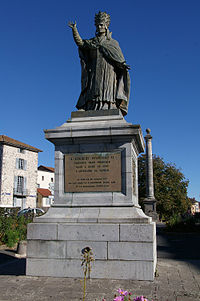
This isn't the first time that the church has been the voice of reason during an apocalyptic scenario.  In the year 999, some people were concerned about the end of the world while others believed that the year 1000 would bring about some sort of important, world-changing event.  It was the Pope who knew better.

Pope Sylvester II (who was probably the smartest man in Europe in his time due to his advanced writings on mathematics and astronomy) never mentioned the millennium in his writings or sermons, and he treated the end of December 31, 999, like the end of any other day.  The people of Christendom were fortunate to have had a level-headed, intellectual leader who calmly guided them through the calendar change.

Today, the Vatican is doing the same thing, using science and wisdom to lead its followers away from fear.

(Long time readers of this site will remember a previous article mentioning the Vatican's astronomy team in this article about baptizing aliens.)

Monday, December 10, 2012

O Come, O Come: The Meaning of Advent

Image Source
The four Sundays preceding Christmas are what is known on the Christian calendar as Advent. There is still a lot I do not know about Advent. I know that the term derives from the Latin, adventus, which means, coming. It's the time of year that we focus ourselves on various aspects of Christ's comings, both his First Coming, which we celebrate at Christmas, and his Second Coming, which we anticipate and hope for with deep yearning.

(Notice we do this at Easter too. Easter Sunday we celebrate Christ's resurrection, his coming back from the dead, his coming back. And in remembering, we also anticipate. This is the direction in which we point our hope and set our faces. It is the major telos (direction) of the way of a Christian's life: Advent.)

Since I'm still learning myself about the specifics, I wanted to point to a few articles that discuss Advent in more detail. Below I will include excerpts, but I encourage you to read them in entirety (they're not long).

So here are some helpful articles. (I'd be remiss not to point you to the sidebar for a very helpful, though less brief, article right here at TTC posted during this time last year. For whatever reason the images are no longer functioning, so please excuse our technical difficulties.)

1) Advent 2012: A Season of Waiting for the Coming of Christ

I confess I was surprised to find this piece from The Huffington Post. I start with it for the excerpt I include below; however, the piece also includes a spectacular slideshow of Advent's Darkness to Light Procession, a visual discourse on the question, What is Advent? So be sure to check it out.

For now, "just the facts":
In 2012, the Advent season begins on Dec. 2, 2012 and ends on Dec. 24, 2012. The Eastern Churches' equivalent of Advent, Nativity Fast, is 40 days long and began on Nov. 15, 2012. 
The themes of the Advent season are Hope, Peace, Joy and Love. Lighting of candles, especially the circular Advent wreath with five candles is an important tradition of the Advent season. Each Sunday of Advent, one of four candles is lit -- with the final candle, the Christ Candle, being lit on Christmas Eve.

2) Advent – Holy Dissatisfaction and Hopeful Anticipation

Blogger Joel Willitts constructs a helpful metaphor for Advent by recalling the intense dissatisfaction and anticipation that accompanied the waiting period of his 8-month engagement. Willitts's reflections are extremely apt for helping us understand Advent (both the Advent of Christmas and the everyday advent of a believer's hope) as this is essentially the metaphor Scripture uses. Dissatisfaction and anticipation. When we discuss Advent, particularly as Advent is "in vogue" (for all the right reasons) among otherwise non-liturgical Evangelicals, we tend to only regard Advent as a time of anticipation. But as Willitts notes, it is more than that:

Advent’s two heart postures, holy dissatisfaction and hopeful anticipation, also have two corresponding practices repentance and meditation. 
Advent’s Holy Discontent – Repentance of
  • Apathy
  • Indifference
  • Distance
  • Sin 
Advent’s Hopeful Anticipation – Meditation on
  • Jesus’ Second Coming
  • Jesus’ birth
  • Jesus in our lives 

3) The Essence of Advent

This piece provides a super-brief historical survey of Advent and then goes on to discuss Advent's significance and place in our (daily) Christian lives. The following resonated with me in particular:
Advent is intended to be a season of fasting and reflection, as well as anticipation. Reflecting on the violence and evil in the world leads us to cry out to God to make things right—to put death’s dark shadows to flight. Our exile in the present makes us look forward to our future Exodus. And our sinfulness and need for grace lead us to pray for the Holy Spirit to renew his work in conforming us into the image of Christ.

Amen.

Friday, December 7, 2012

Calling it a "Holiday Tree" is Actually a Good Idea

Every year, the holiday spirit is quenched by millions of Americans who feel injured because they didn't get their way with the Christmas tree debate.  I think it's time we realized that this is not a battle we should be fighting.

Christmas trees aren't exactly a Christian practice, they're just decoration.  Since the late middle ages, fir trees and similar greenery have been associated with Christmas, and it always makes me smile to see these wreaths and evergreen trees decorate the streets in December.  (Some armchair historians will try to tell you that Christmas trees resemble an ancient, pagan tradition; these people are mistaken.)


But my happiness is always cut short by the voices arguing about what these trees should be called, and, the problem is, I don't think it matters.  Calling it a "holiday tree" doesn't hurt anything.  In fact, I think the church should embrace this change.

Everyone hates the commercialization of Christmas, and the holiday is associated with lots of things that have nothing to do with Jesus' birth.  Strangely enough, the people who say that we should maintain the True Meaning of Christmas are the same folks who protest the term "holiday tree."  Why are we so desperate to call them "Christmas trees" when it only obfuscates the meaning of the holiday?  What does a fir tree have to do with the Christmas story?

So, let the stores call it a "holiday tree."  And the lights on our houses can be "holiday lights," for all I care.  Then, when we gather to discuss Christmas, we won't be talking about snowmen or fir trees, we'll be talking about the Incarnation.  Separating "holiday" things from "Christmas" things would actually be doing the church a favor.

Wednesday, December 5, 2012

What can we Learn from the Mayan Apocolypse Nonsense? Trust the Scholars, Next Time.

Some of us like to joke about the Mayan apocalypse conspiracy theories, but it's pretty serious to others.  There are people around the world who are seriously frightened, and one young girl even took her life amidst her own doomsday anxieties.  It could have all been avoided if our society was not too proud to ask for help.

What does the average person know about Mayans?  Not much.  But how to people react when faced with the notion that Mayans predicted the end of the world?  Unfortunately, hardly anyone had the idea to ask a historian about it.  Books have been publishing the truth about the Mayan calendar for decades, and even five minutes of casual research would have revealed this, but the masses chose panic and doomsaying.

This happened because no one will trust the people with knowledge.  Scholars spend their lives learning - only to have society ignore them when they are needed most.  For example, Dan Brown's 'DaVinci Code' books have left millions of people confused about religion, but a medievalist could set them straight and clear away their questions in a few minutes.  The mess caused by Brown's misinformation will confound people for decades because the authorities on religious history are never trusted with the one thing they are expected to do.

Roughly fifteen years ago, an ancient book known as the Gospel of Thomas was growing in popularity (for reasons still unknown).  People who never went to church proudly proclaimed that they believed in that book for spiritual reasons of some sort, boasting that it was better than the Bible.  Naturally, none of these people had read the Gospel of Thomas or asked any experts about it; if they had, they would have found out that, in it, Jesus says that women cannot go to Heaven "unless they are made to be like men."  Things like that caused enthusiasts of the Gospel of Thomas to cool down once they actually read the book.

It's time we started trusting the scholars.  Our society has tasked these people with a responsibility to maintain our knowledge of history, and when people are confused about the past these scholars shout out the truth to a world that won't listen to them.  Rather than getting our facts from news broadcasters and storytellers, let's get ourselves aligned with the experts.

Tuesday, December 4, 2012

Random Christmas links

I couldn't think of anything to write regarding Advent or Christmas, so here you go:

Advent Conspiracy
adventconspiracy.org
"We all want our Christmas to be a lot of things. Full of joy. Memories. Happiness. Above all, we want it to be about Jesus...."

Dallas Theological Seminary Christmas Devotionals
http://christmas.dts.edu
"Each one of the devotionals in this volume elucidates a particular name of Christ found in Scripture."

JibJab
jibjab.com/holidays
Scroll to the bottom for the free Elf Madness option. It's a great way to kill time at work.

Has N.T. Wright Ruined Christmas?
internetmonk.com/archive/has-n-t-wright-ruined-christmas
"...I only listen to Advent and Christmas music. There are no other playlists on my iPod."

Top 5 Christmas Clichés – Does Santa Claus Really Matter?
reclaimingthemind.org/blog/2012/11/top-5-christmas-cliches-5-santa-claus/
"Christmas, like the purple elephant in my backyard, is an extraordinary, shocking, otherworldly event."