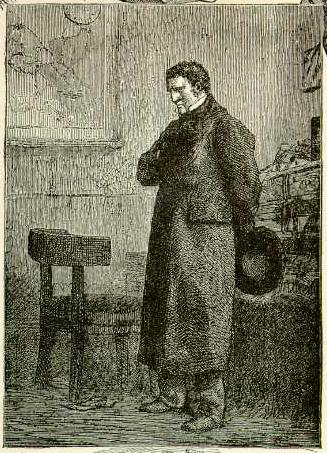
Wednesday, October 31, 2012

Halloween stuff

It's Halloween! Did you know that zombies are theologically significant? They are!
Theologically significant zombies
On this and related matters, see my earlier post at TTC.

And, most importantly, have you seen the Halloween cartoon where Homestar Runner is a Christ figure? (Did the folks who manage HomeStarRunner.com mean him to be a Christ figure? Probably not. But he is one just the same: the dumbest Christ figure ever.)

Monday, October 29, 2012

Leif Enger's "Peace Like A River" - My Favorite Novel

My name is Brian Franklin, and for a long time, I was a literature snob.

"What kind of books do you like to read?" people would ask.  "The classics.  Almost nothing written in the last fifty years is worth reading.  Don't you agree?"  What a snob, is probably what most people thought, as they nodded in agreement

Another popular question: "What's your favorite book?"  I replied properly, like any good literature snob, "A Tale of Two Cities, or, of course, Crime and Punishment, by Fyodor Dostoevsky" (because saying the word "Dostoevsky" always makes you feel smart).  After all, good readers love the classics, right?

But a few years ago, I discovered something: while it’s incredibly important to read classic literature – i.e., old and lasting literature – it’s more important to just read.  Read old. Read new. Read in general.  Read what you love.  Read what excites and inspires you.

And that brings me to a book that I discovered a few years ago: Leif Enger’s Peace Like a River.  A longtime Minnesota Public Radio reporter, Enger published his first novel, Peace Like a River in 2001.  The story is set in the early 1960s upper Midwest – think blizzards, Minnesota lakes, Dakota Badlands, and a 20th-century Wild West.  The novel’s narrator is young Reuben Land, a boy who suffers from severe asthma and has a story to tell about his family: his precocious sister Swede, his bold brother Davy, and his humble, miracle-working father Jeremiah.  Through a shocking turn of events early in the novel, the family is set upon an adventure that has them crossing paths with calloused lawmen, ruthless villains, incredible wilderness landscapes, and unexpected friends.

Peace Like a River has everything you want in a story: adventure, romance, shocking twists, enduring faith, heroic quests, villains, mystery, and above all, the ability to transport you to a place not your own.  Don’t you love these characteristics in a book?!  If not, you probably don’t like books at all.  But if you do, do yourself a favor, and go buy a copy of Leif Enger’s Peace Like a River right now.

As it happens, I do in fact still love A Tale of Two Cities and Crime and Punishment.  Along with Willa Cather's My Antonia, they are among my absolute favorite novels.  But now, when people ask me what my favorite novel is, I respond, "Hands down, Peace Like a River."


P.S. - Once you finish Peace Like a River, waste no time in picking up Enger’s second, most recent novel, So Brave, Young, and Handsome. It’s different, and the same, in all the right ways.

Friday, October 26, 2012

The Brothers Karamazov


Bonding with literary characters is one of reading's greatest rewards. When we discover that we share common concerns or priorities with a character, or that his or her predicament exemplifies a broader truth about the human condition, it pulls us deeper into the story and provides profound satisfaction. It's uniquely edifying to uncover truths about oneself through an encounter with another, albeit fictional, personality – it's why many of us read fiction.

Encounters with Greatness

The experience is no less rewarding when, over the course of a novel, it becomes clear just how poorly we measure up to some noble figure. A character's heroic actions might throw our shortcomings into relief to reveal how dramatically we are lacking by comparison. In some cases their exemplary behavior may even motivate us to reform. When literature leads to self-reflection it becomes more than a frivolous pastime, it serves as a powerful vehicle for personal growth and transformation.

The Heart of a Russian Monk

No novel I've read to date has transformed me more than The Brothers Karamazov, Dostoevsky's epic tale of sin, faith and redemption. Alexei Karamavoz, the novel's twenty-year-old monk protagonist, is a model of Christ-likeness, a selfless servant caught in the midst of an absurd familial dispute who must moderate between his hot-headed siblings and profligate father. Alexei's intense desire to do good in an impossible situation is infectious, and his single-minded purity of heart ranks him among the most noble and appealing of figures I've encountered in literature.

A Philosophical Masterpiece 

The novel as a whole, while widely regarded as Dostoevsky's best, is not without faults. Published in serial form prior to its completion in 1880, certain segments of the narrative strike me as disjointed and meandering, as though Dostoevsky himself was not exactly sure where the plot was taking him as he wrote it. But the philosophical and psychological pathos of the The Brothers Karamozov is extraordinary, and Dostoevsky's mastery of character is in full force throughout. Many passages radiate with intensity and deep feeling, especially those touching on matters of faith, morality and the nature of evil.

Take for instance Alexei's response to the death of his elder monk, Father Zossima. Overwhelmed by the passing of his spiritual mentor, Alexei – also referred to as Alyosha – falls to his knees under a starry night sky:

“Alyosha stood, gazed, and suddenly threw himself down on the earth. He did not know why he embraced it. He could not have told why he longed so irresistibly to kiss it, to kiss it all. But he kissed it weeping, sobbing and watering it with his tears, and vowed passionately to love it, to love it for ever and ever.”

His love of creation extends to all of humanity:

“He longed to forgive every one and for everything, and to beg forgiveness. Oh, not for himself, but for all men, for all and for everything.”

Time and again throughout the novel, Alexei exhibits this unconditional love and eagerness to forgive. And forgive he must, as virtually every other character in the book wrongs him in some fashion or another. Whether in dealing with his repulsive father, his debaucherous brother, licentious women or various despisers of religion, Alexei is patient, generous with his time and considerate to all. His tireless kindness is met with amazement, and the reader cannot help but admire the quality of his character.

A Call to Respond

With The Brothers Karamazov Dostoevsky delivers a convincing defense of Christianity, though not through an expository, discursive argument. Instead he models the essence of the Gospel, Christ Himself, in the form of a young Russian monk. It's a compelling demonstration that demands a response to what we might call the problem of beauty. How is such goodness possible, and how can I too achieve it? It's a demonstration that, for me, led to personal transformation, and which continues to impact me today.


Wednesday, October 24, 2012

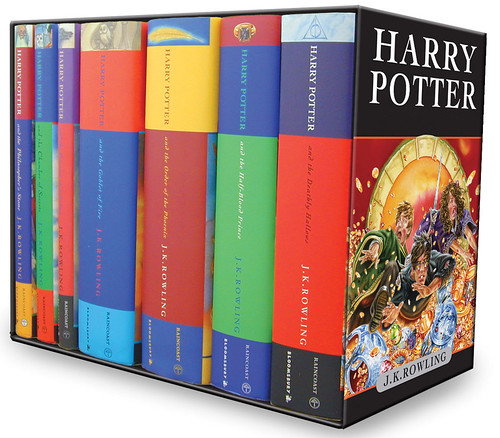
Virtue Recovered: Friendship in Harry Potter

Friendship is one of my favorite literary themes, but it's difficult to find these days. When it does show up in contemporary literature, it usually surfaces in what we oddly call Young Adult Fiction. Classically, friendship is one of the most powerful of the four loves---affection, friendship, romance, charity---but in modern American culture, friendship gets the short shrift. We have eyes only for eros. From chick flicks to shoot-em-up blockbusters, from Taylor Swift to Cee Lo Green, from the Disney Chanel to the History Chanel, romance rules the day. Don't get me wrong, I'm a fan of romantic love; I'm for it. But friendship gets cheated. (And when friendship gets cheated, so do affection, romance and charity.)

Friendship receives very little serious treatment in our cultural avenues largely due to the Freudian sexualization of the whole of the human experience. Intimate friendship is suspect in our culture. We've lost friendship, and we desperately need to rediscover it. True friendship is rare enough as it is, and philios is one of the most essential expressions of being human. We were designed for deep, human connections.


So when friendship does receive serious treatment in contemporary literature, such novels, plays, short stories are particularly noteworthy. In our series this month on fiction, we've talked a lot about how reading fiction has the potential to make us better humans. In the same vein, stories that embody authentic friendship provide us the opportunity to be better friends.


Harry Potter, one of my favorite stories, takes friendship seriously. Through the young protagonists, Harry, Ron, and Hermione, we learn quite a lot about friendship. We discover friendship as a virtue and a discipline; as a form of hospitality and a means of learning forgiveness, sharpening character, and cultivating both self-sacrifice and a sense of self.


Here are the highlights:


"Bad company corrupts good character." That's not from Harry Potter, it's from the Bible. But the idea is deeply embedded in the Hogwarts Saga. Right at the start of Harry's life as a wizard, The Boy Who Lived has the opportunity to ditch the red-headed boy he befriended on the train and become friends with the cool, rich, powerful Draco Malfoy. Referring to Ron and his hand-me-down robes, Draco informs Harry, "You'll soon find out some wizarding families are much better than others, Potter. You don't want to go making friends with the wrong sort." Harry doesn't need to know Latin to understand Draco Malfoy is a character of the wrong sort, a character of 'bad faith' (mal-foy). Harry rejects Malfoy's offer of an alliance (of power more than of friendship) and pleads with the Sorting Hat, "Not Slytherin. Not Slytherin," house of the snake; he is placed instead in Gryffindor, house of the lion. (The Philosopher's Stone)


Harry and Ron, only two-thirds of the literary "soul triptych," are incomplete without Hermione (as John Granger discusses here and in more depth here). It is when these three become friends that things really start rolling. Hermione becomes trapped in the girls' toilets by a troll, partly due to Ron's insensitivity toward her---"No wonder she hasn't got any friends." Owning their responsibility and their need to make it right, Ron and Harry go to find Hermione and the three work together to defeat the troll. Grateful, Hermione, the rule-follower and sometimes annoying or at least inconvenient truth-teller, lies (to a teacher no less) and takes the full blame in order to keep the boys out of yet further trouble. After all, “There are some things you can't share without ending up liking each other, and knocking out a twelve-foot mountain troll is one of them” (Philosopher's Stone). This marks the beginning of the trio's great friendship, and I can't think of a more apropos signpost. Throughout the rest of the series, they will face hardship, heartbreak, betrayal, and various forms of evil, both in the world and in their hearts, but they will face them together. Without saying it directly, Rowling hints at the essential nature of friendship, that it derives from shared experiences, and that those which are difficult and painful, those which expose our vulnerable humanity, those experiences create the strongest bonds.
It's important that Harry, Ron, and Hermione learn this lesson early. When Voldemort returns to power in The Goblet of Fire (Book 4), Dumbledore, often the voice of truth, makes clear the necessity of friendship in the cosmic (and everyday) fight for love and truth and beauty against corrupt power and malicious deception: "We are only as strong as we are united, as weak as we are divided. Lord Voldemort's gift for spreading discord and enmity is very great. We can fight it only by showing an equally strong bond of friendship and trust." Would that the Church grasped this truth. Is it just me, or is Dumbledore/Rowling channeling the apostle Paul who writes, "Make every effort to keep the unity of the Spirit through the bond of peace. There is one body and one Spirit, just as you were called to one hope when you were called; one Lord, one faith, one baptism; one God and Father of all, who is over all and through all and in all!" (Eph. 4:3-6)?

After struggling throughout the majority of The Order of the Phoenix (Book 5) with the part of himself he shares with The Dark Lord (it's not a perfect analogy, but think, sin nature), Harry comes out on the other side of his harrowing darkness realizing the light is stronger, and when he does, he finds pity for his enemy. Voldemort views love and friendship, and the vulnerability required therein, as weakness, and therefore he ever underestimates their power. And Harry, after trying all year to shut out his friends and shut off his love for them in an attempt to save them from his burden and numb himself from his emotional turmoil, after all this, Harry finally understands and finds compassion akin to that of Frodo for Gollum (another great saga about friendship). “You're the one who is weak." Harry declares to Voldemort. "You will never know love or friendship. And I feel sorry for you.” In the end (of Book 7), The Chosen One actualizes the full power of love by sacrificing himself for his friends. It's the Gospels Rowling echos now: "Greater love has no one than this, that he lay down his life for his friends." And Harry's sacrifice covers them.

Harry is a fierce friend; reading his story challenges me to be a better friend. He isn't perfect, but he is exceedingly loyal. He makes mistakes, but he makes it right. He is a friend to those on the margins,"the least of these," he shows compassion to his enemies, and he willingly lays down his life for his friends. Harry has the capacity to be a good friend in part because he has good friends. They accept him for who he is, the light and the dark, and in them he has a home like he never had at number four Privet Drive. If I can learn to be half the friend these fictional teenagers are, I might come to "live a life worthy of the calling [I] have received" (Eph. 4:1).

Monday, October 22, 2012

Thinking seriously about 'choice'


A book I keep meaning to read is, "Unnatural Selection: Choosing Boys Over Girls and the Consequences of World Full of Men" by Mara Hvistendahl.  The book takes a hard look at choice, abortion and the role of women in worldwide society.  


Front CoverThe Wall Street Journal's review of the book, The War Against Girls, sparked my interest.  One of the more interesting quotes from the review states:

Despite the author's intentions, "Unnatural Selection" might be one of the most consequential books ever written in the campaign against abortion. It is aimed, like a heat-seeking missile, against the entire intellectual framework of "choice." For if "choice" is the moral imperative guiding abortion, then there is no way to take a stand against "gendercide." Aborting a baby because she is a girl is no different from aborting a baby because she has Down syndrome or because the mother's "mental health" requires it. Choice is choice. One Indian abortionist tells Ms. Hvistendahl: "I have patients who come and say 'I want to abort because if this baby is born it will be a Gemini, but I want a Libra.'

If you read the book, let me know how it is.  If you, like myself, won't make (or don't have) the time to read the full book, please take the time to read the review.  It will give you plenty to think about.

Friday, October 19, 2012

The Best Drum Solo Ever (Maybe)

I've seen a lot of good drummers.  I've seen drum solos by jazz geniuses and rock legends, and they all blew me away.  So, with so many amazing drum solos out there, how can one really stand out? 

Like this:


The Newsboys have been doing amazing drum solos since I was in middle school - sometimes with two drummers playing perfectly synchronized drum solos at the same time.  I saw them do that at a concert in Paris, TX, a long time ago, but I never got to see the rotating drum riser for myself.  (If you search YouTube you'll find many more videos of their impressive drumming.)

Of course, the best drum solo is probably Led Zeppelin's 'Moby Dick' from the live album The Song Remains the Same, but this one's pretty good, too.

Wednesday, October 17, 2012

The Importance of Being Earnest

My second-favorite play is the only real play I've ever played anyone in: The Importance of Being Earnest by Oscar Wilde. I am forever in debt to my high school senior English teacher, Miss Penner, for having us read both Earnest and Hamlet, my favorite play.

But reading Earnest wasn't enough; she wanted us to perform it; and that, as it turned out, in Shakespearean style, since we had more males in the class than there were male characters available in the play. I still remember pretty well some of my lines as Miss Prism in Act 1. ("Cecily! Cecily! Surely such a utilitarian occupation as the watering of flowers is rather Moulton's duty than yours. Especially at a moment when intellectual pleasures await you.")

The last time I checked, an oldish movie was still streaming at Netflix. It is very good, especially in its portrayal of Lady Bracknell. Yet I still cherish most my memory of Kevin's Lady Bracknell saying "I am glad to hear it," the it she has heard being the fact that Jack smokes.

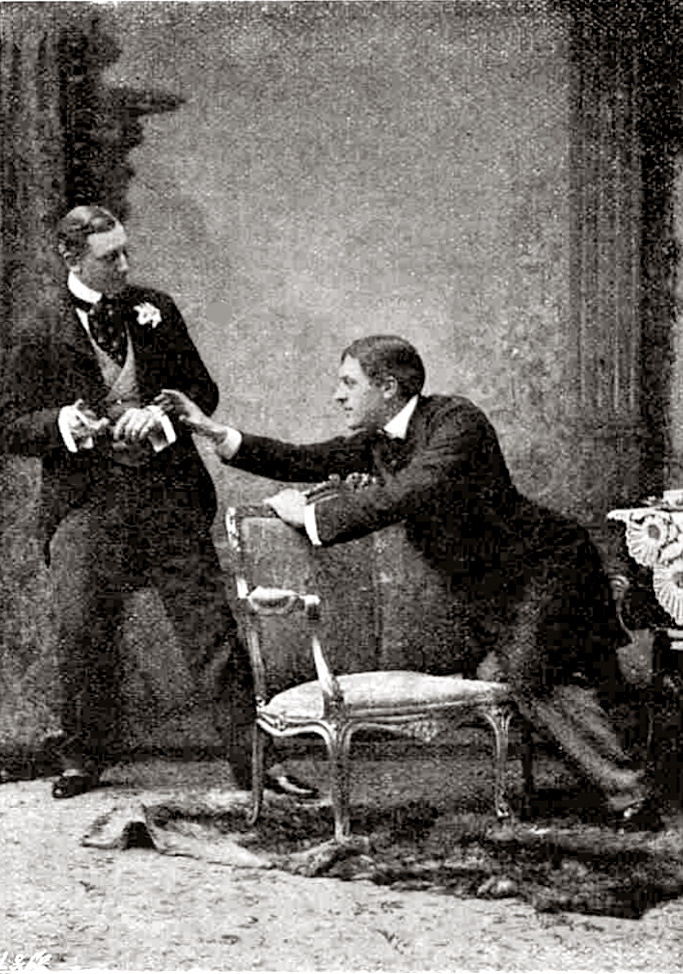
Jack tries to snatch his private cigarette case from Algernon.
 
So what is the point of Earnest? Do we learn anything important from it?

As far as I know, there is only one really important truth illustrated in The Importance of Being Earnest, and it is this: We humans are capable of being very, very, very ridiculous.

Being ridiculous is not the same thing as simply being silly. Larry the Cucumber is silly, and we love him for it. Algernon Montcrieff is ridiculous, and we love watching him be it, but we do not admire it.


Monday, October 15, 2012

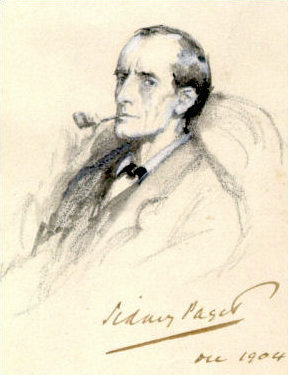
Little Known Facts About Sherlock Holmes - My Favorite Detective

Sherlock Holmes is my favorite fictional character.  Since I was a kid I've always paused at the end each story before Holmes explained everything just to see if I could figure it out for myself.  I've spent many a lunch hour scratching my beard while trying to work out the clues of one of his adventures.  (Only once - when reading The Man with the Twisted Lip - did I actually manage to solve the case on my own.  I was in middle school at the time.)

I suppose, as an introvert who likes to figure things out, I think of Sherlock as a kindred spirit.  Here's some stuff not everyone knows about the World's Most Famous Detective.

The Religious Detective

It's often assumed that Holmes was an atheist, but people who make that claim have obviously not been reading the same books as I.  Observe his conversation in The Adventure of the Naval Treaty:

"There is nothing in which deduction is so necessary as in religion," said he, leaning with his back against the shutters. "It can be built up as an exact science by the reasoner. Our highest assurance of the goodness of Providence seems to me to rest in the flowers. All other things, our powers our desires,our food, are all really necessary for our existence in the first instance. But this rose is an extra. Its smell and its color are an embellishment of life,not a condition of it. It is only goodness which gives extras, and so I say again that we have much to hope from the flowers."

These are not the words of an unbeliever, but of someone who thinks that a higher power is looking out for him.  (Also, I thought it was pretty surprising that Sherlock Holmes, of all people, would get sappy while looking at flowers.)

Holmes the Straight Man

Many people will tell you that Holmes was a homosexual, and these people usually say that Watson was gay, too.  I hate to burst anyone's bubble, but this notion is not supported by the top Holmes scholars because there's simply no evidence for it in the stories.  (Oddly enough, one theory about Holmes being a woman has been taken more seriously by academics than this theory.)

Upon meeting Irene Adler, Holmes remarked that she "had a face a man could die for," and when the King of Bohemia offered the detective any reward he could name Holmes just asked for the photo of Irene.  And Watson's wonderful (and rather corny) description of falling in love with his wife, in The Sign of the Four, leaves no room for misinterpretation.  Watson tried to get his friend interested in dating, once in a while, but Holmes never had the time for it.

So why didn't Holmes ever have a girlfriend?  Aside from his interaction with Irene he's always described as an asexual person with no romantic interest.  Why?  Because he was consumed with his work.  Have you ever worked on a project so singularly that you had no interest in anything else?  Sherlock Holmes is described as being in that state of mind every day - and loving it.

No Chicks Allowed

Holmes thought that ladies were pretty, silly things that were about as useful, and dangerous, as a laced doily.  But don't be misled into thinking that the Holmes stories are sexist; Sherlock was outsmarted more often by women than men, and it probably wouldn't have been that way if he hadn't underestimated every woman he saw.  He wasn't always right.

Sherlock the Do-Gooder

In an episode of the UK show Sherlock, the supporting cast can't agree on why Holmes does what he does.  Of course, any casual reader of Holmes stories knows that the detective was granted a fantastic sense of justice and that he could not stand to see bad men getting away with their crimes.  (He also loved England and was staunchly devoted to Queen and country, tolerating no disrespect of the crown.)  Sherlock Holmes is probably one of the most moral men in all of literature.  That is, until he had no cases to solve and lost himself in his cocaine, to Watson's great outrage.

The Most Egalitarian Crime Fighter

It's fascinating to watch Holmes deal with the different social strata of his day.  He didn't believe in snobbery and encouraged people to cross social barriers to solve problems.  He even made sure to keep the same fee no matter how rich or poor was his client, to the dismay of the wealthy patrons who thought they could secure his attention with their money.

In The Adventure of the Yellow Face, we have what must be the most heart-warming moment in any Holmes story.  A posh Englishman discovers that his wife has been hiding a child from him - a child she had from a previous marriage.  The woman's previous husband was black, and she was certain that her husband would be ashamed of a child of mixed heritage, but she was wrong.  Upon discovering the child, the man picked her up in his arms and pledged to love her like she was his own.  This is not the only time that a Holmes story ends with the hope that the English people would abandon their system of class warfare.


I could write a thousand posts about the neat stuff you'll find in Holmes stories, but I'll have to stop for now and just encourage you to take the journey for yourself.  Books are journeys, after all, and there's no better place to start an adventure than 221b Baker Street, if you ask me.

Friday, October 12, 2012

Friday Stuff - Life After Death, Pumpkin Spice Miracles, and More.

-We've heard a lot about America being a "Christian Nation," but Miles S. Mullin II, church historian and evangelical Christian, has problems with this because he sees church leaders replacing discipleship with politics.  A serious problem, indeed.

--By now, you've probably heard that Starbucks is facing a shortage of Pumpkin Spice drinks.  Well, thankfully we don't need to panic (or horde large amounts of the drinks in our freezers) because there was actually no shortage to begin with.  (This is going to go down in history as another case of mass hysteria, right up there with balloon boy and Y2K.)

-Heard of "near death" experiences?  A neuroscientist who was skeptical about life after death has recovered from a coma with a firm conviction that Heaven exists - because he's seen it.  His story is absolutely fascinating, if true.  Read it and decide for yourself.

-For the first time, the Pope has addressed a crowd in Arabic which included an appeal directly to Muslims for peace in the region.  I approve.  In my experience, I am able to get along with Muslims quite well when we communicate with one another and see how much we have in common. 

Have a good weekend.


Wednesday, October 10, 2012

On the Road


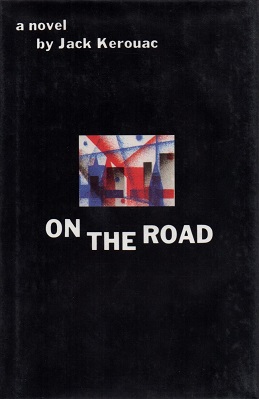
Jack Kerouac's On the Road, from 1955, is the standard text of the so-called Beat generation, as it includes all that the Beats valued: jazz, freedom, sex, and drugs. Exchange “rock n' roll” for “jazz” and you have the perfect recipe for proto-hippies -- so the novel's influence is easy to see. On the Road follows its narrator, Sal Paradise, on several impromptu road trips across the country, most of which are inspired by or done in quest of beatnik cowboy, Dean Moriarty, who seems to embody “the ragged and ecstatic joy of pure being.” His crazy, no-holds-barred approach to living inspires Sal, even though it frequently wounds him and their group of friends. Sal and Dean spend a lot of time raving about the concept of “IT,” and the book functions, in some ways, as their quest after this noble ideal. Just what is “IT?" Well, in the words of Dean Moriarty, “now you’re asking me impon-de-rables...” but the closest the characters seem to come to experiencing “IT” is in jazz clubs. Speaking of experiencing “IT” in the music of an alto sax player, Moriarty enthuses: 
All of a sudden somewhere in the middle of a chorus he gets it -- everybody looks up and knows; they listen; he picks it up and carries. Time stops. He’s filling empty space with the substance of our lives, confessions of his bellybottom strain, remembrance of ideas...with such infinite feeling soul-exploratory for the tune of the moment that everybody knows it’s not the tune that counts but IT --
As a Christian, it’s hard not to see the protagonists’ quest for “IT” as a quest for spiritual fulfillment. That they come closest to finding it in the beauty of complex free jazz is telling for me, as it speaks to the pull of the human soul toward beauty, leading to that which is truly Beautiful. However, for all that is beautiful, joyous and exuberant in this classic novel, it is important to note that On the Road is pervasively lonely. Love is almost never kept and goodbyes are prevalent; such is life on the road, and the narrator, Sal, constantly speaks of his lonesomeness. Sal is also a veteran of World War 2 --  though this is not something that the novel plays up -- and each GI check that Sal receives is a reminder that, to the characters in On the Road, life is undeniably altered, post-war. This post-war setting may account for the novel's simultaneous joy and darkness: joy, because life is recognized as short and precious in light of war, and darkness, because ordinary life will never be dangerous or fulfilling enough after the war, and the spectre of loss and death will continue to haunt Sal no matter how many road trips he takes. The book’s tension between joy and loneliness is the tension of every human being living in a world that is both already redeemed, yet caught in the in-between place where life does not live up to what we feel, in our hearts, that it should be. Like Sal, we’re all just on the road, looking for “IT,” maybe enjoying some good music on the journey. But I didn’t need to tell you that -- Kerouac already told us that “the road is life.”

(this has been another entry in our series of book discussions for National Book Month)

Monday, October 8, 2012

Les Misérables - The Sympathetic Christian

When I read Les Misérables in high school I wasn't expecting to like it.  I didn't really like much of anything that I was asked to read in high school (a combination of my sense of rebellion and the fact that we usually had to read girly books) and I figured this was just another sappy period story.

So I tried my best to hate it.  I'm not sure why we do things like that when we're young, but if Ms. Winfrey had handed me an X-Men comic book I would have found a way to hate it because that's what you do when you're a head-strong teenager who's been handed classic literature.  But the story overcame my immaturity (quite a barrier) and became one of my favorites.

I noticed that the main character (Jean Valjean, and his mentor, Bishop Myriel) were living out the Christian faith that I was trying to understand.  (Yes, even young church-going boys are rebellious about reading books in class, apparently.)  I became fascinated by the acts of Valjean  because they were so self-sacrificing and loving.  Could I make the same hard decisions that he made?  Would I give my uniform to save the life of a soldier if it meant likely forfeiting my own life?  Bishop Myriel gave his large, comfortable house to the hospital so they could treat more wounded and then moved himself and his staff into a much smaller home - would I do something like that?  These characters made me question if I really knew how to live out the faith that I claimed to have.

(At this point, those of you who've only seen the musical don't know what I'm talking about.  In that production, the villain, Javert, is also a religious person, which obfuscates the role of Christianity as it was presented in the novel.)

Possibly the most impressive part of the story is when Valjean owns up to his actions.  Valjean's old crime has been blamed on someone else and Valjean steps up and takes the blame even though it means going to prison.  By this point in the story he's already turned away from his life of crime so it seems unfair that he's going to prison for something that he has atoned for.  But Valjean knows it's wrong to watch someone else suffer for his crimes so he steps forward and takes the punishment.  (No matter how much you scream at the book he will do this every time.)

But what's really remarkable is how rare such a character is.  Have you seen a Christian portrayed sympathetically, lately?  Do the Christians in movies turn out to be self-sacrificing people?  Or are they Bible-quoting lunatics and sanctimonious snobs?  This is a rare book, and probably the best one I've ever read.

(P.S. - Thanks Ms. Winfrey!)

Wednesday, October 3, 2012

My featured book: "The Lost Letters of Pergamum"

 As a preteen I read fiction all the time. I couldn't get enough of it. Nowadays I only read non-fiction except for those occasional times I get it in my brain I need to branch out and read fiction. I usually enjoy it but it doesn't intrigue me now like non-fiction does.

Front Cover
The Lost Letters of Pergamum
I believe story is important. Even in non-fiction writing if it doesn't hit on elements of 'story' the writing is dull, boring and encyclopedic. I tend to fill my need for story and imagination mainly through television. This seems to put me on a lower culture wrung in many people's minds. I've studied a bit in script writing and it's not easy. I can't imagine having to make the sets, costumes, shoot and edit a television show or movie. It's hard. Some things on television are poorly done and trashy but some books are too.

Okay, back on topic. For October book month I'm featuring The Lost Letters of Pergamum by Bruce Longenecker. In seminary I had to read this book and enjoyed it much more than I thought I would. I typically cringe at historical fiction. As an analytic left-brainer putting up with the fuzzy or made-up details I feel fill most historical fiction books drives me nuts. Usually historical fiction authors are writers who decide to write a book based in a different time period and then spend six months to a year researching the time period to find some accuracies to add to the writing.

In The Lost Letters the author has a Ph.D. in Theology and is an expert in the New Testament. This means that when he writes about the time period of the New Testament he comes from the point of view not of a writer trying to find a good topic but of someone who through his extensive study dreamt up a story he wanted to tell. He also takes pains to make sure the reader understands what is purely fiction and what is not with an explanation at the beginning and an appendix.

I also like this book because it helped me understand how people during the New Testament time period wrote and transmitted letters. It filled in for me many of the blanks about how letters in the New Testament came to be in such widespread use. Since I live after the invention of the printing press my ability to fully understand how this worked was beyond me. The use of story and imagination filled in the gaps that non-fiction couldn't and for that I'm appreciative.

The book tells the story of a man that starts reading Luke's history about Jesus and begins wondering about what is true or not. The story accounts a series of letters recently discovered nowadays and published in a book for current day readers to read. The letters are correspondence from Antipas to Luke and others during the time Antipas was reading and learning about Jesus. It's a great read!


Monday, October 1, 2012

The Theological Importance of Reading Fiction

Several months ago, I wrote a post called "The Theological Importance of Imagination" in which I attempted to dispel that nasty Modernist rumor that imagination is childish at best and evil at worst. I discussed how imagination is childlike and as such, essential to faith, hope, and love.

Since imagination is so vital to Christianity, we ought to be keenly interested in developing our capacity for imagination and prayerfully disciplining our hearts and minds, for imagination can be employed viciously just as it can be employed lovingly. This, like most true Christian work, is countercultural.

I argue today, as you may guess from my title, that reading fiction is one of the best ways to cultivate our capacity to "envision that which is not," as JK Rowling puts it, and reading good fiction is a way of disciplining ourselves in virtue.

This is not Anna Karenina.
(Fan-fiction is the funnest!)
The most common expression of a loving imagination is empathy, the ability to "think [our]selves into other people's places." Empathy always results from reading good stories. When we read good stories, we enter a reality through the perspective of an other: a narrator or character or multiple narrating characters. When we're reading a fictional reality through first person narration, we've put ourselves, not merely in the shoes, more like in the skin of that other, walking around in that new skin for sometimes hundreds of pages.

I've never been to Russia in "real life." But I've spent months there, in the 1870s no less, with Anna Karenina. And through the people I met in 19th-century Russia, I learned about human nature, love, forgiveness, and a tiny bit about early turn-of-the-Industrial-century farming too.

Fiction helps us empathize with individuals and people groups we don’t understand, whether because of long distances of time and space and/or large gaps between their ideology and ours. This is huge. What we don’t understand we fear. When we act out of fear, we fail to live by faith and act out of love. So fiction serves as a bridge to other people, but it also works to connect us to the Other, to God. We need imagination to envision the Kingdom of God, a world which Jesus said is here but not yet here. We need our God-given imaginations to pray, Father, make it on Earth as it is in heaven. Fiction helps us go there, helps us engage our imaginations by journeying us to otherworldly places like Narnia and Hogwarts and Middle Earth. When stories depict light and life and love, they are, whether we realize it or not, whether the author intended it or not, pointing us to the Source of light, life and love, to Light, Life and Love himself.

I have a difficult time imagining the world completely devoid of hope, but when I first read Heart of Darkness, my capacity for understanding and empathy expanded. Heart of Darkness is a stunningly crafted world that is horrendously bleak, desolate, and violent. It's a world in which depravity has rejected grace. I have never experienced such a world in "real life," but reading this story gave me compassion for those who have.

Even when novels and short stories show us the shadows, when we’re forced to face all that is dark and dead and ugly in the world (and in our hearts), this too points to Christ. Like the negative of a photograph shows us what should be fully there but isn’t, dark, "ugly" art shows us our fallen condition and points to the realities that begin to take shape when God is taken out of the picture, when sin has pushed him out of the framework of our lives.

Frederick Buechner, one of my favorite writers, puts it this way:
There would be a strong argument for saying that much of the most powerful preaching of our time is the preaching of the poets, playwrights, novelists because it is often they better than the rest of us who speak with awful honesty about the absence of God in the world, and about the storm of his absence, both without and within, which, because it is unendurable, unlivable, drives us to look to the eye of the storm [to God himself]. (Telling the Truth: The Gospel as Tragedy, Comedy, and Fairy Tale 44)
In short, reading good fiction... by which I don't mean only 1000-page Russian novels and horribly dark high school required reading... reading good fiction is a remarkably fruitful form of spiritual discipline and spiritual formation.

October is National Book Month. We here at Thinking through Christianity, naturally, are celebrating. In the next few weeks we'll be discussing our favorite books, so I thought I'd tee up the ball and introduce our upcoming series by talking about why we think good books are worth celebrating and discussing on a site about a faith tradition that sometimes eschews itself from fiction.