This burns me up to no end.
I've gone to a lot of churches. Small intimate ones (30-40 in attendance) and exciting mega-churches (with 6,000 each Sunday). I've never met anyone who hated Gay people. I've never been told to hate gays. I've read the Bible front and back and it simply does not teach hatred. In fact, quite the opposite.
I grew up in a Southern Baptist Church in Paris, Tx. It was traditional, old-fashioned, and not very edgy. (It was difficult for the older crowd when a kid showed up with something shaved into the back of his head.) But the most important teaching I ever received about homosexuals came from this church.
I was a young man (middle school?) and had only a little understanding of what homosexuality was. We had two television channels in our town so I probably learned about this from watching shows like Picket Fences. Anyway, in every TV show involving gays an entire society would be nervous and uncomfortable about the new guy in town and his alternative lifestyle. I learned from the television that I was expected to treat homosexuals with caution. I didn't understand why.
Later, in church, Pastor Fortenberry told us about a congregation that had shown love to a local gay man by befriending him instead of shunning him. They did not shove a Bible down his throat and did not treat him differently. On TV, gays were treated with hostility, but in my church I was being taught to show them love. Every time I have heard about homosexuality in church it has been a repetition of this same teaching; within Christianity there seems to be solidarity here.
I know that there are exceptions. I know that there have been some fools who have used the Bible to justify their hatred, but I grew up in the Bible belt and have yet to meet one of these rare individuals. The church is not the enemy of the homosexual community and every Christian must work hard to overcome the hateful image we have unfairly been given.
Saturday, March 28, 2009


Friday, March 27, 2009
My Arm is Bleeding and I'm Hungry. But I Got a Free Shirt.
It's harder to get free stuff, these days. It used to be you could go to some event and someone would hand out free shirts, but today you have to go through the trouble of giving blood.
I always try to give blood when the blood-mobile shows up on campus. It saves lives and I am impressed at the people I see there. I have never given blood without meeting people in line who are terrified of needles but have decided to overcome this in order to help. It would be easier for these people (mostly college students) to sit in their dorm room or hang out on campus, but they serve others by going through the excruciating process of facing a needle. It's not bad for me, but when I see what some of the "needle-phobes" go through it causes me to admire them. (I'm always tempted to tell them that the needle is really really big and hurts a lot, but they are going through enough.)
This time around I learned that the person who draws blood is called a phlebologist, a term so obscure you can't find it on Wikipedia. I didn't know that.
I always try to give blood when the blood-mobile shows up on campus. It saves lives and I am impressed at the people I see there. I have never given blood without meeting people in line who are terrified of needles but have decided to overcome this in order to help. It would be easier for these people (mostly college students) to sit in their dorm room or hang out on campus, but they serve others by going through the excruciating process of facing a needle. It's not bad for me, but when I see what some of the "needle-phobes" go through it causes me to admire them. (I'm always tempted to tell them that the needle is really really big and hurts a lot, but they are going through enough.)
This time around I learned that the person who draws blood is called a phlebologist, a term so obscure you can't find it on Wikipedia. I didn't know that.
Wednesday, March 25, 2009
China Calls for WorldWide Currency. Evengelicals Wet Themselves (Predictably).
China has recently recommended we fix the worldwide financial crisis by introducing a new worldwide currency.
Let me make sure that last part sunk in. If you are not aware, there is already a single currency that is pretty much running the world:

And if you don't honor the dollar, you don't do business. We don't need to print a single form of currency in order to have one single form of money, the dollar already shape shifts into the Euro and the Yen all over the world and all of those countries may as well be using dollars. Anyone with oil reserves or diamond mines as wealth measures that wealth by it's value in American money.
This paradigm may be on its way out as we see the dollar weaken. China thinks that it should be replaced so that when the dollar drops everyone's individual reserves do not also drop. This isn't a bad idea, but it has brought about the expected result from fringe evangelical websites. The leading rumor (now that W is no longer the anti-Christ) is that Obama is behind this. One of his colleagues recently spoke in favor of the new currency before retracting his comments. Obviously, this is because Obama is secretly plotting to change our money to this New World Currency before placing marks on our wrists and foreheads and presumably growing horns.
Every end times enthusiast I know of thinks that China and Russia are evil co-horts of the anti-Christ and the fact that Russia has also been calling for a one world currency has not escaped their notice:
The revival of the old Roman Empire called for in Daniel 7:7-24 will be economically based and need a one world currency. The economic capital of the world during the last 3 1/2 years of the Tribulation Period will be in the Middle East in Babylon, modern day Iraq...[a] one world currency as called for by Russia and China is indeed a page out of Bible prophecy and setting the stage for this economic prophecy to be fulfilled.
Here's another point of view for those of you who are, in your naive complacency, are not worried about anything:
Many Christians like to think that the events of the book of Revelation are far off into the future or they won’t ever see these things come to pass; partly from unbelief and partly from fear. I can assure you of two things; these things will indeed come to pass (shortly it appears)...Prophecy is being fulfilled almost daily it seems and this move to a one-world currency, which will happen, is just another prophetic link being fulfilled...
This is not constructive. I have referred to these individuals as the Desperate Dispensationalists before. The sky is falling and it's time to worry about persecution instead of loving our neighbors and carrying out the work of The Kingdom. Most of the theologians I know do not interpret Revelation in the "Left Behind" tradition and do not see the violent political thriller that some of us have been instructed to see when we read that book. People have been using world events to cry out "tribulation" for a very long time and all of them are now considered to be silly alarmists. Don't be one of them. Instead, be remembered for spreading love and Truth to those around you.
Let me make sure that last part sunk in. If you are not aware, there is already a single currency that is pretty much running the world:

And if you don't honor the dollar, you don't do business. We don't need to print a single form of currency in order to have one single form of money, the dollar already shape shifts into the Euro and the Yen all over the world and all of those countries may as well be using dollars. Anyone with oil reserves or diamond mines as wealth measures that wealth by it's value in American money.
This paradigm may be on its way out as we see the dollar weaken. China thinks that it should be replaced so that when the dollar drops everyone's individual reserves do not also drop. This isn't a bad idea, but it has brought about the expected result from fringe evangelical websites. The leading rumor (now that W is no longer the anti-Christ) is that Obama is behind this. One of his colleagues recently spoke in favor of the new currency before retracting his comments. Obviously, this is because Obama is secretly plotting to change our money to this New World Currency before placing marks on our wrists and foreheads and presumably growing horns.
Every end times enthusiast I know of thinks that China and Russia are evil co-horts of the anti-Christ and the fact that Russia has also been calling for a one world currency has not escaped their notice:
The revival of the old Roman Empire called for in Daniel 7:7-24 will be economically based and need a one world currency. The economic capital of the world during the last 3 1/2 years of the Tribulation Period will be in the Middle East in Babylon, modern day Iraq...[a] one world currency as called for by Russia and China is indeed a page out of Bible prophecy and setting the stage for this economic prophecy to be fulfilled.
Here's another point of view for those of you who are, in your naive complacency, are not worried about anything:
Many Christians like to think that the events of the book of Revelation are far off into the future or they won’t ever see these things come to pass; partly from unbelief and partly from fear. I can assure you of two things; these things will indeed come to pass (shortly it appears)...Prophecy is being fulfilled almost daily it seems and this move to a one-world currency, which will happen, is just another prophetic link being fulfilled...
This is not constructive. I have referred to these individuals as the Desperate Dispensationalists before. The sky is falling and it's time to worry about persecution instead of loving our neighbors and carrying out the work of The Kingdom. Most of the theologians I know do not interpret Revelation in the "Left Behind" tradition and do not see the violent political thriller that some of us have been instructed to see when we read that book. People have been using world events to cry out "tribulation" for a very long time and all of them are now considered to be silly alarmists. Don't be one of them. Instead, be remembered for spreading love and Truth to those around you.
Monday, March 23, 2009
Let's Talk About the Emergent Church
I haven't had any good experiences with the emergent church. As this article states:
The emerging church movement solidified in only its most theologically liberal segments. The Emergent church movement which comprised part of the emerging church movement embraced theologically liberal ideas about ecumenism, the role of the Bible, and the theology of the Trinity. The views of the Emergent church were often not something that represented the whole of the emerging church movement...

As usual, the most annoying part of a group ends up being it's most vocal and most notable. Still, the only emergent church people I've ever known were young "know-it-all" types who wanted to change "the system" and fight "the man" with a new type of church experience. It never seemed authentic and was not paired with Christian love.
Seminary Professor and author, Mike Wittmer has spent time confronting serious theological issues within the emergent church movement, such as this blog post in which he details a leader of this movement unashamedly disagreeing with the Apostle Paul in his interpretation of sin.
The most common refrain heard from the emergents (other than the word "post-modern") is that how you live is more important that what you believe. This stance has led many to claim that it doesn't matter what you believe as long as you help the poor and needy. Even though giving aid to those in need is paramount to following Christ this statement is problematic on many levels.
Still, other conservative and intelligent voices insist that I am wrong. There are (I'm told) numerous examples of the emergent church that do not involve bad theology and an "us vs. them" mentality against big churches. According to this article (that my friend Dan pointed out) the emergent church is a Christian movement with a few "fringe" members who voice minority opinions that the rest of us find troubling. (I'd like to believe this, but ChristianityToday.com has lost my trust with their "Democratic party propoganda thinly disguised as a theological issue" articles.)
Basically, I'm just not convinced. I think the emergent church is going to go the same way as the Seeker Sensitive movement, that is, it will be swept under the rug. What do you think? Am I being too hard on them?
The emerging church movement solidified in only its most theologically liberal segments. The Emergent church movement which comprised part of the emerging church movement embraced theologically liberal ideas about ecumenism, the role of the Bible, and the theology of the Trinity. The views of the Emergent church were often not something that represented the whole of the emerging church movement...

As usual, the most annoying part of a group ends up being it's most vocal and most notable. Still, the only emergent church people I've ever known were young "know-it-all" types who wanted to change "the system" and fight "the man" with a new type of church experience. It never seemed authentic and was not paired with Christian love.
Seminary Professor and author, Mike Wittmer has spent time confronting serious theological issues within the emergent church movement, such as this blog post in which he details a leader of this movement unashamedly disagreeing with the Apostle Paul in his interpretation of sin.
The most common refrain heard from the emergents (other than the word "post-modern") is that how you live is more important that what you believe. This stance has led many to claim that it doesn't matter what you believe as long as you help the poor and needy. Even though giving aid to those in need is paramount to following Christ this statement is problematic on many levels.
Still, other conservative and intelligent voices insist that I am wrong. There are (I'm told) numerous examples of the emergent church that do not involve bad theology and an "us vs. them" mentality against big churches. According to this article (that my friend Dan pointed out) the emergent church is a Christian movement with a few "fringe" members who voice minority opinions that the rest of us find troubling. (I'd like to believe this, but ChristianityToday.com has lost my trust with their "Democratic party propoganda thinly disguised as a theological issue" articles.)
Basically, I'm just not convinced. I think the emergent church is going to go the same way as the Seeker Sensitive movement, that is, it will be swept under the rug. What do you think? Am I being too hard on them?
Thursday, March 19, 2009
The Southern Baptist Meets the Evolutionist...and Finds Out He's Really OK!
 A few weeks ago I was able to attend a lecture by the well known biologist Sean B. Carroll. You may not have heard of him, but in the field of evolutionary development he is Elvis Presley. I got to hang out with him before and after the lecture and was very impressed with him. If I accomplish nothing else in this blog post, I want to establish that I have a great amount of respect for this Darwinian evolutionist. He describes himself as "a kid just trying to have fun" and he is very warm and upbeat in his dealings with people.
He gave us a fantastic description of Darwin and how he developed theories that seemed to decry special creation (as it was understood at the time).
Darwin was sailing near the Galapagos Islands hoping to check out a nearby volcano (he had been trained as a geologist and was also preparing to enter a seminary) when he made his well known observations. While visiting the Galapagos he noticed that the same species on two different islands had developed differently, which was something that, at the time, was not allowed under the theory of special creation. Being sensitive to the religious, Darwin would lightly promote his findings, in conjunction with similar finding of other biologists, without pressing the matter in a way that would offend the church.
While listening to this lecture, something occurred
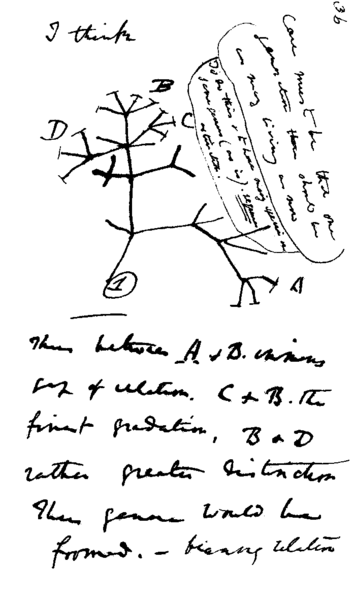 to me. Despite everything I have been taught, there is nothing about this I find unbiblical. I do not believe that God must hold each planet in place; I think He created gravity to do that. I also don't think he had to form each creature by hand, I think it's possible he allowed creatures to evolve as part of the complex biology He placed in them. You don't have to be convinced that it happened this way, but I don't see how it creates any theological problems.
Now, let's get a few things clear:
- I believe that the Bible is without error...
- ...that God created man in His image...
- ...and, that everything in the Bible happened just as it says.
Thursday, March 5, 2009
Blogging the DBU Paideia Conference - Part 3

The heart of the Paideia Conference is when papers are read. Each attendee is able to attend a number of papers about a great variety of topics read by some remarkably intelligent students. These papers discuss almost everything an intellectual could ask for, including issues of faith, purely scientific papers, and examples of literary theory, such as an analysis of "The Love Song of J. Alfred Prufrock" (Which my wife attended, but I didn't, so I asked her to keep a copy of it). A list of all the papers can be found here (pdf).

Jake Rogers gave an excellent talk about the theoretical state of consciousness in alternate realities, an issue being discussed by experts in the field of the philosophy of the mind. Most people probably think Christians sit around singing Kumbaya and asking Pat Robertson about metaphysical issues, but that's not the case.

Obviously this picture came from Amos Barker's Facebook profile, not the conference. He discussed the tricky exegetical habits of Origin. It was one of the most well written papers I have ever read and I really hope I can create papers as good as that some day. He's also a nice guy, as you can see in this photo where he is wrestling newborns.

Carrie Hamilton discussed the redemption story as it shows up in literature (and in movies today), particularly Beowulf and Piers Plowman. It's one of my favorite topics and she handled the material and the discussion quite well. J.R.R. Tolkien was smiling somewhere.

Blake Carlisle discussed the effects of the Renaissance on Italian social unity. He's not a historian, primarily, but I was impressed with how well he handled the historical side of this paper since it involved things I have been studying of late. It was an excellent paper on an issue I've never heard discussed. (Italian history is always swept under the rug.)

Shiffer on Schaeffer. Ph.D. student Scott Shiffer (pictured here with the rock band Petra) gave a discussion on the beliefs of Francis Shaeffer concerning the sanctity of life. It was illuminating and brought up some excellent discussion points that I will be pondering for quite some time. (This, maybe, should be the goal of all of these papers.)

Mark Boone used the conference as an excuse to show off his Lord of the Rings action figures. Just kidding, Mark told us about Augustine's "Egyptian Gold" analogy, how it related to the philosophy of Augustine's day, and how it relates to the thinking of our own time. Mark is probably the most impressively eclectic philosopher I know; he doesn't live in Plato's cave or in Hume's doubts, but he juggles the best teachings from ancient, modern, and post-modern philosphers and the Bible.
 While Mark spoke, his son, Jeremiah, paid pretty good attention. It's neat that the babies of these scholars grow up thinking intimate acoustic concerts and intellectual readings are a normal part of life. Notice that Dr. Naugle is in attendance as well. This is something of a mixed blessing because the presenter gets some bragging rights to say they spoke to Dr. Naugle but they also might get some tough (but good) questions.
 In the evening, we were treated to the music of a beautiful woman (who you can book here). It's my wife, of course, who was asked to fill in with some music at the last second. She did quite well. That's Dr. Naugle's ovation guitar; he's a guitar player and a drummer.
The conference was a rousing success. Dr. Naugle never ceases to amaze me with his connections, his wisdom, and his ability to put on professional enjoyable conferences that include some of the smartest people I will ever know. (He also writes good books.) You will do yourself a favor to try and join in on the excitement next year.
Wednesday, March 4, 2009
Blogging the DBU Paideia Conference - Part 2
Our featured speaker at the Paideia conference was Mike Wittmer, a professor of theology at Grand Rapids Theological Seminary and author of two books that reveal his social-theological perspective as well as the fact that he grew up listening to questionable 80's bands. (The books are titled Heaven is a Place on Earth and Don't Stop Believing, I would have called them He's a Real NoWhere Man and What is and What Should Never Be, respectively, but no one's ever published me, so what do I know? )
I was impressed at how well he knew church history and how competently he was able to discuss theology alongside philosophy. His knowledge is very up to date and relevant, which made him an excellent speaker for such a conference.

His main topic at lunch was the emergent church. Even though they sound really neat, the emergent church is full of theological issues that put them at odds with actual Christianity. In a respectful manner, Mike Wittmer pointed out these problems and discussed his experience in confronting actual leaders of the movement. It's good to have a sound theologian out there combating the problems that the emergent church is creating for the rest of us.
In the evening, he discussed the topic of how we can really know anything at all. Can we know there is a God? Are we just hoping to be right in the end when we place our faith in Him? What do we say when non-believers say our faith is silly? God proves Himself to us, but we can't exactly prove Him to others; it's tough to be an intellectual in this type of conversation and our speaker discussed this delicate issue very proficiently. If people like Matt have anything to do with it, the damaging postmodern trends that are showing up in our churches will not have lasting negative effects.
(Notice I didn't say all post-modern trends, not all of them are bad, but the bad ones are often the result of abusive post-modernism, but enough of that for now.) Here's Mike's blog where you can buy his books and interact with him through his posts.
 Mike Whittmer gave us two fantastic lectures and took questions from everyone on many subjects. Not many scholars are so competent at being inter-disciplinary.

 Mike Whittmer delightfully holds up the coveted Pew Society mug awarded to scholars who headline this conference making him the envy of every author, pastor, and philosopher. (Citation needed)
I was impressed at how well he knew church history and how competently he was able to discuss theology alongside philosophy. His knowledge is very up to date and relevant, which made him an excellent speaker for such a conference.

His main topic at lunch was the emergent church. Even though they sound really neat, the emergent church is full of theological issues that put them at odds with actual Christianity. In a respectful manner, Mike Wittmer pointed out these problems and discussed his experience in confronting actual leaders of the movement. It's good to have a sound theologian out there combating the problems that the emergent church is creating for the rest of us.
In the evening, he discussed the topic of how we can really know anything at all. Can we know there is a God? Are we just hoping to be right in the end when we place our faith in Him? What do we say when non-believers say our faith is silly? God proves Himself to us, but we can't exactly prove Him to others; it's tough to be an intellectual in this type of conversation and our speaker discussed this delicate issue very proficiently. If people like Matt have anything to do with it, the damaging postmodern trends that are showing up in our churches will not have lasting negative effects.
(Notice I didn't say all post-modern trends, not all of them are bad, but the bad ones are often the result of abusive post-modernism, but enough of that for now.) Here's Mike's blog where you can buy his books and interact with him through his posts.
Mike Whittmer gave us two fantastic lectures and took questions from everyone on many subjects. Not many scholars are so competent at being inter-disciplinary.The talented Jake Rogers led us in singing some wonderful old hymns; earlier that day he had read a paper about mental states in hypothetical realities. I'm not kidding.
Mike Whittmer delightfully holds up the coveted Pew Society mug awarded to scholars who headline this conference making him the envy of every author, pastor, and philosopher. (Citation needed)Stay tuned for one more blog entry about the papers that were read over the weekend!
Tuesday, March 3, 2009
Blogging the DBU Paideia Conference - Part 1
Last year's conference was a tough act to follow, particularly in the area of music. After hearing Jon Foreman, Jordan Lawheed, and the venerable Charlie Peacock (see photos of last year's event here) in concert, it seemed like the conference had reached it's apex. I was pleasantly surprised when this year's concert was just as enjoyable.
The night began with the music of the charming April Geesbreght. Her songs were beautiful and engaging, as well as enlightening. She normally plays with a band but we were treated to an intimate acoustic session which went very well.
 April Geesbreght explains her next song while adjusting her capo.
 Scott and Lindsy Shiffer, along with their baby maren, watch April's show.
 Pierce plays these two guitars that were hand-made in Ireland from different companies. He told me that he waited all of his life to have then and they sounded amazing all night. (He also told people that they were made by leprechauns.)
 On a break, Pierce was nice enough to chat with me while he tuned his guitars. He plays through a direct box with a tube that gives his guitars a lot of presence without too much compression. It sounded amazing.
The night began with the music of the charming April Geesbreght. Her songs were beautiful and engaging, as well as enlightening. She normally plays with a band but we were treated to an intimate acoustic session which went very well.
April Geesbreght explains her next song while adjusting her capo.Scott and Lindsy Shiffer, along with their baby maren, watch April's show.The main performer of the evening was Pierce Pettis who, as the saying goes, "doesn't write music, he writes literature." I can't think of a better way to describe his lyrics. He is a well known folk musician who often writes songs for other people, including Garth Brooks and the wonderful Sarah Groves. On his own, he is an amazing performer. I have rarely seen such virtuosic guitar playing (his approach to the acoustic is similar to that of Lindsey Buckingham) come from such a brilliant songwriter. His lyrics encouraged me and made me think, while his playing blew my mind. A rare experience. (He's also a darned good harmonica player.)
 In the wings, Pierce Pettis tunes his guitars up waiting for his turn.
In the wings, Pierce Pettis tunes his guitars up waiting for his turn.Pierce plays these two guitars that were hand-made in Ireland from different companies. He told me that he waited all of his life to have then and they sounded amazing all night. (He also told people that they were made by leprechauns.)On a break, Pierce was nice enough to chat with me while he tuned his guitars. He plays through a direct box with a tube that gives his guitars a lot of presence without too much compression. It sounded amazing.After the show, Pierce hung around and talked to his fans, the new ones he had just made and the ones who have known him for a long time. He talked about his exceptional career and confused the musicians by explaining his bizarre but effective alternate tunings. (Open c-minor with a dominant 7 + suspension? Something like that.) I bought one of his CD's and have been happy with it, if you're into singer/songwriter stuff you might consider it. (I don't work for him, this is a genuine recommendation.)
The opening act of the Paideia Conference was a rousing success. Look for two more blog posts this week to see how the rest of the 12th Annual DBU Paideia conference went.
The opening act of the Paideia Conference was a rousing success. Look for two more blog posts this week to see how the rest of the 12th Annual DBU Paideia conference went.
Subscribe to:
Posts (Atom)