Monday, March 31, 2014

Religion Vs. Relationship


Today some people prefer to say that they are spiritual but not religious. Some claim that Christianity is a relationship not a religion. Recent studies show that America is becoming “less religious.” These ideas lead me to two questions: First, is it really possible to be spiritual without being religious? Second, is it possible to be in a relationship with God without being part of a religion?

The idea of being a spiritual person is that one focuses on things pertaining to the soul as opposed to the physical world around us. Many religious beliefs have to do with the inner nature of humanity, not the physicality of a person; therefore, a spiritual person tends to frequently contemplate religious beliefs.

A religion is “an organized system of beliefs, ceremonies, and rules used to worship a god or a group of gods” according to Webster’s Dictionary (I know not the most academic source, but it is a good basic definition). Someone who follows these beliefs, ceremonies, and rules would then be a religious person. (Note: Buddhism does not focus on a god or gods, but is typically considered a religion because of its organized belief system and the ceremonies and rules practiced by its followers.)

So if the studies are correct in affirming that people remain spiritual but less religious, it would seem that people contemplate the things of the soul, but do not allow those contemplations to alter how they live. Why is that?

Religion and religious people have gotten a bad name in recent times. Religion sounds rigid and structured, not free and exploratory. Many religious people have been proven to be false teachers and hypocrites—not just in Christianity…but especially in Christianity.

In our relativistic culture, people like to choose their own truth. This involves picking and choosing what aspects of faith they want to accept and practice. Some people reject certain claims of the Bible or write them off as archaic.

This brings us back to the original two questions; can someone be spiritual without being religious? Yes, it would seem that one can so long as the person does not fit into traditional religious molds. However, this new spirituality has a relativistic structure. Because it rejects and accepts some practices it creates an amalgamated idea of who God is.

This brings us to our second and more important question; can people have a relationship with God without being part of a religion? To this question, I would argue that they cannot. Why? Because religion is necessary for defining who God is. Without it, we cannot really know much at all about the being we claim to know.

Is religion doomed? Is religion so legalistic and rigid that it is no longer relevant or needed? Absolutely not, when practiced with integrity religion can lead people into deeper spirituality that will alter how someone lives. But in order for this to happen, one must not get bogged down in the hypocritical practices rampant in churches today which foster the kinds of legalism that kill the spiritual life of a congregation.

To put it differently, one cannot accept religion in a piecemeal fashion. Doing so undermines the authoritative practices of any faith. Accepting part of the Bible is like accepting part of who God is but rejecting part of who he is at the same time. To be truly spiritual, to walk in a relationship with God, one must know the practices (beliefs, ceremonies, and rules) of a faith. These practices become a map for leading people into a deeper faith enhancing the person’s relationship with God.

Friday, March 28, 2014

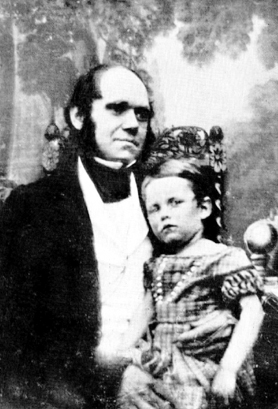
Reports of Darwin's Deathbed Conversion Have Been Greatly Exagerrated

Use the plagiarism checker at Grammarly.com, because cheating is for losers.

It's an enduring tale that we've all heard: while Charles Darwin laid on his deathbed he threw out his own ideas about evolution and accepted Christianity. It makes for an interesting story, but it's completely false.

The tale was made up by Elizabeth Cotton (also known as "Lady Hope" for some reason). She claimed to have visited Darwin on his deathbed where she saw him reading his Bible and complaining about people taking his theories too seriously. (The story can be read in its original version at Wikipedia.) According to Cotton, Darwin told her that he was wrong about evolution and wanted her to tell his friends and family about Jesus. The story reads like a tall tale, complete with emotional appeals and unrealistic dialogue. And are we really expected to believe that Darwin wanted to discredit all of his life's work and that Elizabeth Cotton was the only person he told?

Darwin's family has always denied the stories of his deathbed conversions. Since many of his family members were Believers they probably would have wanted Cotton's story to be true (at least the part about him finding Christ), but they never supported Elizabeth Cotton's claims and neither have any independent historians.

Charles Darwin is a poorly understood person. He was not an atheist, and he did not consider evolution to be at odds with the church. Plenty of people think his work was pitted against religion (like the people who visit my site and tell me that Darwin "killed God"), but he didn't see it that way. Darwin enjoyed doing science for the sake of understanding the world around him, and he wasn't out to change anyone's religion. Charles Darwin specifically stated that his scientific notions were not a challenge to religion, but people don't like to remember that part.

I've had the pleasure of reading some of his correspondence and discovered among them some rather interesting statements about religion. In a letter to a friend, he says that he attended a presentation of Handel's Messiah and laments that his soul is too "dried up" to appreciate it. In another, his wife wishes he would return to seminary, but understands that he isn't able to go back there. None of these things are explained, at all, but it certainly paints a picture of man who's religious journey was more complex than we like to think.

Wednesday, March 26, 2014

No, an 8-year Old Girl was Not Kicked Out of School for Having Short Hair

Headlines like School says 8-year-old student not feminine enough and Christian school principal says 8-year-old girl not welcome because she dresses and behaves like a boy are all the rage today, but there's more to the story. However, we might not ever hear all of it.

Hopefully, rather than get up in arms about this, all of you went to the school's website to look for a press release. Timberlake Christian Schools did issue a release, and it says that the news stories have got it all wrong. The school did not kick 8-year old Sunnie Kahle out - her grandparents made the decision to remove her. Furthermore, the issue had nothing to do with the length of her hair or the clothes she wore.

So, what is the problem? The school can't tell us because Sunnie Kahle is a minor. The truth may turn out to be something just as horrid as these headlines or it may be nothing, but until we have the facts let's stop taking up arms. For now, be sure to ignore the media's hate-mongering clickbait; they're just trying to stir you up so they can get more viewers.

Four Things We Can Learn About Evangelism (From a Church that is Doing it Wrong)

An old friend who works in a music store sent me this story:

I was asked by one of my customers if I would be the music minister at the Church he pastors. (This was out of the blue one day.) I told him that I was not interested, but thanked him for the offer. He asked why I wasn't interested. I told him that I am an atheist. He began to tell me that I wasn't an atheist and all the reasons why I wasn't. I did my best and held my ground without being rude. (I was working at the time and being rude to a customer is just plain wrong.) 
It gets worse. This pastor finally left - but he sent members of his congregation by every few days to pester this guy about his atheism through arguments. Eventually, his boss at the store (who is a Christian) asked these people to knock if off. For believers who oppose rude evangelism, this sort of thing is embarrassing.

"Today, we launch project 'Annoy That Guy At The Music Store'. Ah, I love the smell of freshly printed tracts in the morning - it smells like victory!"

Here are some points that I want to stress about evangelism:
  • As my pastor recently said, "People should not be treated like projects." Jesus can be represented by showing people love - not by bickering.
  • Arguments are fruitless. I don't know any believer who ever said, "I became a Christian after someone repeatedly shoved anti-atheist arguments down my throat." That's never how it works, so find another approach.
  • Representing Christ on Earth means emulating His humility and compassion. Sure, He had to argue with religious leaders over fine points - but He did not seek out these religious arguments.
  • This one is important - Jesus let people go. When people didn't understand Him and decided to leave He didn't argue with them. We should show as much respect to others. He did not harass them into coming back. This doesn't mean giving up, it just means being respectful. Bickering with someone to the point of making them angry means that they will never want to talk to you again.
I'm not trying to put a muzzle on evangelists; I am trying to direct our efforts in a loving fashion. An old friend of mine liked to remind us that it's not clever marketing or annoying evangelism that will show people the greatness of God - it's love. People are hurting and need to be loved.

Monday, March 24, 2014

humanitarian relief

if i'm just a walking sac
of chemicals, then there's no
such thing as miracles
and caring isn't caring; just synapses
flaring—so tell me, why should i care?

movies end happily, but i can't
for the life of me understand—if
God is dead,
what’s the hurry? why all
this cumbersome worry?
there's no referent and nothing
is definite; so do as you please; forget
poverty, education, disease.

please
tell me why—why
i should care; 
pack my bags and go
over there; pay
plane, bus and taxi
fare? so what
if children don't
eat and people can't
walk down the street without
rape, AIDS, pregnancy to meet?

i get the green thing. i have to live
in this space with all the rest
of this evolving race. but there's no
Telos so Darwin tells us—so why
should i care?

‘cause apparently, we ain't
goin' nowhere.

so i decided i don't care. but
i can't. i mean, just listen
to this rant. there's
care there.
care's there from the start,
presupposing
Science and Art; care
recessed, repressed in
my blood-rent heart.

things aren't
the way they're
supposed to be,
and the Story
of Biology is not
sufficient—they say we're
here on accident but
i need more.

i need more in order
to account
for this life as we live
it. look around and see
people caring, friend and neighbor
sharing—poverty, injustice repairing.
there's care there.

people don't love wholly
right, even when striving with all
our light: we withhold, we
withdraw, we fight; we harbor
anger, we brandish pride; we've all
of us murdered and lied; selfishly denied
truth, justice, mercy.

and yet
there's Care there.
Care echoes
in our tomes, re-
calling
to our breath
and bones
our Original
Shimmering
Start—pulsating,
all along,
in our heart.


(c) Renea McKenzie, 2014

The line breaks have been reworked since this poem's original publishing at Probe.org (which for some reason is still published under wrong title; the title was never "humanitarian aid"). At any rate, the new line breaks (I hope) add layers of meaning and emphasis.

Wednesday, March 19, 2014

7 Things You Didn't Know About The Bible


Here are seven tidbits about the Bible that you may not already know.  These are all well-known to the people (pastors, theologians) that study in the field but is information that rarely makes it into a sermon.

1. We may very well have an original document from the New Testament.

There are some documents from the New Testament that have been discovered that date very close to when the original would have been penned. Much depends on how and when you date both the manuscripts and authorship of them, but it's fun to think about.  (I always had the impression that some of my seminary professors thought it very likely, although wouldn't say it outright since there was no way to confirm it.) 

Part of Papyrus 46.
2. Greek with no spaces and Hebrew with no vowels.

Have you seen on Facebook those memes where words are typed with numbers or characters and you can still read it?  That's similar to how people wrote thousands of years ago.  They relied on the brawn and brains of the readers to figure out all the stuff in between.

3. A woman helped translate the New Testament.

Barbara Aland works as an editor for the  Nestle-Aland Greek New Testament, which is the Greek text translators use to then translate into English. It's a compilation of orginal language manuscripts.  She also played a part in the highly regarded Greek-English dictionary that translators rely on called BDAG

4. Textual Criticism is the field of study relating to old documents. 

Textual Criticism is also not exclusive to Biblical texts but all historic documents.  The techniques in this field can be applied to anything from documents of Shakespeare to a bunch of torn up letters from 100 years ago you found in your attic.  

5. Your Bible tells you how it was translated.

Ever read any of that boring stuff at the front and back of your Bible?  Every Bible I've seen has at least a few pages going over their translation techniques.  Many will have a great deal of information and resources on the topic.  It's actually worth taking a look at every now and then.

6. New Testament manuscripts get categorized by presumed location of scribe.

It's called a text-type and is based on certain distinctions that show up within all the documents in that category.  The three prominent ones are called Byzantine, Alexandrian and Western.  This is actually important to know because different translations are based on the use or combination of different text-types.  The Nestle-Aland (referenced above) uses all text-types but favors the Alexandrian.  The King James Version is based on the Byzantine. 

7. Wondering how that Bible gets into your hands?

It goes something like this:  
  • Start with tons of really old, kinda old and not so old manuscripts in the original language.
  • Someone like Barbara Aland takes those manuscripts and puts them into one original language document like the Nestle-Aland 28. 
  • English speakers use that document to translate into English.  (They may still look at other manuscripts if they feel it's needed.)
  • Often the translators are working with a publisher such as Zondervan, so then the finished translation easily finds its way into your heart home.


Sunday, March 16, 2014

The Most Interesting Fact About St. Patrick is the ONE Thing We Never Talk About

What did Saint Patrick do? The true story of everyone's favorite party saint is fascinating, but every March I'm surprised that no one talks about Patrick's actual past. You've seen him dressed up as a leprechaun, and you might have heard some nonsense about him getting snakes out of his country, but you probably don't know about St. Patrick the abolitionist.

It started when a group of pirates attacked Patrick's city and kidnapped members of his church, forcing them into slavery. Patrick was horrified - but not just because his friends were captured. These were no ordinary pirates; the slavers believed they were Christians, too.

Patrick assembled a group of priests who were brave enough to go to those criminals and beg for the slaves to be freed. It was a brave gamble, but it didn't work, and the priests were turned away. They were forced to walk away without rescuing their friends, hearing the pirates laughing at their backs.

Patrick's next move was to write a letter to the pirate leader (apparently, pirates were pretty literate, back then), and it's this letter that endears him to us.

Patrick said that he couldn't tell who was worse off - the captured slaves or the pirates. Being enslaved is terrible, but being unable to tell right from wrong is awful, too, he said. Patrick had been a slave when he was a boy and he couldn't understand how a group of Christians could justify doing that to someone.

St. Patrick's effort to stop slavery makes him the earliest known abolitionist in Western history. Plenty of people protested their own slavery ("Let my people go!"), but no one had moved to stop the practice altogether as Patrick did. (That we know of.) Unfortunately, we do not know what happened next in Patrick's story - the records are lost in history.

Saint Patrick's work continues: Last week, a government official in India rescued a dozen people from slavery and returned them to their families. One of them was a man who met his daughter for the first time when he returned - the person who enslaved him would not allow him to go home for her birth. It's always hard for me to comprehend how slavery somehow still exists in our modern world.

So while you're drinking green beer or drawing shamrocks this week, remember that St. Patrick stood for what was right when everyone around him was just following the crowd.

(You've probably heard stories about Patrick running snakes out of Ireland or other tall tales, but none of that really happened.  His true legacy, which is much more interesting, is what we should start passing on.)

Wednesday, March 12, 2014

Adoption - What NOT to say

Adoption has become a hot topic lately.  There is all kinds of good news out there - great books, stories about local foster care and adoptionfundraisers for adoptions and orphan care, and a broader comfort level with the subject and the practice.

Unfortunately, out of unfamiliarity, ignorance, or plain carelessness, people often say rude or foolish things about adoption.  This frustrates people involved in adoption.  It often offends them deeply.  It's nice to "mean well" when you speak, but meaning well doesn't erase the careless or hurtful words already spoken.

So, as an adopted person, whose life is invested in the subject, allow me to offer you some tips on what NOT to say when talking about adoption:

What NOT to say to Adopted People

1. Anything at all - without asking first.
Believe it or not, adoption is an intensely personal subject which cuts to the core of who an adopted person is.  It is personal.  It is that person's story, and no one else's (not even their adoptive parents').  Please do not assume that you have a right to delve into the details of a person's adoption unless they give you permission, or they have already publicly expressed their willingness to talk about it in the past.  Even then, tread carefully.  It's personal.

For another perspective on this, click here to read an incredible and piercing article: "My Child's Adoption Story is None of Your Business."

2. Who are your "real" parents?
Stop talking, right there.  Never, ever, under any circumstances, use the word "real" when talking about adoption.  Whether you mean it or not, you are distinguishing in value between my birth parents and my adoptive parents, as if one set are my "real" parents and the other are "not really" my parents.  In a very real sense, both sets are my real parents.  When you want to distinguish between those sets, use more specific, non-value terms like adoptive/biological, or parents/birth-parents.

3. Where are you from from?
Non-adopted people get the privilege of treating this like the normal question it should be:

Person 1: "Where are you from?"
Person 2: "I'm from Odessa.  What about you?"
Person 1: "I'm from Fort Worth.  Hey, I've been to Odessa!"
This naturally becomes a very friendly conversation about who you are, where you grew up, how you got to where you are now.  Very pleasant.  I love knowing where people are from!

But OFTEN, when people know that you're adopted, they don't want to know where you're from.  They want to know where you're from from:

Person 1: "Where are you from?"
Person 2 (adopted): "I'm from Odessa."
Person 1: "Oh, well I mean, where are you from from?"
Person 2: Well, I'm from Odessa, but I was born in San Antonio..."
Person 1: "No, I mean...what is your background?  You know..."

And so on.  Watch the video below (it's instructive, and hilarious). This has happened to me so many times.  So many times.  And it shouldn't.  Now, I'm happy to talk about where I'm from, where I was born, and my ethnicity.  But it is not ok to pass over what is basically human about me (where I grew up) in order to satisfy your curiosity about my adoptive/ethnic past.  (P.S. - I'm 1/4 Korean.  And no - I don't speak Korean. Seriously. Stop asking).


What NOT to say to People Who Adopt

1. ANYTHING in front of their children
If you have a question about a person's children - adopted or not - do NOT ask when their children are present.  You have no idea what those children know or don't know, especially about a subject like adoption.  You have no idea how their impressionable little brains and hearts are processing the information they do know.  I have heard generally nice people ask parents, in front of their adopted children - "Do they know who their real parents are?"  No person - especially a child - should ever have to hear that.  It's not always that bad, but the rule always applies: if it's about the kids, ask the parents when the kids aren't around.

2. Could you not have your own kids?
Stop, right there.  First of all, allow me to politely say: it's not really your business.  Second, like the word "real," you should never, ever, under any circumstances, use word "own" when talking about adoption.  When you use this word, you are distinguishing between parents' children in a way that you should not - "own kid" versus "someone else's kid."  That's not how adoption works.  All their children - adopted or biological - are their "own" children.

P.S. - On a similar note, check out the recent, excellent post which our blogmaster Adam wrote: "Eleven Questions You Can Stop Asking Childless Couples."  Many of the same principles apply, especially the part about us minding our own business.

3. How will you love a child who is not related to you?
I've heard this one in several forms (blood vs. non-blood; own vs. not-your-own, yours vs. someone else's, etc.), most often from other married people.  All forms of this question are unacceptable.  Let me ask you this: are you married?  Did you marry someone from your family - a sibling or a cousin?  No?  Good.  You have now successfully loved someone as your "own" who is not blood-related to you.  We humans do it all the time!

CONCLUSION
I know that most people say these sorts of things not out of meanness, but out of well-meaning ignorance.  I get it, and I will forgive you.  But now I strongly exhort you to do better next time.  In fact, I hope all readers will heed this advice not as a chastisement, but as a loving lesson on how to improve, and love your fellow humans better.

Adoption is not something we should avoid talking about, and it's certainly not something shameful.  It's beautiful and glorious, and I'd love to talk to you about my own adoption.  But it is personal, complex, and often difficult.  Let's talk (or not) about it that way.

Links
I'll leave you with a few random links to helpful material on this subject:
- Adopted for Life: The Priority of Adoption for Christian Families and Churches, by Russell Moore
- "My Child's Backstory is None of Your Business," an article in Christianity Today
- "Transracial Family Gets Double takes "Everywhere we Go" - an interview from NPR
- Father and Son: Finding Freedom, by Walter Wangerin Jr. (who also wrote The Book of the Dun Cow, one of my favorite books in the world.)

Monday, March 10, 2014

5 faith-shaping CCM songs

In light of Adam's post last week about why Christian music is still important, I thought I'd share 5 songs that came from the Contemporary Christian Music genre that have played crucial roles in shaping my faith.

1. "Let There Be Light" by Andrew Peterson. I can think of no better song to summarize the beauty and importance of God's creation relative to our human ability to create in God's image. As I have struggled through my own music and writing projects and through the mundane tasks of ordinary life, I just have to remember Andrew Peterson's words:  "And the work of our hands is the salt of the earth/and the music we make is the light of the world/let it shine, let it shine, let it shine..."


2. "Meant to Live" by Switchfoot. It's really hard to pick just one Switchfoot song, especially from their bestselling album Beautiful Letdown. This one was a mega hit for the band, but I never got tired of its discussion of longing and hope for a better life: "we want more than the wars of our fathers/ and everything inside screams for second life..."


3. "He's Alive," by Don Francisco. This one goes way back, and it's one of my earliest memories of Christian music. In folk-ballad style, Don Francisco relates the tale of the morning of Christ's resurrection, and it's still a moving and hair-raising telling of the story. What we don't know at first is that the story is told from Peter's perspective, and the world-changing significance of the Resurrection becomes intensely personal. When Peter first hears rumors of the resurrection, he thinks, bitterly, "When at last it came to choices, I denied I knew His name/ And even if He was alive, It wouldn't be the same." But when he does see the Resurrected Christ, he encounters a forgiving Lord with open arms: "Guilt in my confusion/ Disappeared in sweet release/ And every fear I'd ever had/ Just melted into peace." Finally, after a Bob-Dylan-worthy eight verses, the song breaks into its hook and refrain: "He's alive, he's alive, he's alive, and I'm forgiven; heaven's gates are open wide."


4. "Shifting Sand," by Caedmon's Call. Even though I've been listening to this album since high school, this song didn't really hit me until college, when the refrain, "My faith is like shifting sand, so I stand on grace," finally came home for me as I began to understand that everything -- even my faith -- was a miraculous work of God's grace.


5. "If I Stand," by Rich Mullins. It's also extremely difficult to pick just one Rich Mullins song, but if I could only have one of his beautiful and insightful pieces, it would be this one, because it sums up most of what I want to say about why and how I believe -- there's "a music higher than the songs that I can sing, but the stuff of earth competes for the allegiance I owe only to the Giver of all good things, so If I stand, let me stand on the promise that you will pull me through, and if I can't, let me fall on the grace that first brought me to you..."


Now, I'd love to hear from you: have any songs, Christian or otherwise, shaped what you believe? (Christian or otherwise)

Friday, March 7, 2014

Eleven Questions You Can Stop Asking Childless Couples. (With Responses.)

My wife and I aren't interested in having children. This never seemed like a big deal, to me, but it's an earth-shattering idea for some people, who lose their minds and start interrogating us like we're screenwriters in the 1960s who accidentally sympathized with communism.

Here's some things you can stop saying to us:


1 - "Why do you hate kids?"

I don't. I'm involved in the lives of children and I think that they are some of the most important people in my life. It's nonsense to assume I don't like children just because I'm not having any of my own.

2 - "Have you asked your wife how she feels about that?"

No, I haven't. I decided we wouldn't have kids without informing her, or even asking her opinion, and she stays perpetually confused about her barrenness. Is that a problem?

Of course, this is a decision to be made as a couple. We discussed this at length while we dated, as any responsible people would do. What sort of monster do you think I am?

3 - "How are you going to avoid having kids?"

This one always makes me pause. In my experience, successfully using birth control is about as difficult as falling down a flight of stairs on roller skates while blindfolded. People like to ask this question, though, with wide, empty eyes as if they truly don't understand. They must think I'm a wizard. Do I really need to explain how this is possible?


4 - "What if you have kids, anyway?"

I'm not sure what people are looking for, with this one. If we get surprised with a child, then...I guess we would have a kid. Is there something else they expect me to say? Maybe people think I haven't considered this possibility, but I have. Any scenario you can come up with is something we have already thought about. The possibility that we might unexpectedly have kids doesn't mean we should change our plans.


5 - "I know people who said they would never have kids...and they did! I think you'll be just like them!"

That's adorable.

6 - "Who's going to take care of you when you're old?"

Robots, probably.

Did you have kids because you wanted to make them responsible for your well-being? Of course not. That's a selfish thing to do, and procreating just to have servants when I'm elderly is a strange idea. You haven't thought this question through.


7 - "Doesn't the Bible say that people should have kids."

No, it doesn't. Believe it, or not, as a licensed minister who studies theology and church history in grad school, I've considered that possibility. I'm planning to have as many kids as  the Apostle Paul, C.S. Lewis, St. Francis, Mother Teresa, and Rich Mullins - combined.

8 - "Why don't you just try having kids and see how you like it."

Now, you're scaring me. You don't "try" being a parent. It's not as if I can return a kid to a store, is it? People know this (I hope), but still ask me to give parenting a test drive by just having one kid. Being a parent is an all or nothing decision.

9 - "You shouldn't say 'never,' because you never know what God's going to do."

You just said "never."

(People say this exact sentence to me, all the time.)

10 - "Are you unable to have kids? Did the doctor say you were sterile? Is your wife the problem? Do you have trouble with...you know..."

Step back.

I know you'll have a hard time understanding this, but those are personal questions that should only be asked by close friends, family members, and anyone who's first name is "doctor." Otherwise, these questions are absolutely inappropriate.

(And, no, it's none of those reasons.)

10 - "Did you have a bad experience as a kid that makes you afraid to be a father?"

No.

Believe it, or not, psychology is a very complex field that is not as simple as it looks on television. Ascribing my activities to personal problems is beyond your capability. Cut it out.

11 - "You Will" (Said with a smug smile.)

 Everyone said this when we got married, because as soon as someone is hitched people are required to ask them about having children as soon as possible. "We're not planning to have any," I would say. "You will," they would respond. No, I didn't.

12 - "But...Children are a blessing!"

So is martyrdom. I don't see you lining up for that one.

St. Sebastian
Martyrdoms: 2
Diapers changed: 0

Wednesday, March 5, 2014

Debating Science is a Waste of Time - Do This Instead


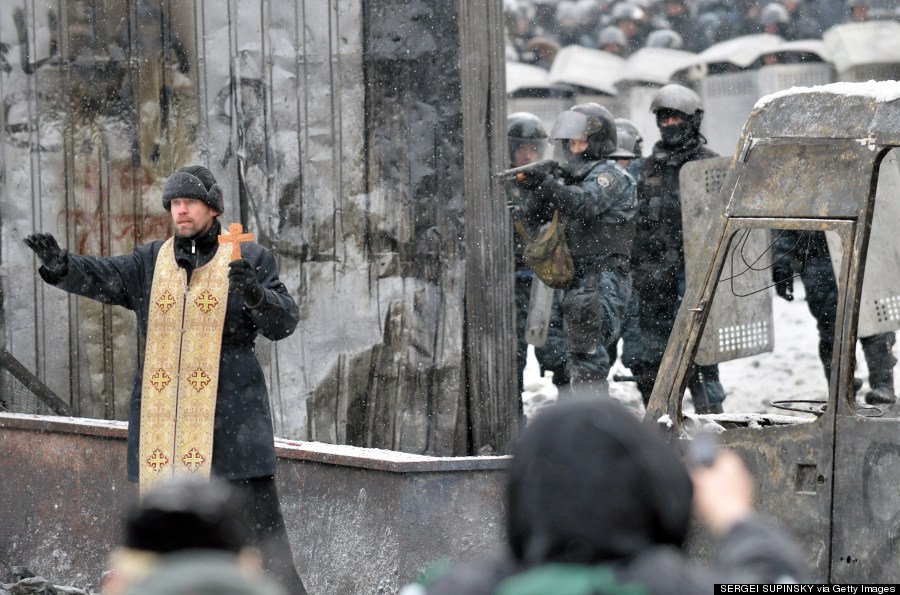
Last month in Ukraine, Orthodox priests stood between soldiers armed with guns and protesters holding Molotov cocktails, boldly praying - and begging - for peace. They took a stand in freezing weather with weapons pointed at them and publicly asked God for help, because they believe it is that important to find peaceful resolution. (They're risking their lives even though the government has threatened to ban these kinds of prayers.) Read about it here - the pictures are amazing.


Meanwhile, Christians in the United States were preparing to take center stage in a conflict of their own. Before a world-wide audience, the church was prepared to wrestle with a truly important issue:

"Exactly how old is the earth?"

The debate had the impact I expected. When faced with opposition to our convictions, it's human nature to dig our heels in and stubbornly stick to our agenda. No one changes their minds after this sort of verbal sparring - they only find more reasons to fight. Debates always make people less open to new ideas, and debating religion does not help the skeptic to understand our beliefs.

Meanwhile, there are people in your town who don't have food. There are clothes in your closet that you never wear and families a few blocks away who could use them. Times are rough on a lot of folks, and finding hope is never easy when bills can't be paid. Not to mention, the trials of everyday life make it hard to believe in a loving God.

The church is equipped to help with these problems. We can feed and clothe our neighbors while we remind them of God's grace. We can be a sympathetic ear for the person who has been laid off or a family for the lonely child who has no parents. Our music and preaching can help someone remember why they believed in God, in the first place. We can bring hope.

Or, we can argue about the age of the planet.

I'm not just talking about the well-known debates, because this is a problem that happens in small ways, too. Social media is drowning in religion vs. science arguments that never accomplish anything. I realize that some people use science to criticize the faith, but don't respond to those attacks with angry words. Turn the other cheek, ignore the haters, and don't respond with insults. Every ounce of energy and resources you spend squabbling over scientific scruples should be redirected toward helping your community.

Get out there and show people that Christianity isn't about pointless debates, but a love that comes from God and the hope of what is to come.

Monday, March 3, 2014

Christian Music is Still Important

We poke fun at the Christian music industry around here, sometimes. Rightly so - it's terrible. The music we call "Christian" is made up of boring songs that try to make people cry before the end of the bridge, but then everything's OK at the end. And the music is awful; tuning into Christian radio stations always makes me wonder if the songs are intended to be sitcom theme songs from the 80s.

Of course, like we said before, this is probably just an outcropping of the problems we see all over the music industry. (Which is why I only listen to the local jazz station when I'm in my car.) But the very idea of "Christian music" has become unpopular in Christian circles. This is partly because of the terrible music that it spawns, but also because it's an approach to songwriting that has no place outside of the church. Why bother singing about God if the only people who will hear you already believe?

But I think Christian music is still important. Where would I be without the wonderful songs of Rich Mullins, reminding me that the natural beauty of the world reflects God's love? Who else would put the ancient text of the Apostle's Creed into a Celtic-inspired song featuring a mountain dulcimer? (I'm talking about the songs "The Color Green," and "Creed." Look them up if you don't know them. Please.)

People like Bebo Norman and Andrew Peterson have written songs that I never fail to remember throughout my life, even though they would have little meaning to anyone outside of the church. The meditative sounds of Fernando Ortega always help me to calm down and remember what is important when I'm upset.

But the entire music industry is not what it used to be, and when it began to tumble the Christian labels were the first casualties. The best musicians in the Christian music industry stopped receiving contracts (because they were not the most profitable) and only the most generic groups stuck around. Of course, the same thing happened in the mainstream music industry, and you'll notice that major labels no longer sign groups like Collective Soul or The Counting Crows. Dance party pop music always sells the best, so that's what they make room for.

It's common to criticize Christian artists for "living in a bubble" and not having relevance to anyone who doesn't go to Sunday School, but there is always a place for ministering to other Believers. If we don't make room for someone like Rich Mullins then we will miss out on the encouragement and teaching that good Christian music can bring us.