Showing posts with label christian music. Show all posts

Wednesday, May 14, 2014

Listen to this: Borderland


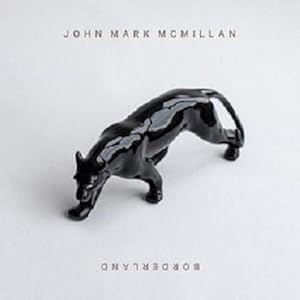
I'm slow to take to new music -- especially new Christian music. I've heard the name John Mark McMillan floating around for the last couple of years, but I never bothered to listen. This March, McMillan released Borderland, and I started to see and hear his name even more. After two friends with trusted musical taste both insisted, on the same day, that I give this work a listen, I succumbed and watched this video of Borderland's first single, "First/Last."


I instantly liked it. As a worship leader, I'm always on the look out for songs that work corporately (that is, they are singable, memorable, and true), but that approach old concepts in a unique way. "First/Last" accomplished this goal nicely, so I looked up the rest of the album, expecting to hear more similar worship songs.

What I heard instead was a sonically surprising fusion of rock, pop, folk, and gospel, grounded in McMillan's enjoyably gritty baritone, and lyrics that would more likely appear in a literature class than in Sunday school. All McMillan's songs passed the musical side of my "corporate worship test" with their instant hummability, but the instrumentation -- which starts with contemporary worship's acoustic-guitar-fronted-rock band, but is deepened by lush strings and successful experiments with 80s synth and electronic elements -- would be unlikely in most church worship services. Most unlikely, however, are the beautiful lyrics, that seem to exult in ambiguity, thought-provoking figurative language, and evocative imagery. Take the album's opening invocation, "Holy Ghost:"

Dead in the water
Like lamb to the slaughter
If the wind doesn’t sing her song
And I’m speaking in tongues
Cause I need a Holy Ghost

It's not exactly what you'd hear at church on Pentecost Sunday. Even the album's perfectly singable single, "Future/Past," broadens the Christian vocabulary for speaking about the mysteries of God with lines like, "The constellations are swimming inside The breadth of your desire," before launching into the song's catchy chorus: "You are my first/you are my last/ You are my future and my past..." Here, cliches ordinarily applied to romantic love take on more resonance when sung to a lilting triple meter that, in the chorus's last line, seems to fluctuate and expand, demonstrating musically the mystery of a powerful, benevolent creator who exists beyond the confines of time.

And getting beyond confines is really what this entire album is about. Borderland is an album about the space between spaces, the "already-but-not-yet" of life lived between the fall and the fullness of restoration, when Christ's kingdom has come, but is not yet complete. McMillan luxuriates in the tension of this space, the place "on this side of the thunder" ("Holy Ghost"), "on the brink" ("Love at the End"), where we "see the light of heaven's porch" though we're stuck "outside [the] chain-link fence" ("Borderlands"). McMillan underscores the tension inherent in his theme by dwelling in musical borderlands -- between CCM and Indie-pop; between corporate and individual; between stadium rock and coffeehouse folk; between the strange and the familiar. And while you may never hear more from this album than "Future/Past" in a worship service, Christians and non-Christians alike will enjoy and benefit from spending some time in the musical and spiritual limbo of Borderland. 

(Note: After looking into Borderland, I realized that I already loved John Mark McMillan for penning the worship song "How He Loves."  See more lyrics here: http://johnmarkmcmillan.com/lyrics)


Monday, April 21, 2014

Christian Music: Not Safe and Fun for the Whole Family

I haven't listened to a lot of Christian music in a long time, certainly not on the radio, for reasons I'm sure many of you can guess. But music is a particularly powerful influencer. Good music often carries a lyric into the subconscious and a song can stick in your head for days. For me (and I suspect for most folks) music is an important habit of my mind, whether intentional or unintentional.

For this reason, I've recently been more intentional about the role of music in my need to to "take every thought captive to obey Christ" (2 Cor 10) and to think on "whatever is true, whatever is noble, whatever is right, whatever is pure, whatever is lovely, whatever is admirable" (Phil 4).

Since the stuff on Christian radio isn't my style, among other things, it doesn't have much power to help me in this endeavor. (It does help many, many Christians "set [their] minds on things above" (Col 3:1), so I won't judge it too harshly, and I chide myself for doing so so disdainfully in the past.)

Fortunately, there is a good amount of "inde" music out there these days that reaches out to me and others like me (and others not like me!). Thanks to sites like Amazon and Noisetrade with their automatic, you-may-also-like suggestion boxes, out-of-the-mainstream music gets easier and easier to find.

Here are some of my recent finds.


As you can plainly see from the cover of their album, The Fourth Wall, The Vespers belie my bias for folk and bluegrass. They could be described as inde folk, or neo-folk, rockin' out their pickin-n-strumin' instruments in their vintage clothing. What you can't see are their at times haunting, at times playful vocals and lyrics. You can sample those here.

The Vespers don't only help us rejoice with those who rejoice, they also help us weep with those who weep, a holistic truth telling.


Note the cover art on Beautiful Things: this is not your typical Christian music scene. Paradox is a significant part of the Christian understanding of truth, and Gungor reminds us of one of the most crucial paradoxes: 

You make beautiful things
You make beautiful things out of the dust
You make beautiful things
You make beautiful things out of us

Psalm-like, "Beautiful Things" opens with doubts and a sense of being overwhelmed and beat down by the ugly things in this world and in our hearts, but it is the refrain that remains in the mind---the reminder, the affirmation, the hope.


Wilder Adkins's Oak & Apple presents new, acoustic remakes of old, beloved hymns. This choice exposes my preference for hymns over other kinds of Christian music. I'm not the only one, apparently, because there have been several projects in this vein of late. I prefer acoustic, folk-oriented albums like this one, but there are a significant number of neo-hymn albums with more pop-rock flavor.

One reason I appreciate these kinds of albums is because, along with familiar favorites, I'm always introduced to hymns I didn't grow up with. I love learning new hymns; the hymn is such a rich heritage, and learning the hymns from outside my own tradition links me to the wide, deep heritage of the faith.


You can find her latest album here.

You might recognize that name. It just so happens that one of my very favorite musicians is our very own Christine Hand. Christine's music appeals to me pretty much for all the same reasons the above albums and artists do: the woman and her band can play their instruments! roots in folk, folk-rock, and blues; soulful, holistic vocals and lyrics. Her song, "The Face of All the World", is one of my long-time favorites, and I often turn to it when I feel overwhelmed by the world and am in need of encouragement and a reminder that God is everywhere and in everything:


You're every sweet sound
You are the cold rain
And every tear that from my eyes will fall for joy or pain
You are the best thing that I have found
And this world is wide and round


I haven't given up "secular" music---as we often like to say, all truth is God's truth. There are many, many songs of all stripes that remind me of Christ or the absence of him, of the glory and the horror of this life; and many songs of many stripes that are just plain fun! But as music is a powerful influencer, it's something we should at times be intentional about. The above albums and artists disciple my mind and nurture my soul. 

Your turn. I'm always on the lookout for good music. Share with us in the comments: What have been some of your favorite finds? What music gives you courage and hope? 

Monday, March 10, 2014

5 faith-shaping CCM songs

In light of Adam's post last week about why Christian music is still important, I thought I'd share 5 songs that came from the Contemporary Christian Music genre that have played crucial roles in shaping my faith.

1. "Let There Be Light" by Andrew Peterson. I can think of no better song to summarize the beauty and importance of God's creation relative to our human ability to create in God's image. As I have struggled through my own music and writing projects and through the mundane tasks of ordinary life, I just have to remember Andrew Peterson's words:  "And the work of our hands is the salt of the earth/and the music we make is the light of the world/let it shine, let it shine, let it shine..."


2. "Meant to Live" by Switchfoot. It's really hard to pick just one Switchfoot song, especially from their bestselling album Beautiful Letdown. This one was a mega hit for the band, but I never got tired of its discussion of longing and hope for a better life: "we want more than the wars of our fathers/ and everything inside screams for second life..."


3. "He's Alive," by Don Francisco. This one goes way back, and it's one of my earliest memories of Christian music. In folk-ballad style, Don Francisco relates the tale of the morning of Christ's resurrection, and it's still a moving and hair-raising telling of the story. What we don't know at first is that the story is told from Peter's perspective, and the world-changing significance of the Resurrection becomes intensely personal. When Peter first hears rumors of the resurrection, he thinks, bitterly, "When at last it came to choices, I denied I knew His name/ And even if He was alive, It wouldn't be the same." But when he does see the Resurrected Christ, he encounters a forgiving Lord with open arms: "Guilt in my confusion/ Disappeared in sweet release/ And every fear I'd ever had/ Just melted into peace." Finally, after a Bob-Dylan-worthy eight verses, the song breaks into its hook and refrain: "He's alive, he's alive, he's alive, and I'm forgiven; heaven's gates are open wide."


4. "Shifting Sand," by Caedmon's Call. Even though I've been listening to this album since high school, this song didn't really hit me until college, when the refrain, "My faith is like shifting sand, so I stand on grace," finally came home for me as I began to understand that everything -- even my faith -- was a miraculous work of God's grace.


5. "If I Stand," by Rich Mullins. It's also extremely difficult to pick just one Rich Mullins song, but if I could only have one of his beautiful and insightful pieces, it would be this one, because it sums up most of what I want to say about why and how I believe -- there's "a music higher than the songs that I can sing, but the stuff of earth competes for the allegiance I owe only to the Giver of all good things, so If I stand, let me stand on the promise that you will pull me through, and if I can't, let me fall on the grace that first brought me to you..."


Now, I'd love to hear from you: have any songs, Christian or otherwise, shaped what you believe? (Christian or otherwise)

Monday, March 3, 2014

Christian Music is Still Important

We poke fun at the Christian music industry around here, sometimes. Rightly so - it's terrible. The music we call "Christian" is made up of boring songs that try to make people cry before the end of the bridge, but then everything's OK at the end. And the music is awful; tuning into Christian radio stations always makes me wonder if the songs are intended to be sitcom theme songs from the 80s.

Of course, like we said before, this is probably just an outcropping of the problems we see all over the music industry. (Which is why I only listen to the local jazz station when I'm in my car.) But the very idea of "Christian music" has become unpopular in Christian circles. This is partly because of the terrible music that it spawns, but also because it's an approach to songwriting that has no place outside of the church. Why bother singing about God if the only people who will hear you already believe?

But I think Christian music is still important. Where would I be without the wonderful songs of Rich Mullins, reminding me that the natural beauty of the world reflects God's love? Who else would put the ancient text of the Apostle's Creed into a Celtic-inspired song featuring a mountain dulcimer? (I'm talking about the songs "The Color Green," and "Creed." Look them up if you don't know them. Please.)

People like Bebo Norman and Andrew Peterson have written songs that I never fail to remember throughout my life, even though they would have little meaning to anyone outside of the church. The meditative sounds of Fernando Ortega always help me to calm down and remember what is important when I'm upset.

But the entire music industry is not what it used to be, and when it began to tumble the Christian labels were the first casualties. The best musicians in the Christian music industry stopped receiving contracts (because they were not the most profitable) and only the most generic groups stuck around. Of course, the same thing happened in the mainstream music industry, and you'll notice that major labels no longer sign groups like Collective Soul or The Counting Crows. Dance party pop music always sells the best, so that's what they make room for.

It's common to criticize Christian artists for "living in a bubble" and not having relevance to anyone who doesn't go to Sunday School, but there is always a place for ministering to other Believers. If we don't make room for someone like Rich Mullins then we will miss out on the encouragement and teaching that good Christian music can bring us.

Friday, January 17, 2014

Even Worship Songs Need Good Writing!

Question: Since our worship songs generally consist of more than "na-na-na-na," doesn't the meaning of a worship song matter?

Question: Since the meaning of a worship song evidently matters, shouldn't we try to get it right?

But we don't always get it right.  Consider these examples.

Natural and Legal Metaphors Mixed Up

My personal favorite is this line: "And like a flood his mercy reigns."  Do we really want to proclaim the message that God's mercy governs in the manner of a natural disaster?  (And if a flood governs like a king, I wonder what sort of weather events legislate like a parliament.)

Perhaps we could use on our overhead projectors on Sunday mornings the alternate spelling that actually makes a little sense: "And like a flood his mercy rains."

They're not the same thing.
(Pictures from Hobbes' Leviathan and from Edal Anton Lefterov.)
Plain Old Bad Grammar

And then we have this one: "And if our God is with us, then what can stand against?"  Why don't we give that preposition an object?  The Bible does (Romans 8:31): "If God is for us, who can be against us?"

I can't see what good the bad grammar does in this situation, unless it creates the illusion of good poetry.  But this would only be an illusion.  Of course, poetry doesn't always have to follow the rules of grammar.  But it takes more than bad grammar to make good poetry.

Adding "us" on the second repetition of the final line would not sabotage the meter: We already stretch "against" to occupy the space of about seven syllables, so we can afford give the space of one syllable to "us."  Nor would adding "us" ruin a rhyme (if there is a word that rhymes with "against," you won't find it in this song).

Biblical Oddities

"Days of Elijah" is such a nice song, but often a painful one for me.  If David (instead of, say, Ezra) is "rebuilding a temple of praise," I wonder when the first temple of praise was built.  I've heard this altered to "building a temple of praise"; I like that; I understand it.

For years I was annoyed by the line about "the days of Your servant, Moses, righteousness being restored."  One Sunday morning last summer I realized that this actually makes sense as part of the biblical narrative: Some of the righteousness lost when Adam sins is restored in the Mosaic law, especially the Ten Commandments.

Still, I wonder how many people are actually thinking about two Bible characters and more than a thousand years of biblical history when they sing that bit; maybe we could just sing "And these are the days of your servant, Josiah, righteousness being restored."

Et Cetera . . .

Some worship songs I'd do better not to mention are, it seems to me, much, much worse in theology, poetry, etc.

And hymns aren't excluded.  I would need another blog post (or another dissertation) to analyze the unbiblical dualisms and Platonisms that appear in some hymns.

Giving Our Best to God

We should be giving our best to God.  If you're like me and you don't sing very well, then go ahead and sing; for you and me, maybe bad singing is the best we can do if it's all we have.  But the Church has more than bad poetry, bad spelling, bad grammar, and bad theology to put in our worship songs.  We can do better.

In particular, these songs I've mentioned are nice songs!  I don't want us to stop singing them.  But can we maybe sing them a little better?

Monday, July 23, 2012

Christian Worldview 101: The Playlist

One of my favorite traditions with my husband is to make themed mix-CDs whenever we go on a road trip. 
The themes can be about anything, but many of the most meaningful have been spiritual themes. The great thing about the “spiritual” mixes is that we don’t always have enough “Christian” songs to complete the theme, so we end up using “secular” songs in ways we wouldn’t have imagined, and we see both those songs and our faith in a new way. Some of my favorites have included a different CD for each week of Advent, CDs for Holy Week, one called “notes from God,” which comprised a collection of songs that sounded like they were written from God’s point of view, and, my personal favorite, “Christian Worldview 101,” which told the Christian story of Creation, Fall, and Redemption through songs. Here are the track listings:

Creation 
(and its implications: Creation is good, God had a plan before time began, nature reveals God, and humanity is made in God’s image as fellow creators)

1. “Good Day Sunshine” by The Beatles
2. “Before There Was Time” by Caedmon’s Call
3. “God of Creation” by David Crowder Band
4. “Let There Be Light” by Andrew Peterson
5. “Calling Out Your Name” by Rich Mullins

The Fall
(Edenic fall into sin and representations of its effects)

6. “Adam” by The Bittersweets
7. “Revenge” by Jon Foreman
8. “Not California” by Hem
9. “Eleanor Rigby” by The Beatles

Longing for the Messiah:

10. “Meant to Live” by Switchfoot
11. “Waiting on the World to Change” by John Mayer
12. “Peace Child (O Come Emmanuel)” by The Normals

Life of Christ -- incarnation and death on cross (okay, I know the Sufjan song is about Santa and stuff, but, as I wrote last Christmas, nothing else expresses Christmas joy quite as well as this song, for me):

13. “Come On! Let’s Boogie to the Elf Dance” by Sufjan Stephens.
14. “How Deep the Father’s Love For Us” by Stewart Townsend, as performed live by Skillet

Redemption -- from individual conversion to the general defeat of death to the eternal reign of Christ:

15. “Remedy” by David Crowder Band
16. “I Saw the Light” by Hank Williams (and others), as performed by David Crowder Band
17. “Baptize my Mind” by Jon Foreman
18. “Death Shall Have No Dominion” by The Bittersweets
19. “Raise Up the Crown (All Hail the Power of Jesus’ Name)” by Chris Tomlin
20. “In the House of God Forever” by Jon Foreman

Aside from revealing some obvious biases in my music taste (you have to like folk-rock to enjoy this playlist), these songs, for me, tell the story of Christianity in a unique and moving way. I could explain each of the choices, but I think the songs speak better than I could. So, I made a Youtube playlist with all the songs. The only one I couldn’t find is
“Death Shall Have No Dominion” by The Bittersweets, so here's the Grooveshark link for that. Also, while writing this, I realized that I forgot to include Eleanor Rigby, by the Beatles, but you all know that one already, right? -- Right? -- I mean, if you don't, for the love of everything good and beautiful, go buy the Beatles Number 1 hits CD right now to start your education!


Enjoy!