Sunday, March 31, 2013

Easter Sunday - The Resurrection


Early on Sunday morning, while it was still dark, Mary Magdalene came to the tomb and found that the stone had been rolled away from the entrance.She ran and found Simon Peter and the other disciple, the one whom Jesus loved. She said, “They have taken the Lord’s body out of the tomb, and we don’t know where they have put him!”


Peter and the other disciple started out for the tomb.They were both running, but the other disciple outran Peter and reached the tomb first.He stooped and looked in and saw the linen wrappings lying there, but he didn’t go in.Then Simon Peter arrived and went inside. He also noticed the linen wrappings lying there,while the cloth that had covered Jesus’ head was folded up and lying apart from the other wrappings.Then the disciple who had reached the tomb first also went in, and he saw and believed—for until then they still hadn’t understood the Scriptures that said Jesus must rise from the dead. (John 20:1-9)


While they were still talking about this, Jesus himself stood among them and said to them, “Peace be with you.”

They were startled and frightened, thinking they saw a ghost.He said to them, “Why are you troubled, and why do doubts rise in your minds?Look at my hands and my feet. It is I myself! Touch me and see; a ghost does not have flesh and bones, as you see I have.” (Luke 24:36-39)


Now, brothers and sisters, I want to remind you of the gospel I preached to you, which you received and on which you have taken your stand.By this gospel you are saved, if you hold firmly to the word I preached to you. Otherwise, you have believed in vain.For what I received I passed on to you as of first importance: that Christ died for our sins according to the Scriptures,that he was buried, that he was raised on the third day according to the Scriptures,and that he appeared to Cephas, and then to the Twelve.After that, he appeared to more than five hundred of the brothers and sisters at the same time (1 Corinthians 15:1-7)


Jesus did many other things as well. If every one of them were written down, I suppose that even the whole world would not have room for the books that would be written. (John 21:25)


Saturday, March 30, 2013

Holy Saturday - The Great Sabbath


Jesus called out with a loud voice, “Father, into your hands I commit my spirit.”When he had said this, he breathed his last. The centurion, seeing what had happened, praised God and said, “Surely this was a righteous man.”When all the people who had gathered to witness this sight saw what took place, they beat their breasts and went away.But all those who knew him, including the women who had followed him from Galilee, stood at a distance, watching these things. (Luke 23:46-49)


Later, Joseph of Arimathea asked Pilate for the body of Jesus. Now Joseph was a disciple of Jesus, but secretly because he feared the Jewish leaders. With Pilate’s permission, he came and took the body away.He was accompanied by Nicodemus, the man who earlier had visited Jesus at night. Nicodemus brought a mixture of myrrh and aloes, about seventy-five pounds. Taking Jesus’ body, the two of them wrapped it, with the spices, in strips of linen. This was in accordance with Jewish burial customs.At the place where Jesus was crucified, there was a garden, and in the garden a new tomb, in which no one had ever been laid.Because it was the Jewish day of Preparation and since the tomb was nearby, they laid Jesus there. (John 19:38-42)


Thus the heavens and the earth were completed in all their vast array. By the seventh day God had finished the work he had been doing; so on the seventh day he rested from all his work.Then God blessed the seventh day and made it holy, because on it he rested from all the work of creating that he had done. (Genesis 2:1-3)

Friday, March 29, 2013

Good Friday - The Crucifixion


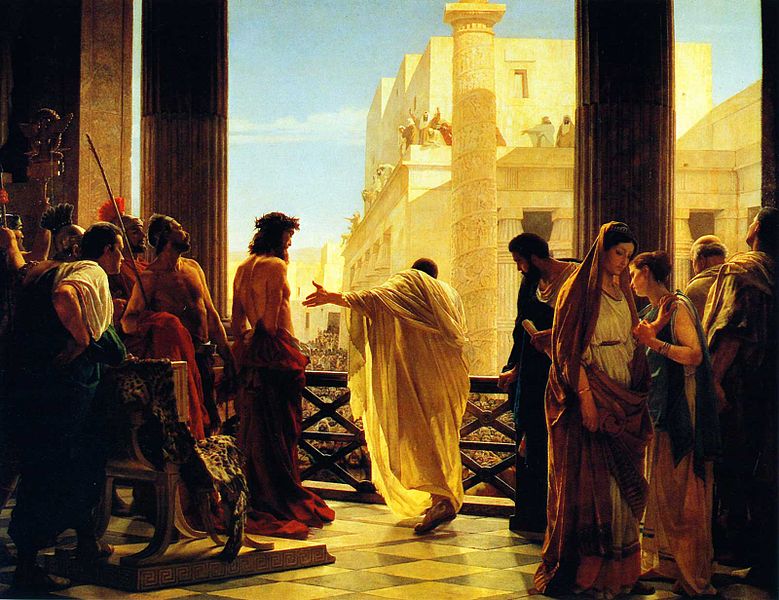
     Then the governor’s soldiers took Jesus into the Praetorium and gathered the whole company of soldiers around him. They stripped him and put a scarlet robe on him,and then twisted together a crown of thorns and set it on his head. They put a staff in his right hand. Then they knelt in front of him and mocked him. “Hail, king of the Jews!” they said. They spit on him, and took the staff and struck him on the head again and again. After they had mocked him, they took off the robe and put his own clothes on him. Then they led him away to crucify him.

     
     As they were going out, they met a man from Cyrene, named Simon, and they forced him to carry the cross. They came to a place called Golgotha (which means “the place of the skull”). There they offered Jesus wine to drink, mixed with gall; but after tasting it, he refused to drink it. When they had crucified him, they divided up his clothes by casting lots. And sitting down, they kept watch over him there. Above his head they placed the written charge against him: This is Jesus, the King of the Jews. (Matthew 27:27-37)


Thursday, March 28, 2013

A Book About a TV Show About the Bible

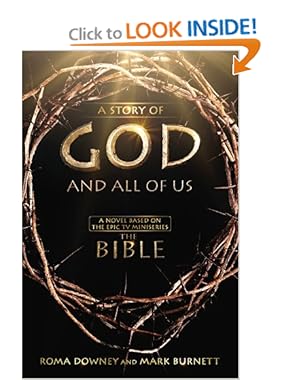
The Bible is a pretty successful show, so it's only logical that someone should try to make a book out it.

Seriously. Someone has written a novelization of the TV show about the Bible.

You can check it out on Amazon, but the reader reviews, as usual, are the best part. Here's some of the tongue-in-cheek thoughts from the review section:

When I watched the first episode of the epic TV miniseries "The Bible," I remember thinking to myself, "This is spectacular, but what if I want to engage with these stories on a deeper level." After watching and re-watching and re-re-watching the entire series, it still felt like something was missing...Thank God for this book!

 ...and...

A fantastic book with truly heart-warming stories. I hope someone makes this into a movie, or at least a TV mini-series.  

But not everyone is so critical. Over at GoodReads.com there are reviewers telling us that putting the Bible in a novel format has made it easier for them to read and understand. Can't argue with that - the Bible isn't the easiest book to read, and organizing the story into chronological order would help a lot of people. In that light, it's not that different from a collection of Bible stories that churches use to teach Scripture.

I can't decide if this is a joke or a good idea.

Wednesday, March 27, 2013

A Space of Grace

I'd like to say I planned this post to be as timely as it is, but I mostly live under a rock called Grad School. Ask the person I had this conversation with yesterday:

"Man, Facebook is blowing up today."

"Really? Why? What happened?"

[incredulous look] "Gay marriage."

"Oh yeah." I shrug and go back to grading papers; make a mental note to stay off Facebook for 24, no make it 48 hours just to be safe; promptly forget.

That this post is timely is pure coincidence, or not; you choose.

About a week ago, my friend Julie wrote about the grace she experienced from a rather controversial place. I asked her if I could highlight it here because I value the fresh dialogue she opened up about conservative Christians and homosexuals. This nuance is perhaps particularly important this week as so many who call themselves Christians are proving the sad stereotypes true. I hope this story of grace will challenge all of us to act and speak and better yet, listen, with grace toward one another.

A Space of Grace: The Truth about Many Ex-gay Ministries

I had breakfast this morning with the man who’s been the single most influential person in my life outside of my family. His name is Ricky Chelette, and he’s the Executive Director of Living Hope Ministries. I met Ricky when I was 16 years old, and he was just a Baptist minister who mentored kids like me in his free time. About 5 years later, he became the director of Living Hope, which is an Exodus member ministry and could be referred to as an “ex-gay” ministry” (since that misleading term is often used to refer to ministries associated with Exodus).

These ministries have been flogged by the media for the past several years, vilified as an oppressive movement of people who are devoted to making gay people straight. Some of that criticism has been necessary—there have been ministries who have been judgmental, oppressive, and downright abusive at times. Many of them deserved to be vilified. I’m concerned, however, by the way all ministries seeking to walk with people in this manner are lumped together and caricaturized for the whole world to mock. You clearly haven’t been told the whole story.

Tuesday, March 26, 2013

Does the Church Have an Answer for This?

The issue of homosexual marriage is the hot topic of the week, and Christians are, as a whole, "undecided."

Not surprisingly, there are people in both camps. I have Christian friends who tell me that Jesus would approve of gay weddings, and others who say He would not. But most of the people I know honestly don't have a firm opinion on the matter and just avoid talking about it.

Believe it, or not, plenty of people don't actually know any homosexuals. (Or, they don't think they do.) Some of you will find that hard to believe, but it's possible to spend your week going to work and seeing your friends and family without being around anyone who is gay. A lot of people I know don't have a single gay contact in their life, and when questions about homosexuality come up they are at a complete loss because they don't know anything about it.


My advice to the church is that we get to know these people. Don't treat them like outsiders or freaks, but get to know some of them and listen to what they say. Ask a gay person about their life story and their beliefs. Find out what goes on in their world and how they feel about the church. Getting to know the people we've been condemning will change this conversation for the better.

Monday, March 25, 2013

The Road to Recovery Can Take a Lifetime to Walk

People struggling with a difficult past face a new challenge once they are recovering - everyone expects them to get better.

I recently had the privilege of hearing Dr. Gideon Strauss tell his story. He was in South Africa during the Apartheid movement and his life was damaged by a social system that tortured and killed innocent civilians. He told us how he read the Psalms to learn how to deal with his pain.

At the end of his lecture someone asked, "When did you feel whole, again?" He immediately responded, "I don't."

Rachel Held Evans has just finished a week-long series on the survivors of abuse (it takes a strong will to read these stories, but they are important), and a common refrain is that the victims, after finding the road to recovery through Christianity, are still healing for the rest of their lives.

Things that hurt us when we are young don't go away just because we grow up. They continue to shape us, and hold us back, as long as we live. The church cannot simply take away that pain, but we can walk alongside those who have been hurt so they won't have to be alone.

Friday, March 22, 2013

GOD HATES OBAMA AND CHRISTIANS SHOULD TOO

I was initially going to write this post about those email forwards turned Facebook memes, their malicious deceptiveness, and the role they play in too many well-intentioned Christians' daily social networking liturgy. You know what I'm talking about. They're half truths disguised as completely true stories about politicians, or touching (but still only partly true) stories about a family or individual 'victimized' by liberal policies. They're wolves in sheep's clothing. And they spread like wildfire, in part because they're half true. (Or in some cases, as with the example below, almost completely made up.)


But this landed in my lap this afternoon, and I thought I'd shift gears slightly.


This still lands in the category of a Facebook meme propagated by ultra-conservative groups, but it lacks the compelling narrative. What makes this kind of thing attractive is it's one-liner, black-and-white pith. It's cheeky; it's inflammatory; it's simple. And American Evangelicals love these sorts of things for all of those reasons. This is baffling to me.

We must beware of deceptively simple arguments such as this. We are called by Christ to be innocent as doves and shrewd as serpents (Mt 10). We must stop allowing ourselves to be duped. We must repent from being a part of spreading these lies--even if by being silent--and turn to fight against them instead, for they are a great harm to the church.

The especial, malicious irony of the above image is that it was posted by one of those harmful "Christian" Facebook groups mere hours after Israel bestowed their highest honor upon President Obama, thanking him for his "tireless work to make Israel strong."


President Peres went on to say, "Your presidency has given the close ties between Israel and the United States a new height. A sense of intimacy. A vision for the future." (Read the full transcript or watch the video here.)

Dearest brothers and sisters in Christ, stop forwarding these emails. Stop liking and sharing these Facebook photos. These memes are poisonous. They are often intentionally deceptive, and there is nothing more unChristian. We are supposed to spread the cure, not the poison.

Wednesday, March 20, 2013

Lasting Impact of Humbleness

Recently Richard Twiss passed away.  I met him while working on a local missions conference here in Portland.  I sat by him in a few meetings.  He nicely chatted with me.  We exchanged a few emails regarding updates to his website that I might help with.  Nothing ever came of it.  He struck me as very genuine and very down-to-earth.  When he died I read about it first, of course, on Facebook.  It quickly became apparent he had a prominent national and worldwide influence as Christian leaders from everywhere were posting and re-posting stories and condolences.

I knew he had started a ministry called Wiconi International and did quite a bit of traveling for ministry and speaking engagements.  From my interactions I never would have guessed he was someone so "important."
The more I think about it Richard reminds me of  a person C.S. Lewis talks about in Mere Christianity when he discusses a humble person.  Lewis says,  "Probably all you will think about him is that he seemed a cheerful, intelligent chap who took a real interest in what you said to him." 

You can read more about Richard Twiss at, "A Native Faith: Richard Twiss Shapes Portland's Youth and Beyond" from Christianity Today.  You can watch videos of Richard from his ministry's website here: wiconi.com/?cid=1058

I'd be remiss if in posting this I didn't mention another person who passed away recently.  One of my seminary professors, Prof Hendricks, also had great influence and showed great humbleness.  Since I knew him in the context of seminary I knew all of his "credentials" but when he taught class or you saw him around campus he just seemed like a guy you wanted to be friends with.  I imagine if I'd met him in a coffee shop or another context I would be as shocked as I was about Richard when I found out the reach of his ministry.

You can read more about Prof Howard Hendricks at, "Howard Hendricks, Longtime Dallas Seminary 'Prof' and Mentor" from Christianity Today.  He put his seminal seminary class into a book,  Living by the Book, and I would suggest  everyone read it.


Monday, March 18, 2013

Did Christians Once Teach that the Earth is Flat?

Did the church ever teach that the earth was flat? Some armchair historians think so. There are historians who have perpetuated these ideas, and it's something that is often taught in school. Is it true? Does the Bible teach that the world is flat? Not even close.

As a matter of fact, the idea of a flat Earth was never a common Christian teaching. Augustine spoke of a round and spherical Earth in his discussion of antipodes in the fifth century. Pope Sylvester II (who reigned in the year 1000) was an educated man who loved science he taught his students that the earth was round; in his spare time he could be found building spheres out of wood and then painting a map of the Earth on them.

A lot of ancient/medieval Christian scholars describe the earth being spherical, including Origen, Thomas Aquinas, Hildegard, and Bede. (They got this notion from people like Aristotle, Plato, Archimedes, and Ptolyemy who taught the same thing.)  But the idea that Christians are "flat-earthers" persists.

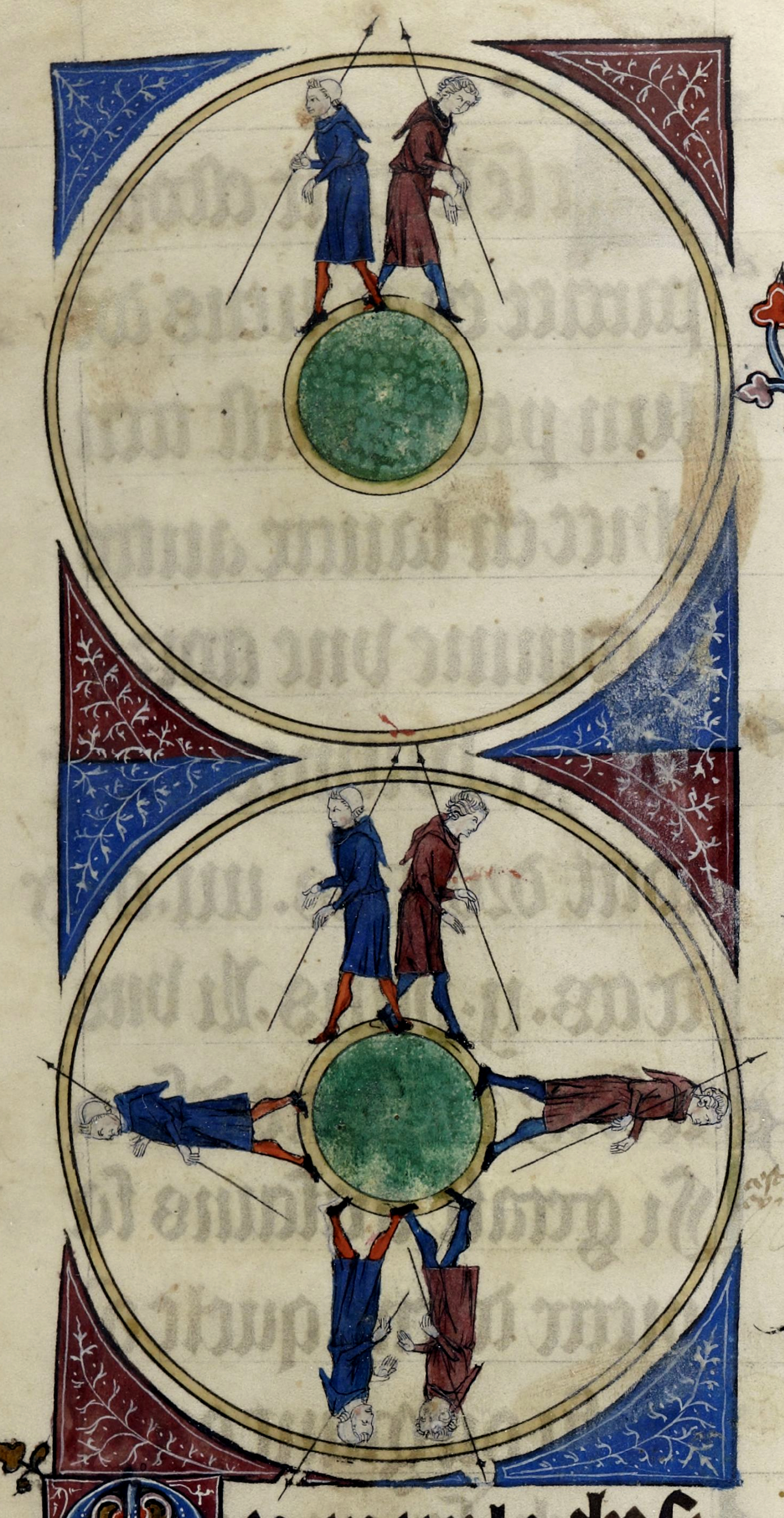
Medieval paintings of the world show it to be round. And if you've ever wanted to read something really interesting from the middle ages you should read Hildegard's 'The Book of the Rewards of Life.' (Liber Vitae Meritorum) from the 12th century - it describes not only a spherical planet, but her idea of how the whole world works.

In the age of the Scholastics, in the latter half of the middle ages, the university as we know it was born, and the leaders of this movement, people like Thomas Aquinas and Albertus Magmus, wrote the textbooks that shaped the intellectual world - and they always described the earth as a sphere.

Remarkably, almost every single important figure in antique/medieval Christianity described the earth as a sphere. The Greeks, who were able to estimate the shape - and even the measurements - of the earth, passed this knowledge to them, and the church never strayed from this ancient wisdom.

(Did anyone in older times deny that the earth was round? Yes. A few. About the same number of people currently think that the moon landing was faked.)

Where did we get the idea, then, that ancient people thought the earth was flat? It's hard to say where that rumor started, but those seeking to discredit the church have gladly latched onto this rumor. Unfortunately, it's a complete lie. Wikipedia has all of the relevant information here, but this quote from James Hannam says it all:

The myth that people in the Middle Ages thought the earth is flat appears to date from the 17th century...it gained currency in the 19th century, thanks to inaccurate histories such as John William Draper's History of the Conflict Between Religion and Science (1874) and Andrew Dickson White's History of the Warfare of Science with Theology in Christendom (1896). Atheists and agnostics championed the conflict thesis for their own purposes, but historical research gradually demonstrated that Draper and White had propagated more fantasy than fact in their efforts to prove that science and religion are locked in eternal conflict.

Friday, March 15, 2013

Art as Conversation

In the world of academia, scholars partake in dialog through publishing books, journal articles, and book reviews in addition to speaking at forums conferences, and debates. By researching, reading the work of others, and then speaking-teaching-and/or writing, one contributes to the discussion. Students participate through group discussions, presentations, and on occasion by also publishing new research.

I have a theory that taking a similar approach to art would be both beneficial and enjoyable for Christians as artists and as students of the arts. Obviously, we cannot all participate in the discussion by creating art, but those who can should. Christians who are artists should do their best to participate in their field of the arts. Different kinds of arts are similar to different subjects in school. English and Math are separate fields of study, but there is some interconnectedness between the two, just as there is interconnectedness between sculpture and literature. As connoisseurs of culture, we are students of the arts. We each have our favorite types of art (music, movies, TV, photography, painting, etc.), and as we partake of our favorites more and more, we become more knowledgeable about the subjects to which they speak.

While I could attempt to explain this theory in more detail, I think it would be more beneficial to provide an illustration.

Topic: Domestic Abuse in Music

Different musicians contribute to the discussion in this field by composing and performing songs that speak to this issue. Each song represents a different take providing new insight. Some songs will educate about the realities of abuse in the home, others will challenge our preconceived ideas about the topic, others will make us angry, others will make us weep for the broken, and some songs might even be used by God to convict us of ministry we need to do for those affected around us.

So we listen to several songs on the issue, we discuss the songs with friends and acquaintances who have a similar love for the art of music. We question the intentions of the artists, we reflect on how the lyrics affect us personally, and we discuss how they relate to our faith. As a result, we grow in knowledge as students in any classroom setting. ***It is through meaningful discussion like this that we engage art. Simply watching a show or listening to a CD is consuming, not engaging.***

Example songs for this topic:

Martina McBride: Independence Day
Nickelback: Never Again
Aerosmith: Janie's Got a Gun
Tracy Chapman: Behind the Wall
Christina Aguilera: Fighter

In fact there are so many songs that on the 3 links below, you can find these and over 80 other songs on the topic:
http://www.avclub.com/articles/the-hits-keep-coming-30-songs-inspired-by-domestic,57741/ 

http://www.songfacts.com/category-songs_that_deal_with_child_abuse_or_domestic_violence.php

http://16days.thepixelproject.net/the-pixel-project-selection-2011-16-songs-about-violence-against-women-and-staying-strong-and-positive/

Now the question is if we are to view songs in this type of way, what does that mean for listening to music with messages out of sync with a Christian view, what does it mean for listening to artists who are "corruptive", what does it mean for subjecting ourselves to non-Christian music?

It means that if we are to having a meaningful conversation about the messages portrayed in music (or any other form of art), that sometimes we should subject ourselves to things that will challenge our views. We do not need to try and listen to or watch everything out there that is challenging, and there are some things we should just stay away from based on personal preference, maturity, and ability to handle the presented material.

But viewing art in this way, learning from it, evaluating it, and discussing it is bound to have some profound effects on how we consume culture and how we understand it. It can also help us grow as believers.

Thursday, March 14, 2013

'Oz' Makes us Feel Great and Powerful

I went to see Oz the Great and Powerful because it looked like fun. It was. But what I remember most are the more serious implications of the story.

At the film's start, Oz is trying to be a successful stage magician, but his act stinks. He does finally convince the crowd that he is truly a magician, but things quickly go sour as a crippled girl is brought to him and he is asked to heal her. His heart is broken, the crowd turns on him, and the curtain closes while he leaves in shame.

But things are different when he reaches the land of Oz (as we know it). He meets a little girl made of porcelain (voiced by the same actress) who cannot walk because her legs have been broken. Oz feels sorry for the child and fixes her up with some glue. (As a technical consultant, I enjoyed watching him solve problems in clever, resourceful ways.)

The land of Oz is not just a place filled with magical things; for Oz it's a place where he is changed, and he is able to be the "great and powerful" person he always wanted to be. However, he had to go through a personal transformation before he could be The Wizard; instead of just being a famous stage magician, he became a benevolent leader. Oz was able to find the life he always wanted when he became a new person.

This message is what makes the film so powerful. It resonates with our natural desire to find another life after this one, a life where we find the fulfillment we are looking for and where we can leave the past behind.

Wednesday, March 13, 2013

Was America Founded as a Christian Nation?: A Complicated Answer to a Complicated Question

Was America founded as a Christian nation?

Take a few minutes to look at or listen to news of any kind - internet, tv, or radio - and chances are that you will find someone, saying something, about the United States, religion, the founders, or a combination of all three.  Our climate is ripe with opinions about the relationship between religion and society today, and what the history of the United States can tell us about it.  Often, the discussion is boiled down to this seemingly simple question - Was America Founded as a Christian Nation? - and our answer to it.

I say "seemingly simple" for a very clear reason: despite what many people believe and argue, this is a complicated question, which demands a complicated answer.

As a Christian historian who thinks and writes about these issues, it discourages me to tell you that the place where I have found the most hesitation, pushback, anger, and even slander for thinking critically about this issue is...the church.  Many of my brothers and sisters who have reacted in this way to my discussion of this issue attest to loving history.  But at root, they seem to have been less concerned with the complexities of history, and more concerned with using history for present-day political battles.  My brothers, this should not be so.

If we want to pursue truth and understand the history permeating this question, we need to be ready for a complex discussion.  This complexity begins with the question itself.  How a person asks the question, and how a person answers, are wholly dependent upon how that person defines the terms in the question.

Walk through the question with me, and consider the following:

"Was" and "Founded"
These words refer to a particular point in the past - the American founding.  The problem with the question, and with our often-simplistic answers, is that we haven't agreed on when this founding happened, or what this founding actually was.

When was it?  1492?  1620?  1776?  1787?
What was it?  European discovery?  Pilgrims at Plymouth Rock?  English, Spanish, French, or a combination of them all?  The Declaration of Independence?  The ratification of the Constitution?

When and what you deem the founding will help determine much of what you think American history and society is all about.  For 1620 supporters, religion and religious freedom are the story.  For 1787 supporters, unification under a common law is the story.  For 1492 supporters, multiculturalism is the story.

"America" and "Nation"
What is this America or nation? Is it a geographical location? A people? A nation-state? A government?

Again, if we don't define our terms, and agree upon them, we shouldn't be surprised when our discussion about the role of religion in "American" history devolves into a morass of confusion.  How can two people actually get a useful answer to the question when one defines "America" as a place or people characterized by union around a common law (the Constitution) and the other defines "America" as the land settled by Puritans dedicated to establishing Christianity?  They can't.

"Christian"
Finally, the most complicated term of all.  What is this "Christian" in the question?  To what does it refer?
A predominately Christian population?
An explicitly Christian state?
A law defined (or influenced by) Christianity?
And which Christianity? Puritan Massachusetts, Anglican Virginia, Catholic Maryland, Quaker Pennsylvania, or something in between?
And what about all those non-Christians who helped frame the colonies, states, and nation?

Was America founded as a Christian nation?

Well, that's a complicated question, with a complicated answer.

If we refuse to acknowledge the complex nature of this issue, we reveal our pride, and will never make progress as a Church, or as a nation.

But there is hope.  Once we humbly acknowledge the complexity of religion and American history, we can actually begin to make the progress we want in our discussions with fellow Christians and with our non-Christian fellow citizens.

Monday, March 11, 2013

Transcendent Mundane

Modern poetry is frustrating. It's often fragmented and anything but straight forward. It doesn't even rhyme! But contemporary poetry has a project, it has an objective, and it isn't just to frustrate you. I promise. Part of the goal of modern poetry is to find the transcendent in the mundane, or to reconnect the two. This is an important project for the Christian: to see God in the everyday and to point others to Him.

Point. Nudge. Hint.

This is what poetry does. That frustrates us. We'd rather art just be plain spoken. The problem is, if a poem just put it out there, it wouldn't likely change us. Those who agreed already with the truth presented would nod approvingly; those who disagreed would walk away still disagreeing. Poetry leads us to water, but it won't try to make us take a bath. 


Poetry also forces us to slow down. We don't like that either. But this is yet another project that should be important to Christians.

Slow down. Find God in the least likely places.

Contemporary poet Karl Petersen helps us do this, and with his help, I'm gonna put into practice what I've been preaching. Join me. You won't regret it.

Transcendent Word of the Mundane: An exploration of Karl Petersen’s Urban Fits

Petersen paints his city with a generous view: generous in scope, taking in the “gutters and the limos," and generous in feeling, writing poetry often lined with humor and hope. His latest collection, Urban Fits (which itself employs Petersen’s hope-woven wordplay), draws attention to the subtly significant, even sacred, quality of everyday comings and goings in his city and his soul.

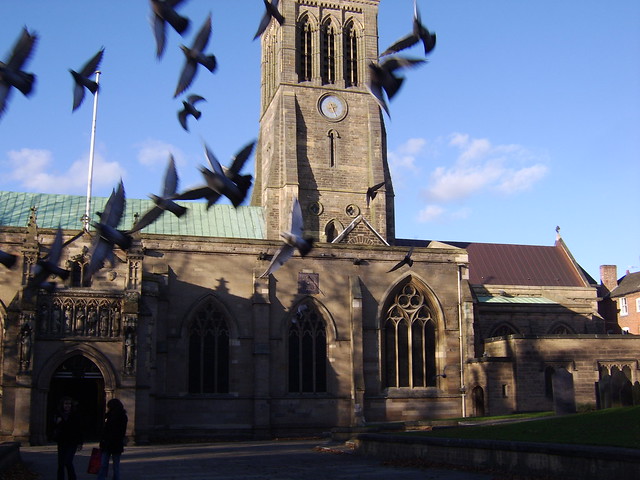
Urban Fits is divided into four untitled sections, each of which opens with a poem embodying the collection’s two major themes: the city and the sacred. Inviting us to see and hear and experience what he sees, hears, experiences through the frame of his window, Petersen introduces us to this collection with “Pigeon Matins”:
passing wings
grace the window pane
at the parting of curtains
the angels arise
in a tidy choir on wires,
mumble matins–
a summons…
[...]
to the powers that be (6-12, 17)
By answering the church-choir call of pigeons outside his window, Petersen summons his readers “from dormancy” (13) to journey with him in meditative contemplation of the uncommon commonplace.


Employing the rhythms of person and place through sound and image, Petersen’s poetry is engaging and provoking in a style which remains largely accessible to the everyman and woman of whom he writes:
a baby navigates
the pre-dawn of its birth–
twisting and somersaulting
like an astronaut
in a cramped capsule
eager to stretch his legs
in outer space
[...]
we’ve all been there
restless to escape the comfort
of watery solitudes
for exotic constellations
as we rumble and bump along
in this tin womb of a bus (“Navigating the Dawn” 2-8, 19-25)
While birth and death, love and friendship, poverty and community, truth and beauty are all explored in the broad scope of Urban Fits, the most recurrent motif in Urban Fits is the Vancouverite daily commute. Petersen’s city bus and traffic jam embody the transient city life: the drab and quotidian, the seemingly insignificant and disconnected congregation of the people within a particular time and place. Petersen views traffic jams and bus occupants as sacrosanct congregations because, refusing to be contained within the cathedral, it is Petersen’s Catholic faith which informs his day-to-day:
Drink it in—
brake lights stalling you
in a memory that nags from last night’s quarrel,
bumpers snarling—you’re daily wine.
You can only wait and curse and cry for mercy. (“Morning Mass” 12-16)
We come to gather that the narrative of Petersen’s faith as it regards the human condition does not leave us waiting and cursing and crying, for Petersen does not leave us there:
On a nearby chimney,
an orphan squirrel of bygone wood groves, survivor,
raises little hands to offer up your absolution—
[...]
dashing over the housetops with deft invocations
in the twitches of his tail, into a tree,
[...]
like an arrow prayer at morning mass.
Then he is gone again, into a confessional of firs. (18-20, 23-24, 27-28)
Karl Petersen’s poetry is full of humor and hope, the occasional exhortation, and ultimately, faith that the daily grind which can make us feel, almost ineffably, that things aren’t the way they’re supposed to be, is itself laced with profound laughter and grace. Urban Fits is a delightful invitation to its readers to slow the moving picture of our lives frame by frame so we notice and consider our own daily liturgy.

Saturday, March 9, 2013

A Fun Comic About Popes Resigning

History can be fun.

No really, it can. Take, for example, this fun comic about the last pope to resign. (All history lessons should be taught in story form, like this.)

Thursday, March 7, 2013

Lent and my closet

Previously on this site, Adam wrote about the growing popularity of Lent among evangelicals. I'm one of those native evangelicals who grew up observing only Christmas and Easter on the church calendar, but who has found great spiritual fulfillment in the discovery and practice of the traditions associated with the church calendar. One of those traditions is Lent. I don't go to an Ash Wednesday service -- my Baptist church doesn't have one -- but I do enjoy the season of Lent as a special time of introspection and preparation that usually includes giving up or adding something to my life that will help me to remember and identify with Christ's sacrifice in anticipation of celebrating and participating in His resurrected life. Last year, in the middle of studying for doctoral exams, I devoted Lent to my studies, in an effort to remember to glorify God in all that I do. True, I would have been studying anyway, but purposely adding in a spiritual component reminded me of who the Giver of wisdom and knowledge is, and that my mind and my time are gifts from God meant to bring Him glory. I had a similar experience one year when I combined my healthy eating goals with my Lent goals -- during that season, dieting wasn't just dieting; it was part of living my whole life as unto the Lord. For me, Lenten observance has really been about doing the things I already know I should be doing, but it provides me with a set period in which to really focus on those things, and that helps me grow closer to God in the process.


This year, I decided to give up buying any new clothes (or shoes :( ) for the duration of Lent. I've been putting my leftover cash each week in a special offering at our church for the hungry. So far, this experience has taught me some things:


I have too many clothes already.
I have more than enough.
But when I'm depressed or angsty, I try to fix what's wrong by buying clothes.
I try to improve the outside when problems are on the inside.

Giving up buying new clothes -- not a bad thing in itself -- has shown me how I turn to shopping when I should be turning to God. I still feel the pull when I’m inside any store -- especially Target, O my nemesis and my friend -- I feel the pull toward the clearance racks and the new, colorful items for spring. But I say a prayer, and I turn away, and I pray that my heart would begin to feel pulled toward something other than shopping.

Giving up buying new clothes is a small, small thing -- so tiny when seen in light of Christ's bearing the wrath of God on the cross. But in identifying with Him in this small bit of suffering, I hope also to identify with Him in His life, through discovering a freedom from the desire to buy new things and the renewal of my desire to know Christ and His love and power in my life.

That, I think, is why evangelicals do Lent.

Tuesday, March 5, 2013

Locusts Descended on Egypt. Yesterday.


Just in time for passover, Egypt is swarming with locusts. Of course, this happens every year, but the news has more fun with it when they try to compare it to the Book of Exodus. This year's infestation, however, is supposedly worse than usual.

The Atlantic Wire posted this video which turned out to be quite fascinating. Growing up in a rural area, I can easily see how damaging locusts (which are also known as grasshoppers) could be, but I never thought about how frightening it would be to be caught in a swarm of them. The sky really turns dark the the terrible buzzing is downright oppressive. Here's the video (there's no audio for the first minute).

Friday, March 1, 2013

Recommended Reading - Medieval Church History

A lot of people ask me to recommend books that will help them learn about the history of the church. Here's three books that I find essential:


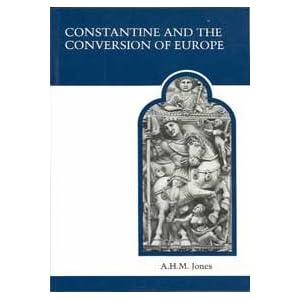
Constantine and the Conversion of Europe by A.H.M. Jones

This book is a blast. Constantine's story has everything you want in a good tale - action, intrigue, personal journeys of conviction, etc. - and this book manages to tell that story while also exploring the formation of the Catholic church and its relationship to Rome. It's really entertaining, but also a great tool for learning. If you've never read a history book, give this one a try. I couldn't put it down.


The Crisis of Church and State 1050-1300 by Brian Tierney

Yes, that is the most boring title to a book that I can imagine. And it doesn't look much better when you open it up and realize that it's just a collection of old documents, but give it a chance and this book will impress you. It uses an older method of history writing in which the author presents documents and introduces them with their proper historical background. Like I said, it sounds boring, but a lot of changes happened to the church (and Europe) during those years, and this book might be one of the most useful texts in understanding that time. Tierney does a great job of telling an epic story through a series of primary documents.


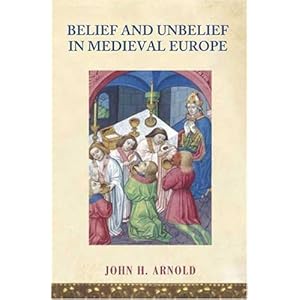
Belief and Unbelief in Medieval Europe by John. H. Arnold

This one opens up with a great story from the middle ages about vampire hunting, which makes up for the dull title. This book really does a fine job of explaining the complexities of medieval faith and the what it would have been like to be a medieval Christian. For example, Arnold points out that most Christians did not own a Bible, and their local priest was their only link to theological knowledge (and that priest might be illiterate). It's a fascinating subject, and the book contains fascinating stories that make the middle ages really come alive.