Showing posts with label poetry. Show all posts

Friday, April 11, 2014

It's Poetry Month! But, I Don't Like Poetry. Except This One Time...

So, this is National Poetry month. Big deal. Since I don't get worked up about poems you may as well tell me that I should spend April celebrating table settings or squirrel noises. But there is one poem I know that I think about all the time. Nearly every day, in fact.

It was a poem my mother read to me when I was young. I was trying to play a video game when she came into my room, grabbed a volume from the bookshelf (our house was covered in books), and said she wanted to read one of her favorites to me. I tried not to roll my eyes. A poem? Seriously? It was like being Fred Savage in The Princess Bride when Colombo walks in and says he's going to read a book. "Is this a kissing poem?" I might have asked.

It was The Fool's Prayer, by Edward Rowland Sill, and it was everything that I expected it to be - sentimental and metered, filled with words I didn't understand like "knave," and "balsam." It tells the story of a jester who is asked to say a prayer before the king and the royal court. The jester (who must hide his grimness behind a fake, painted-on smile) prays for humility despite his faults, repeating "Lord be merciful to me, a fool." The king, who had been prepared to mock his jester's words, is so moved that he recites the same prayer.

Booooring. I was trying to beat The Legend of Zelda: A Link to the Past, or something equally important, so I obviously didn't have time for poems. And why didn't the poet just start with the last four or five lines and make it shorter? Was it really necessary to write an entire page full of rhymes? Why should I spend my spare time unraveling knotted phrases or counting syllables? Besides, simple prose could accomplish the same thing as this poem in the space of a Post-It note! (Yes, English majors, I'm one of Those people. Also, I am realizing that I was a big jerk when I was a teenager. Sorry, Mom!)

Being a teen, I didn't want to understand this poem in the pursuit of some sort of enlightenment, because I was already an invincible genius, wise beyond my years and perfect in every way. But something about the poem's phrasing, the metrical rhymes, and its repetitions caused The Fool's Prayer to cling to the edges of my mind. Though I dismissed it in a moment of youthful arrogance, the poem didn't dismiss me. It was still there, lurking about my thoughts and taunting me with it's lesson.

Even though I'm 32, I still enjoy pretending that I'm wise even though I'm not. "I sure was dumb ten years ago," I might say to a co-worker, but in the back of my mind I'm certain that when I'm 42 I'll be saying the same thing. There has been some progress in my life; I no longer think of myself as an invincible genius, but as an absent-minded bumbler who can't find his car in the parking lot. Also, I had to look up the spelling of "genius" five minutes ago. (That really happened. I tried "geneous" and "genious" before giving up. If the NSA ever confiscates my Google searches they'll only find an endless list of misspelled words.) Like everyone else, I think I'm a decent person, but I've proven to be more selfish than caring plenty of times. I've been guilty of hatred and pettiness while claiming to decry those things.

When faced with my shortcomings I become aware of a familiar, unrelenting refrain crying out from my memory to teach me the old lesson. The Fool's Prayer might not be great poetry by academic standards - I wouldn't know - but it's a good one in my book. In dark times the poem's refrain will pierce through the haze of self-doubt and loathing, leading me down a well-worn path where I whisper a comforting liturgy: "Lord be merciful to me, a fool."

...But for our blunders -- oh, in shame
Before the eyes of heaven we fall.
 
"Earth bears no balsam for mistakes;
Men crown the knave, and scourge the tool
That did his will; but Thou, O Lord,
Be merciful to me, a fool!"
 
The room was hushed; in silence rose
The King, and sought his gardens cool,
And walked apart, and murmured low,
"Be merciful to me, a fool!" 

(Read the whole thing, here.)

Monday, March 24, 2014

humanitarian relief

if i'm just a walking sac
of chemicals, then there's no
such thing as miracles
and caring isn't caring; just synapses
flaring—so tell me, why should i care?

movies end happily, but i can't
for the life of me understand—if
God is dead,
what’s the hurry? why all
this cumbersome worry?
there's no referent and nothing
is definite; so do as you please; forget
poverty, education, disease.

please
tell me why—why
i should care; 
pack my bags and go
over there; pay
plane, bus and taxi
fare? so what
if children don't
eat and people can't
walk down the street without
rape, AIDS, pregnancy to meet?

i get the green thing. i have to live
in this space with all the rest
of this evolving race. but there's no
Telos so Darwin tells us—so why
should i care?

‘cause apparently, we ain't
goin' nowhere.

so i decided i don't care. but
i can't. i mean, just listen
to this rant. there's
care there.
care's there from the start,
presupposing
Science and Art; care
recessed, repressed in
my blood-rent heart.

things aren't
the way they're
supposed to be,
and the Story
of Biology is not
sufficient—they say we're
here on accident but
i need more.

i need more in order
to account
for this life as we live
it. look around and see
people caring, friend and neighbor
sharing—poverty, injustice repairing.
there's care there.

people don't love wholly
right, even when striving with all
our light: we withhold, we
withdraw, we fight; we harbor
anger, we brandish pride; we've all
of us murdered and lied; selfishly denied
truth, justice, mercy.

and yet
there's Care there.
Care echoes
in our tomes, re-
calling
to our breath
and bones
our Original
Shimmering
Start—pulsating,
all along,
in our heart.


(c) Renea McKenzie, 2014

The line breaks have been reworked since this poem's original publishing at Probe.org (which for some reason is still published under wrong title; the title was never "humanitarian aid"). At any rate, the new line breaks (I hope) add layers of meaning and emphasis.

Monday, March 11, 2013

Transcendent Mundane

Modern poetry is frustrating. It's often fragmented and anything but straight forward. It doesn't even rhyme! But contemporary poetry has a project, it has an objective, and it isn't just to frustrate you. I promise. Part of the goal of modern poetry is to find the transcendent in the mundane, or to reconnect the two. This is an important project for the Christian: to see God in the everyday and to point others to Him.

Point. Nudge. Hint.

This is what poetry does. That frustrates us. We'd rather art just be plain spoken. The problem is, if a poem just put it out there, it wouldn't likely change us. Those who agreed already with the truth presented would nod approvingly; those who disagreed would walk away still disagreeing. Poetry leads us to water, but it won't try to make us take a bath. 


Poetry also forces us to slow down. We don't like that either. But this is yet another project that should be important to Christians.

Slow down. Find God in the least likely places.

Contemporary poet Karl Petersen helps us do this, and with his help, I'm gonna put into practice what I've been preaching. Join me. You won't regret it.

Transcendent Word of the Mundane: An exploration of Karl Petersen’s Urban Fits

Petersen paints his city with a generous view: generous in scope, taking in the “gutters and the limos," and generous in feeling, writing poetry often lined with humor and hope. His latest collection, Urban Fits (which itself employs Petersen’s hope-woven wordplay), draws attention to the subtly significant, even sacred, quality of everyday comings and goings in his city and his soul.

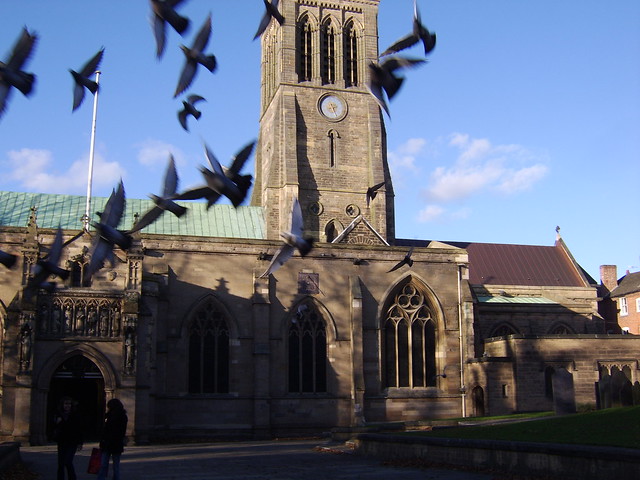
Urban Fits is divided into four untitled sections, each of which opens with a poem embodying the collection’s two major themes: the city and the sacred. Inviting us to see and hear and experience what he sees, hears, experiences through the frame of his window, Petersen introduces us to this collection with “Pigeon Matins”:
passing wings
grace the window pane
at the parting of curtains
the angels arise
in a tidy choir on wires,
mumble matins–
a summons…
[...]
to the powers that be (6-12, 17)
By answering the church-choir call of pigeons outside his window, Petersen summons his readers “from dormancy” (13) to journey with him in meditative contemplation of the uncommon commonplace.


Employing the rhythms of person and place through sound and image, Petersen’s poetry is engaging and provoking in a style which remains largely accessible to the everyman and woman of whom he writes:
a baby navigates
the pre-dawn of its birth–
twisting and somersaulting
like an astronaut
in a cramped capsule
eager to stretch his legs
in outer space
[...]
we’ve all been there
restless to escape the comfort
of watery solitudes
for exotic constellations
as we rumble and bump along
in this tin womb of a bus (“Navigating the Dawn” 2-8, 19-25)
While birth and death, love and friendship, poverty and community, truth and beauty are all explored in the broad scope of Urban Fits, the most recurrent motif in Urban Fits is the Vancouverite daily commute. Petersen’s city bus and traffic jam embody the transient city life: the drab and quotidian, the seemingly insignificant and disconnected congregation of the people within a particular time and place. Petersen views traffic jams and bus occupants as sacrosanct congregations because, refusing to be contained within the cathedral, it is Petersen’s Catholic faith which informs his day-to-day:
Drink it in—
brake lights stalling you
in a memory that nags from last night’s quarrel,
bumpers snarling—you’re daily wine.
You can only wait and curse and cry for mercy. (“Morning Mass” 12-16)
We come to gather that the narrative of Petersen’s faith as it regards the human condition does not leave us waiting and cursing and crying, for Petersen does not leave us there:
On a nearby chimney,
an orphan squirrel of bygone wood groves, survivor,
raises little hands to offer up your absolution—
[...]
dashing over the housetops with deft invocations
in the twitches of his tail, into a tree,
[...]
like an arrow prayer at morning mass.
Then he is gone again, into a confessional of firs. (18-20, 23-24, 27-28)
Karl Petersen’s poetry is full of humor and hope, the occasional exhortation, and ultimately, faith that the daily grind which can make us feel, almost ineffably, that things aren’t the way they’re supposed to be, is itself laced with profound laughter and grace. Urban Fits is a delightful invitation to its readers to slow the moving picture of our lives frame by frame so we notice and consider our own daily liturgy.