Thursday, July 30, 2009

Organic Food Liars

This was just published, today.

LONDON (Reuters) - Organic food has no nutritional or health benefits over ordinary food, according to a major study published Wednesday.

Researchers from the London School of Hygiene & Tropical Medicine said consumers were paying higher prices for organic food because of its perceived health benefits, creating a global organic market worth an estimated $48 billion in 2007.

A systematic review of 162 scientific papers published in the scientific literature over the last 50 years, however, found there was no significant difference.

I've been told that God wants me to eat natural food because it is better for my body. The Bible certainly does ask us to treat our bodies well - but it also asks us to use our brains.

Organic vegetables are no different than ugly normal vegetables on a chemical level - nutrients are not more plentiful in the organic variety. Why? Because it isn't possible to take a healthy vegetable and make it less healthy. Sure, you can add something (like pesticide) to the food, but you can't take away the health benefits by doing so. If the non-organic food contains nothing harmful then there is no health benefit to eating organic.

The debate about the dangers of pesticides still rages on. I don't think there is any evidence that they are harmful but it is not immediately relevant to this part of the discussion. What we are discussing is the fact that the actual food itself is not any more nutritious.

(Obviously, if you prefer the flavor or have some other reason for eating organic food this doesn't apply to you.)

For more information on organic foods that you might not have heard (for example, these crops are grown mostly by business tycoons rather than local farmers and the cultivation of organic foods is more harmful to the environment then standard food) check out Brian Dunning's article here.

Please don't misunderstand me: I do not look down on people who eat organic food. However, the organic food industry has been lying to us and I think it's time for these lies to stop.

Tuesday, July 28, 2009

Answering Your Questions About Postmodernism

I planned on writing more about postmodernism, this week, but the questions I received from my readers were so good that I don't actually have to craft an original post. Here are your questions.

A friend of mine who holds many degrees asked the following (on Facebook):

Your narrative makes it sound as if social constructs are something we just decide to put together, but doesn't the idea of a social construct suggest something larger than us, something we are born or educated or otherwise brought into?

This is absolutely correct and I am sorry if I was unclear on this. In my example of a social construct (there is always a cat on my bed), I came to this knowledge because every time I walk into my room a cat is sitting there; it's not because I wanted it to be that way. (If I could decide my own social constructs they would go something like, "Molly always makes me coffee" or "Desmond never tries to enter the trash can.")

Andrew had this question:

Does being post-modern imply that you favor going against the common metanarrative, or just that you're willing to question it?

Good question. Remember, the definition of post-modernism is that we are incredulous to all metanarratives. When presented with one, a postmodernist should not attempt to tear it down or run from it; instead, they should question it. In questioning the metanarrative a postmodernist thinks they can learn the truth and get out from under the point of view that has been given to them. Thanks, Andrew.

My cat, Desmond, was helping Christine with her homework; later, he asked her out on a date.
His relationship status on Facebook currently says, "It's complicated."


My good friend, Krystal, has this question, which is similar to the last one:

Also...I mostly get what your point was when you said:
"A good postmodernist simply tries to act outside of the influence of the metanarrative rather than insisting upon their own."
But what is really the difference, when one looks at this closely? Or how can you tell?

Some people treat postmodernism as if it were a religion of its own. "I'm a postmodernist," they say, "so I don't believe in God." There's nothing postmodern about that. A true postmodernist might say, "I have been told that God is real; I will question this truth and consider it." This second person, the true postmodernist, will question the Nihilist as well as the Christian until they reach a conclusion - never believing one of these worldviews until they have reason to do so.

However, the most relevant question came from Bruce, who has the question that I am slowly getting to:

My question though concerns your statement that postmodernism is not a problem for my faith. Like you I'm a Christian. While I would disagree with your idea of what postmodernism is I think that on your definition it remains a problem for Christian faith....Why would postmodernism, defined as: "Incredulity to all metanarratives" given the above observations, not be a problem for my faith?

I do not think postmodernism is antithetical to Christianity - but that thought requires its own post which will arrive later in the week. Stay tuned!

(I'm sorry that this blog post came late. It takes longer than normal to post when writing about stuff like this!)

Friday, July 24, 2009

Your Questions about Postmodernism...

Just an quick update: I've been getting some good questions about postmodernism and plan on answering these questions on my blog, Monday. If you have any questions you would like to ask you can email it to me or put it in the comment section.

Oops. Desmond found out that I used pictures of him without his permission.
He's going to be upset for a while.

Why Do Churches Want to Change the Texas Education Cirriculum?

It's true that our country has a Christian heritage - but its background has other baggage as well. Recently, a group in Texas has asked that the education curriculum spend more time asserting the Christian foundations of the United States. Even though I am a Bible-believing Southern Baptist who thinks Christians are under-appreciated in this country - I disagree with them.

One of the panel, David Barton, founder of a Christian heritage group called WallBuilders, argues that the curriculum should reflect the fact that the US Constitution was written with God in mind including that "there is a fixed moral law derived from God and nature", that "there is a creator" and "government exists primarily to protect God-given rights to every individual." (Link)

A good friend of mine who is a few steps away from having a Ph.D. in Southwestern Studies (and happens to be a minister) likes to remind me that the religious freedom in the United States can be largely attributed to the deists who founded our country.

If we are going to ask schools to teach the importance of Christianity in founding our nation, isn't it only fair that we also teach the influence of Deism? Most schoolchildren are familiar with church but can't tell you what Deism is, so which religion of the founding fathers is really being repressed? When we consider the role of Thanksgiving and the two Great Awakenings in our history books it's hard to say that Christian faith is not represented.

In fact, it is almost the only faith represented in American History books. To this day, most people think the Native Americans were simply pantheists like the Greeks and couldn't tell you anything about their religion. Should this religion, as well as Deism, also be a part of the curriculum? It seems draconian to expect our faith to be the only one that history considers important.

"These knobs go up to ELEVEN!"

Christianity already has the dominant role in American history books and I don't think we gain anything by asking it to be placed on a higher pedestal. The picture above is one that you may have seen in a textbook - but it won't be so easy to find a picture of a Deist school or a Native American ceremony in your books. The church has already won this game of king of the hill and stirring up this issue in an inflammatory way is not going to bring new members into your church.

Wednesday, July 22, 2009

Explaining Post-Modernism with Cats


Now that we have discussed What Post-Modernism Is Not - it's time to get our hands dirty and figure out what it is.

The definition of Post-modernism is as follows: Incredulity to all metanarratives.

This is already getting boring - I'm bringing in pictures of my cats so I don't lose you.
Desmond (left) and Molly (right) are going to help us.

But, what is a metanarrative and how can we be incredulous to them? Fortunately, metanarratives are not complicated, it's just an obscure word and the concept can be explained by discussing two other simple things - narratives and social constructs. Here we go!

Narrative - The story of an individual thing, group, concept, etc. Your life has a narrative; so does your cat and your oven and that idea you had to start a business. Here are some examples.

Joe Average grew up in Indiana where he got married and worked in construction while his wife baked pies and their kids sold lemonade; he eventually retired and moved to Florida.

Flabby, the goldfish, was taken from the pet store and placed in a glass bowl in a suburban home. He was flushed 6 months later.

The first line of iPhones was very popular but was discontinued when the next model was manufactured. Some people still have them.

So, a narrative is just a story. Easy .

Narrative - "Desmond spends a lot of time on our bed instead of the cat bed we bought for him."

Social Constructs - Concepts that we develop when we see what these narratives have in common.

Guys are tough - women are pretty.

Goldfish die easily.

iPhones are popular.

Nothing complicated. By looking around us we see themes in our social patterns that we are all familiar with. We may not appreciate these themes but they are part of our society. We all know tough guys who like to wear pink and construction workers who listen to Mozart - but these social constructs are the "norm" based on the majority of the things we see.

Social Construct - "There is always a cat on our bed." Sheesh.

Metanarrative
- The "over-arching story." Combine these social constructs into a single account and you have a single narrative that tells the whole story.

Here's the Wikipedia definition of a metanrrative:

...therefore, a metanarrative is a story about a story,
encompassing and explaining other 'little stories' within totalizing schemes.

Now, working from the narratives and social constructs I just discussed, here is an example of how we might see the metanarrative:

In our world, men marry women and they raise a few kids. At some point, they will buy a gold fish that will die quickly. If any one is cool they will have an iPhone.

Of course, your view of this metanarrative will be different from that of a person in India or someone who is from the future. We develop our view of the metanarrative naturally without stopping to think about it. Uneducated people and scholars all hold to their own views of the over-arching story of mankind.

When Desmond realized that he was only hanging out on our bed because it was the way he had always done things, he opened his mind to new possibilities and started sleeping in the laundry basket. (It also made him more efficient in his task of 'getting cat hair on clean clothes.')

The average person walks through life being inexplicably guided by their view of the metanarrative. We expect our neighbors to have two cars and our children to sell lemonade in the summer. We expect everyone to share our views about eternity.

As kittens, Molly would stand up and pose for a camera. However, as soon as he knew that he was simply following standard procedure, Desmond refused to comply to society's expectations and only scowled at the camera.

The post-modernist, however, is of a different sort. They recognize that they are walking on a path that society has made for them and consider how they can go their own way. When they realize that they are doing what is expected of them, they stop and re-consider the decision. " Is this the right thing to do?" they might ask, "or is it just what I am expected to do?"

By questioning the metanarrative, women suffragists realized that they should be allowed to vote - even though most of society had unquestionably accepted the notion that they should not. In the same way, philosophers, like Plato, decided that beyond the physical world was a world we could not see that, unlike our world, is eternal. By giving important melody parts to the bass guitar, instead of the electric lead guitar, Paul McCartney stepped out of the framework of rock music and recorded the first bass guitar solo on "Paperback Writer." (As you can see, post-modernism is not necessarily new.)

Since everyone knows that "cats don't wear flannel," Molly has decided to embrace post-modernism and put on one of my plaid shirts. Desmond has other plans and insists that wearing this shirt will not make her happy. Their existential struggle continues to this day.

Next time, we will discuss how this interesting view is misused in our time and what its proper context might be. As always, discuss!

"Got it?"

(W0w, I just found out that Mental Floss, one of my favorite stops on the internet, has linked to this! Thanks, Miss C!)

Monday, July 20, 2009

Baptist Wax.

My new favorite blog is The "Blog" of "Unnecessary" "Quotation Marks." It displays different signs each day that include misappropriations of quotation marks which result in humorous possible misunderstandings.; for example, when someone writes "don't" step on the grass - are they being sarcastic when they say "don't"?

Recently, they featured this gem:


I'm a baptist and I can tell you that the Pentecostals pretty much have this market cornered with their anointing oil. (But market research speculates that there is room in the industry for a counter product such as Baptist Wax which is applied to the entire body and the believer's car rather than just being poured over the affected area.)

Here's another favorite:


Imagine selling someone fruit spread by making quotation marks in the air with your fingers while saying that the product includes actual fruit. Probably not a good move. Anyway, when you're bored with that blog check out the Apostrophe Abuse blog.

Thursday, July 16, 2009

I'm Jealous of the Monkeys

I'm not making this up - a monkey has been trained to control a robot with his mind.

A laboratory in Pittsburg has planted a microchip in the monkey's brain which lets him control a robotic arm with his thoughts; he has learned to pick things up and turn handles.

Look at the scowl on his face. We haven't just given awesome robot wielding power to a monkey - we gave this power to an evil monkey! (Also, I'm pretty sure that monkey can talk in a British accent and has command over legions of henchmen.)

But, that's not all. I recently discovered that this little fellow isn't the only robot controlling monkey in the world. A monkey named Idoya has been trained to control a robot halfway around the world with its thoughts. When Idoya, who resides in the U.S., thinks about walking a robot in Japan walks around. Idoya has been so well trained that she can simply watch the robot on a screen and make it do as she wishes without any help from her trainers.

These experiments have interesting potential for helping the paralyzed to walk by fitting them with robotic implants. Very cool. Until then, the monkeys get to have all of the fun. Let's see, that's two monkeys, today, who can control powerful robots and I can't control my can opener. Can I have a chip in my head? When do I get to use my mind powers to force robots to do my bidding? That's almost as cool as having grad students follow me around. (Hmm, I might be the first Christian to ask someone to put a chip in their head. What kind of a website is this?)

"Ooh, I've got an idea, let's fit the human with a microchip and see if he can control robots!"

And, in one more piece of monkey-related news, monkeys have even been trained to recognize bad grammar - which means that, even if I can't have mind-control over a robot, I can at least have a pet monkey to proof read my blog. And, if you ever told someone that their YouTube comment could have been written better by a chimp - you were right.

The world's most frightening grammar nazi. You're looking at the end of dangling participles as you know them.

Friday, July 10, 2009

Meet the Calvinati!

Since John Calvin would be 500 years old, today, I've decided to introduce my readers to a group called The Calvinati.

The Calvinati is an online hub for news, blogs, and information about today's Calvinists. Calvinists are an odd group, these days, and often find themselves hiding their true nature from their church friends. How would the congregation react if they knew that the music minister believed in limited atonement? Or, that the children's minister believed in the total depravity of man? (Oh, wait, I think every children's worker believes in that one...)

The opening paragraph on their website states:

The 1906 Catholic Encyclopedia's article on Calvinism begins with the words "this remarkable (though now largely obsolete) system..." Yeah, right. Try again, 1906 Catholic Encyclopedia (if that's your real name!); The Calvinati are alive and well. And we are everywhere.

Today, the Calvinists have made a comeback. They exist in large numbers of theologically schooled men and women who do not discuss predestination with outsiders.

Like a secret society, Calvinists are probably sitting next to you in pews and filling your church's committee groups - unbeknownst to the general population. Yes, they've got their fingers in a lot of pies and you'll know it's bad when your pastor mentions "undeniable grace." They've gotten to him, too.

Their website can help the curious or the enthusiast find answers to questions about Calvinism and locate other Calvinist groups, online or in their area. It also tells you what to wear to the secret meetings where they will teach you the handshake. (You are also expected to wear a tulip on your jacket...) The predestined are coming and I, for one, welcome our new Cavlinati overlords...

Thursday, July 9, 2009

Things I Didn't Know About the Amish (For Example - They Could be Reading This...)

I didn't realize I had misunderstood the Amish until I read an article in TheTechnium that described them differently than the neo-Luddite hillbillies I had imagined. (Which is really unfair, in retrospect.) I was surprised to find out that, not only are they technologically bright, but one particular group of them even manufactures an electric fireplace that is sold to people all over the world.

Electricity is not a problem for the Amish - but it is very important for them to feel like they are "separated" from the rest of society. Being linked up to the same power grid as a local strip club is unacceptable, but something like solar power is not.

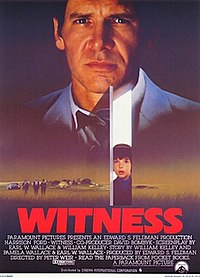
My knowledge of the Amish begins and ends with Harrison Ford. (Same goes for archaeology and space travel.) Also, Viggo Mortenson plays an Amish teenager in this film and I always look for Orcs to come running over the hills when he is on screen.

The Amish also have pioneered interesting ways to use pneumatic energy to make their own localized electricity and are known to put solar powered telephone booths in their fields so they can call to check on their wives - who answer on their own solar powered gizmo. Currently, some Amish are considering cell phone use.

They are not opposed to using someone else's electricity or riding in someone's vehicle because owning a thing is not the same as using a thing. Amish can also be seen in local libraries using the internet - so it's only a matter of time before they find out about "Amish Paradise".

Fearing they could go "Ben Hur" at any moment, local motorists cautiously let the Amish buggy have the right of way....

Interestingly, if some lunatic destroyed the power plants in Pennysylvania area the Amish could use their electricity and go about business as usual. If the power grid failed the rest of us would be technologically behind them for a change. Their ability to survive without the outside world might make them the wisest people on the planet. (Also, Michael Bay should make a film about what I just typed.)

Thank goodness they are a peaceful people.

(Read the whole entire article from TheTechnium here.)

Tuesday, July 7, 2009

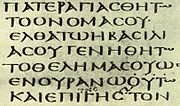
Does the Newly Published Codex Sinaiticus Challenge Our Theology?

In between Michael Jackson videos the news informed us that the world's oldest Bible has been published online. However, the media is unable to discuss this without trying to challenge Christianity.

Every two or three years a new document is championed by Bible critics as the document that will change the way we see the Bible - even cause us to question its authority. When I was in high school it was the Gospel of Thomas. Later, Judas's gospel was big news. (Do either of those seem relevant, now?) Today, it's the Codex Sinaiticus. We are being told that this work contains books that are not in our Bibles and, thus, create difficulties for our theology.

This is old news for the historian. The Codex Sinaiticus was made when the church was still deciding which books should be considered canon so it's inclusion of certain books presents no problem for Christians.

There are verses missing, also, from these books. CNN reports that Jesus' resurrection is missing in one section. What CNN does not tell you is that this is not, by any means, the oldest copies of the gospels and therefor do not usurp the authority of the older documents. It is not unusual for documents to be missing sections or passages for many reasons (copy errors, missing pages, water damage, to name only a few) and the vast majority of documents still correspond. (There are over 2,400 manuscripts of the New Testament so we're not just talking about four or five scrolls.)

The Codex Sinaiticus is an important work and the previously scattered fragments have now been brought together in a remarkable way. However, the book itself is old news. Theologians and historians went over it with a fine toothed comb a long time ago.

(Thanks, Kelly, for the heads up.)

Monday, July 6, 2009

The Magic Spider Bite

This story broke in March but I only heard about it today.

A California man was in a motorcycle accident years ago that left him, sadly, without the use of his legs. He spent 20 years in a wheelchair as a paraplegic - but everything changed when he was bitten by a Brown Recluse Spider.

While beaing treated in the hospital a nurse noticed spasms in his leg. Since that was supposed to be impossible, the hospital ran tests and discovered that his nerves were still working. In less than a week this guy was walking around on his own.

No one has yet figured out how a spider bite could cure a guy of paralysis but it is very interesting.

The poisonous bite of Brown Recluse Spider is more well known that the healing effects of it's cousin - the Brown Extrovert. (citation needed)

There is a great deal we don't know about our world. I always think that our level of scientific understanding is impressive (and it is) but stuff like this reminds me that there is still a lot to learn.

(I came across this story on Oddee.com, from their list of amazing medical miracles.)

Wednesday, July 1, 2009

300th Post! - How We Should Appreciate Our Freedom

Fleeing religious persecution, our forefathers came to a new world where they could worship as they pleased. How did they accomplish this? Did they set up the Southern Baptist United States or the Republic of John Calvin? No, they simply allowed religious freedom to all.

I know Christians who think that our country ought to be run as if were a large church where we have an official protestant religion and all decisions are made by the Bible - these are well intentioned ideas but they are misled.

The people of Europe knew all too well the dangers of mixing church and state: persecution and torture. The English protestants had known extreme punishment until Elizabeth I made the Church of England the official church - not following suite was punishable by the state. Mind you, this is not "Christian vs. Muslim" this is "Christian vs. other Christian."

Is that what we want?

Asking the government to regulate religion would create a monster that no one could control. The reason our patriarchal God-fearing church builders established absolute religious freedom in this country was to avoid this problem all together. Asking the government to favor one religion could backfire as soon as Christianity finds itself as a distant minority and new leadership wants to persecute the church. It might sound far-fetched - but no government needs to have that kind of power.

Instead, let's rejoice that our neighbors can build Buddhist temples and mosques. Why? because it means we have the freedom to worhsip as we choose. We do not worship the same God as other religions but we can only hold on to our freedom if they hold on to theirs.

For Independence Day - let's be thankful that we can do with our religion as we please and remember two things:

1 - The first amendment which allows religious freedom to all - it's the best thing that ever happened to Christianity in the world of politics and government.

2 - The brave soldiers who make it possible.


Thank God for them.