Tuesday, May 20, 2014
This Blog is Taking a Break
We won't be publishing any articles for a while. I know, you're crushed. Check back later.


Monday, May 19, 2014
"The Founders" - Four Reasons You Should Avoid Using Them
It's primary season in Texas, so it's that time again. That time when we get to hear this phrase over and over again: "The Founders believed..."
In any political argument, it's the ultimate evidence; the ultimate trump card; the ultimate way of stopping your opponent in his tracks. Just start your sentence with these three words. "The Founders believed..."
Unfortunately, using these three words is very intellectually risky, and often a terrible blunder. Here are four reasons why you should either be slow to invoke "The Founders," or avoid doing so at all:
 1. There is no one recognized club of "Founders"
Unfortunately, creating a Founders Club for historical discussion isn't as easy as creating one on Facebook. Are you talking about some of the common big names, like George Washington, John Adams, Benjamin Franklin, and Thomas Jefferson? Or, are you talking about some lesser-known but important men like John Witherspoon, Patrick Henry, John Marshall, and John Jay? Or, maybe you're more progressive and you want to talk about Abigail Adams and Mercy Otis Warren.
Turns out, hardly anyone is EVER talking about the same individuals when they invoke "founders" in their arguments.
2. There is no one point in American History that can be officially dubbed "THE founding."
When people talk about "the Founding" they are often referring to different times, documents, and events. Could be the Declaration of Independence in 1776. Could be the the nation's first constitution, the 1781 Articles of Confederation. Could be the writing of our current Constitution, ratified 1787-89. Or, do you mean the settling of Jamestown in 1607, or Plymouth in 1620, or the peopling of America by Indians in the hundreds of years previous to these?
Who your "Founders" are will depend on which "founding" you are assuming.
3. The Constitutional "Founders" were a diverse group of people, with a diverse set of beliefs on everything, including the Constitution.
The Constitution did not fall out of heaven with everyone in perfect agreement on its divine origin. You chuckle, but we often forget that the Constitution was not merely written down. It was forged through months of debates and compromises in every city and state in the nation. Major Revolutionary leaders like Patrick Henry and Samuel Adams initially rejected the Constitution as antithetical to the ideals of the Revolution. No single man at the Constitutional Convention got exactly what he wanted. What every man did get was a document of compromise that he could settle with, even if he didn't agree with everything in it.
4. The "Founders" were humans, who changed their minds over time.

The Founders were many, diverse, and human. Appealing to them collectively as biblical prophets or as a historical unified front is ahistorical, unfair, and unhelpful.
In any political argument, it's the ultimate evidence; the ultimate trump card; the ultimate way of stopping your opponent in his tracks. Just start your sentence with these three words. "The Founders believed..."
Unfortunately, using these three words is very intellectually risky, and often a terrible blunder. Here are four reasons why you should either be slow to invoke "The Founders," or avoid doing so at all:

Unfortunately, creating a Founders Club for historical discussion isn't as easy as creating one on Facebook. Are you talking about some of the common big names, like George Washington, John Adams, Benjamin Franklin, and Thomas Jefferson? Or, are you talking about some lesser-known but important men like John Witherspoon, Patrick Henry, John Marshall, and John Jay? Or, maybe you're more progressive and you want to talk about Abigail Adams and Mercy Otis Warren.
Turns out, hardly anyone is EVER talking about the same individuals when they invoke "founders" in their arguments.
2. There is no one point in American History that can be officially dubbed "THE founding."
When people talk about "the Founding" they are often referring to different times, documents, and events. Could be the Declaration of Independence in 1776. Could be the the nation's first constitution, the 1781 Articles of Confederation. Could be the writing of our current Constitution, ratified 1787-89. Or, do you mean the settling of Jamestown in 1607, or Plymouth in 1620, or the peopling of America by Indians in the hundreds of years previous to these?
Who your "Founders" are will depend on which "founding" you are assuming.
3. The Constitutional "Founders" were a diverse group of people, with a diverse set of beliefs on everything, including the Constitution.
The Constitution did not fall out of heaven with everyone in perfect agreement on its divine origin. You chuckle, but we often forget that the Constitution was not merely written down. It was forged through months of debates and compromises in every city and state in the nation. Major Revolutionary leaders like Patrick Henry and Samuel Adams initially rejected the Constitution as antithetical to the ideals of the Revolution. No single man at the Constitutional Convention got exactly what he wanted. What every man did get was a document of compromise that he could settle with, even if he didn't agree with everything in it.
4. The "Founders" were humans, who changed their minds over time.
A good example of this is James Madison. In 1787, he was the primary architect of the Constitution, pushing for a stronger national government than many of his contemporaries wanted (like Jefferson and Henry). Only a decade later, in 1798, he helped Jefferson draft the Kentucky and Virginia Resolutions, now considered classic defenses of the rights of states to challenge the power of the national government. So if you're referring to Madison in your founders argument, which Madison are you referring to - the 1787 Madison, or the 1798 Madison? We change our minds and thought processes over time, and so did they.
The Founders were many, diverse, and human. Appealing to them collectively as biblical prophets or as a historical unified front is ahistorical, unfair, and unhelpful.
Friday, May 16, 2014
Spritual .gifs - How to Survive Church Greeting Time (If You're an Introvert)
The service is going strong until your pastor says those horrible words: "Now, turn and shake hands with your neighbor."
Oh, no.
The church's introverts sneak out of the sanctuary very covertly.

Maybe this is a good time to get a drink of water.

No one will notice. You can just wait it out.

But what if you come back too early and those extraverts are still in there, waiting for you?

The horror.

What if they get too friendly?

Seriously. They don't get it.

Maybe act really tough and they'll leave you alone.

They might walk past you if you pretend you're reading.

Or if you act like you're in the middle of a religious experience.

Try to blend in with your surroundings.

Or, do what I do - learn an instrument. Band members never have to greet people. Too busy rocking out.

And now you know why the band members at your church are weird. If none of that works, just ask for high fives and wait it out. Greeting time can't last forever. Can it?

Oh, no.
The church's introverts sneak out of the sanctuary very covertly.
Maybe this is a good time to get a drink of water.

No one will notice. You can just wait it out.

But what if you come back too early and those extraverts are still in there, waiting for you?

The horror.

What if they get too friendly?

Seriously. They don't get it.

Maybe act really tough and they'll leave you alone.

They might walk past you if you pretend you're reading.
Or if you act like you're in the middle of a religious experience.

Try to blend in with your surroundings.

Or, do what I do - learn an instrument. Band members never have to greet people. Too busy rocking out.

And now you know why the band members at your church are weird. If none of that works, just ask for high fives and wait it out. Greeting time can't last forever. Can it?
Wednesday, May 14, 2014
Listen to this: Borderland

I'm slow to take to new music -- especially new Christian music. I've heard the name John Mark McMillan floating around for the last couple of years, but I never bothered to listen. This March, McMillan released Borderland, and I started to see and hear his name even more. After two friends with trusted musical taste both insisted, on the same day, that I give this work a listen, I succumbed and watched this video of Borderland's first single, "First/Last."
I instantly liked it. As a worship leader, I'm always on the look out for songs that work corporately (that is, they are singable, memorable, and true), but that approach old concepts in a unique way. "First/Last" accomplished this goal nicely, so I looked up the rest of the album, expecting to hear more similar worship songs.
What I heard instead was a sonically surprising fusion of rock, pop, folk, and gospel, grounded in McMillan's enjoyably gritty baritone, and lyrics that would more likely appear in a literature class than in Sunday school. All McMillan's songs passed the musical side of my "corporate worship test" with their instant hummability, but the instrumentation -- which starts with contemporary worship's acoustic-guitar-fronted-rock band, but is deepened by lush strings and successful experiments with 80s synth and electronic elements -- would be unlikely in most church worship services. Most unlikely, however, are the beautiful lyrics, that seem to exult in ambiguity, thought-provoking figurative language, and evocative imagery. Take the album's opening invocation, "Holy Ghost:"
Dead in the water
Like lamb to the slaughter
If the wind doesn’t sing her song
And I’m speaking in tongues
Cause I need a Holy Ghost
It's not exactly what you'd hear at church on Pentecost Sunday. Even the album's perfectly singable single, "Future/Past," broadens the Christian vocabulary for speaking about the mysteries of God with lines like, "The constellations are swimming inside The breadth of your desire," before launching into the song's catchy chorus: "You are my first/you are my last/ You are my future and my past..." Here, cliches ordinarily applied to romantic love take on more resonance when sung to a lilting triple meter that, in the chorus's last line, seems to fluctuate and expand, demonstrating musically the mystery of a powerful, benevolent creator who exists beyond the confines of time.
And getting beyond confines is really what this entire album is about. Borderland is an album about the space between spaces, the "already-but-not-yet" of life lived between the fall and the fullness of restoration, when Christ's kingdom has come, but is not yet complete. McMillan luxuriates in the tension of this space, the place "on this side of the thunder" ("Holy Ghost"), "on the brink" ("Love at the End"), where we "see the light of heaven's porch" though we're stuck "outside [the] chain-link fence" ("Borderlands"). McMillan underscores the tension inherent in his theme by dwelling in musical borderlands -- between CCM and Indie-pop; between corporate and individual; between stadium rock and coffeehouse folk; between the strange and the familiar. And while you may never hear more from this album than "Future/Past" in a worship service, Christians and non-Christians alike will enjoy and benefit from spending some time in the musical and spiritual limbo of Borderland.
(Note: After looking into Borderland, I realized that I already loved John Mark McMillan for penning the worship song "How He Loves." See more lyrics here: http://johnmarkmcmillan.com/lyrics)
Monday, May 12, 2014
Charting 125 Years of Christian Change
One of the more interesting tools on the internet is Google's Ngram Viewer. It allows you to search words and phrases through about 500 years of book history. You select your phrase, tell it the time-frame you want, and it will search all the books Google has scanned into the system's repertoire. I decided to put it to the test with some Christian phrases and found a several interesting results.
Going into this I thought I could guess how these would chart, but always ended up wrong. All the charts show a drop in use of Christian terms between about 1930 and 1980. Before and after those years, there are some significant changes also but nothing so apparent.
A few technical notes to add -- I used the category "English" which combines both British and American sources. Also, the Ngram Viewer only goes up to the year 2008 so all of the charts are based off of that year, and 125 years back. I had to shrink down the charts to get them to fit on the blog, so I apologize the years are jumbled at the bottom. I included above each graph the years that are represented.
I hope you gain some insight. Please post in the comments anything you see in these charts.
ON HEAVEN AND HELL:
I find it interesting that "heaven" tracks, for most of this chart, higher than "hell" especially since the word "hell" is often used in other phrases or slang sayings. (For instance the phrase, "go to hell", peaks in the 1930s.) The early 1990s are the only time that "hell" is actually more prevalent than "heaven".
125-year-trend: 1883-2008:
Zoomed-in to 1970-2008:
ON CHURCH AND JESUS:
You can see two things easily from this chart. The Ngram Viewer is case-sensitive, so I entered both "church" and "Church". It makes the results more interesting. The non-capitalized version of church is now much more prominent than it once was, seemingly representing our more casual writing styles and views of church.The next thing easily seen is that the term "Jesus" is now as prominent as the word "church". (Although, if you combine both forms of capitalization "church" still beats Jesus.) It is hard to see on the chart below but "Jesus" actually was ahead of "church" between 2002 and 2007. This shows a major shift in our overall thinking of how we view Jesus and church interacting with Christianity.
125-year-trend: 1883-2008:
Zoomed-in to 1958-2008:
THE HOLY SPIRIT VS. THE FATHER
On this graph I pit "the Holy Spirit" against "the Father". Before charting this I thought that "the Holy Spirit" would grow continually throughout the 20th century since Pentecostalist revivals started early in the century. Instead we see a decline until about 1940 in both terms and then see some growth. In the 1970s you see "the Holy Spirit" growing faster than "the Father" which, if I had to guess, would attribute to the growth of the Calvary Chapel and Vineyard movement.125-year-trend: 1883-2008:
Zoomed-in to 1958-2008:
STUDY THE *
Below I've listed charts looking at the phrase "study the *". The asterisk is a wildcard so the system filled the word in on it's own. This chart shows a very interesting change in our collective thought process. Only two terms, "study the effect" and "study the history", appear in all the charts when broken into 25-year categories. Check-out the chart at the bottom comparing those terms with rise and fall of "study the Bible".On the 1933-1958 and 1958-1983 charts "study the Bible" does not appear at all. On the 1908-1933 chart the phrase starts dropping but then makes a major jump to finish fourth on the 1983-2008 chart.
125-year-trend: 1883-2008:
Zoomed-in to 1883-1908:
Zoomed-in to 1908-1933:
Zoomed-in to 1933-1958:
Zoomed-in to 1958-1983:
Zoomed-in to 1983-2008:
The top terms:
Only two terms, "study the effect" and "study the history", appear in all the charts. Here are those terms charted with "study the Bible" for the whole time period from 1883-2008.
----
Those are all the charts I have for now. Please comment about any trends you catch or why you think some of this happened. I think the current trends of Christianity are very different than what most of us have seen in our lifetimes. It will be interesting to do these same charts in another 25 years!
Friday, May 9, 2014
Why Harvard's Black Mass is a Harmless Waste of Time
A few of you have been spooked by news that some students at Harvard are going to enact something called a "Black Mass" with help from leaders of a Satanic Temple in New York.
Sounds scary. But ask yourself if you've ever heard of a "Black Mass" before assuming it's a threat. Does it conjure up ideas of witchcraft or summoning devils? Does the idea of a Satanic Temple make you think of dark robed figures sacrificing animals at Stonehenge?
It shouldn't.

First of all, what's the Black Mass? It's nothing. A lie. The sort of thing a medieval politician would claim was happening behind closed doors in an attempt to give their opponent a bad reputation. For many centuries, the best way to win a court case was to claim that your opponent was involved in witchcraft. It worked well in the Salem Witch Trials, too; no witchcraft was attempted by the accused, but that didn't keep them from being prosecuted and having their land and money given to the bullies who put them on trial.
Supposedly, a person performing the Black Mass would do something hideous to the Eucharist. If Harvard performs a black mass, they aren't going to summon Satan or cut open someone's pet, instead they're going to act out Catholic Mass with some profane, disrespectful twist. It should also be noted that the Black Mass is not a tradition of the Satanic church. It's not anyone's tradition, and it never has been. Anyone who thinks that the Black Mass really happened in the past has fallen for (centuries-old) political propaganda, just like the people who believed that devil worship was going on in Salem.
Second, who are these so-called Satanists? We've talked about this before - Satanism is not devil worship. It's not witchcraft. In fact, Satanists do not believe that Satan exists. Why on earth are they called Satanists? I have no idea, but they certainly win the award for The World's Most Confusingly Named Religion.
Sounds scary. But ask yourself if you've ever heard of a "Black Mass" before assuming it's a threat. Does it conjure up ideas of witchcraft or summoning devils? Does the idea of a Satanic Temple make you think of dark robed figures sacrificing animals at Stonehenge?
It shouldn't.
First of all, what's the Black Mass? It's nothing. A lie. The sort of thing a medieval politician would claim was happening behind closed doors in an attempt to give their opponent a bad reputation. For many centuries, the best way to win a court case was to claim that your opponent was involved in witchcraft. It worked well in the Salem Witch Trials, too; no witchcraft was attempted by the accused, but that didn't keep them from being prosecuted and having their land and money given to the bullies who put them on trial.
Supposedly, a person performing the Black Mass would do something hideous to the Eucharist. If Harvard performs a black mass, they aren't going to summon Satan or cut open someone's pet, instead they're going to act out Catholic Mass with some profane, disrespectful twist. It should also be noted that the Black Mass is not a tradition of the Satanic church. It's not anyone's tradition, and it never has been. Anyone who thinks that the Black Mass really happened in the past has fallen for (centuries-old) political propaganda, just like the people who believed that devil worship was going on in Salem.
Second, who are these so-called Satanists? We've talked about this before - Satanism is not devil worship. It's not witchcraft. In fact, Satanists do not believe that Satan exists. Why on earth are they called Satanists? I have no idea, but they certainly win the award for The World's Most Confusingly Named Religion.
Wednesday, May 7, 2014
The Responsibility of Having Children
 |
| Medhelp |
You may have heard the saying, "children are a gift from the Lord;" if you have children, you may even feel like that statement is true whenever the kids are properly behaving themselves. In reality, children are much more than a gift...they are a miracle.
New life is created and with it come the responsibilities of raising a person to be a fully-functioning member of society. If you are a Christian, you have the additional responsibility of doing what you can to teach the child to love God and others as oneself.
Christians see value in human life because God is the author of life and all God created was good. However, because we now live in a world tainted with sin, our understanding of the value of life has been broken. We no longer see life for what it is--an opportunity to share in God's blessings. Instead, we toil through pain and strife to find peace and goodness.
Christians have a responsibility of sharing the Kingdom of God with the world. In order to share God's Kingdom, they must first understand God's Kingdom. It is a kingdom of peace, light, joy, beauty, truth, and honor. It is a kingdom of where right is distinguished from wrong, where good is distinguished from evil. It is a place where God is glorified in his righteousness and where people share in his rich blessings.
Parents must be willing to go through the process of raising their children to see beauty in ugliness, goodness in tragedy, joy in sorrow, and equipping them to chase their dreams, face their fears, and to strive for their goals. We must protect them from evil but we must allow them to make their own choices. We must also allow them to realize or face the consequences of their decisions. We must teach them to be at peace with all people, but to stand up for themselves and their beliefs when others want to challenge them. We must help our children experience new things like riding a bike, swimming, and tasting snow, but we must also let them see that pain accompanies pleasures when knees are scraped or when they eat the snow too quickly and get a cold headache.
The things parents do for their children, the sacrifices they make, the experiences they share, the conversations they have, they all point to seeing value in life. Every little thing we do has consequence and the way we handle each situation directs the paths of our lives and relationships. We all desire to be significant and because life is from God, all of life is significant. Everything matters: how we talk, how we act, how we think, how we feel, and what we eat.
It is difficult to see the intrinsic value in every person we meet, or at least to consciously keep ourselves aware of it. We must remember that all people are a miracle, that all are here because God chose to share his creation with them, whether they recognize him or not. Children remind us that life comes from the Lord, that he sustains us, and that each new day is a gift. How do you see others? How do you see your children?
Below are two of my favorite songs about being a parent and preparing to raise children. I posted the videos with the lyrics. Listen and enjoy.
Plumb: In My Arms
Creed: With Arms Wide Open
Majority of Americans are Skeptical about the Big Bang - But I'm Not. Here's Why.
A very slim majority of Americans are skeptical of the Big Bang. Fifty one percent, to be exact. But not me.
I grew up hearing that the Big bang theory was a threat to Christianity. You might think that this came from white-haired, sanctimonious ministers who shouted anti-science agendas from behind antique pulpits, but you'd be wrong. People who don't agree with my religious views are the ones who insist that science is the enemy of my faith.
I had a classmate in grad school who insisted (loudly) that it is better to understand that the earth is really old than to believe in God. (Apparently, when you're a grad student you can just interrupt the conversation to denounce personal beliefs.) I asked him why an old earth model was incompatible with Christianity and he couldn't give me an answer, he just insisted that it was an affront to religion. I disagree.
Believe it, or not, I was attending a Baptist University when I learned to relax about the Big Bang. My physics professor explained the theory as well as someone could to a group of undergrads, and by the time he was done I realized that I had no reason to criticize it. Why on earth was the Big Bang theory considered a problem?
By all observations, the universe appears to be expanding, so it follows that all of it must have been smaller in the past. How much smaller? I don't know. No one does. But it's easy for me to imagine that the universe began with an explosion that forced space to grow in every direction. If God is all-powerful, then He is certainly allowed to create the universe this way. How about attributing the expanding universe to the God's grand design? Makes sense to me.
You know who else wouldn't be skeptical of the Big Bang? Monseigneur Georges Lemaître (d.1966), the first astronomer to theorize that the universe was expanding.
Did I mention that he was a priest? And that his work was approved by the pope?

There's no skepticism of the Big bang in my book. I wasn't around when the universe was created, so I don't know how it happened, but why argue with science?
A few things to remember. 200 Nigerian girls were kidnapped last week by a man who intends to sell them into slavery. The situation in Ukraine is growing more bloody and more hopeless by the day. 260,000 people in my city are living in poverty.
We've got our work cut out for us. Meanwhile, the Big Bang theory isn't hurting anyone.
I grew up hearing that the Big bang theory was a threat to Christianity. You might think that this came from white-haired, sanctimonious ministers who shouted anti-science agendas from behind antique pulpits, but you'd be wrong. People who don't agree with my religious views are the ones who insist that science is the enemy of my faith.
I had a classmate in grad school who insisted (loudly) that it is better to understand that the earth is really old than to believe in God. (Apparently, when you're a grad student you can just interrupt the conversation to denounce personal beliefs.) I asked him why an old earth model was incompatible with Christianity and he couldn't give me an answer, he just insisted that it was an affront to religion. I disagree.
Believe it, or not, I was attending a Baptist University when I learned to relax about the Big Bang. My physics professor explained the theory as well as someone could to a group of undergrads, and by the time he was done I realized that I had no reason to criticize it. Why on earth was the Big Bang theory considered a problem?
By all observations, the universe appears to be expanding, so it follows that all of it must have been smaller in the past. How much smaller? I don't know. No one does. But it's easy for me to imagine that the universe began with an explosion that forced space to grow in every direction. If God is all-powerful, then He is certainly allowed to create the universe this way. How about attributing the expanding universe to the God's grand design? Makes sense to me.
You know who else wouldn't be skeptical of the Big Bang? Monseigneur Georges Lemaître (d.1966), the first astronomer to theorize that the universe was expanding.
Did I mention that he was a priest? And that his work was approved by the pope?
There's no skepticism of the Big bang in my book. I wasn't around when the universe was created, so I don't know how it happened, but why argue with science?
A few things to remember. 200 Nigerian girls were kidnapped last week by a man who intends to sell them into slavery. The situation in Ukraine is growing more bloody and more hopeless by the day. 260,000 people in my city are living in poverty.
We've got our work cut out for us. Meanwhile, the Big Bang theory isn't hurting anyone.
Monday, May 5, 2014
15 Reasons You're Not as Cool as My Grandpa
My grandfather passed away last week. He was easily the coolest guy I ever knew, and it's time you all learned why you'll never live up.

He made these bookends by melting down a ford truck engine. He poured the metal into a cast of Lincoln. I asked him what he used to melt the engine and all he said was, "fire." Fair enough.

He captured this boat in WWII. Grandpa's the one on with the machine gun. He and his shipmate went exploring (they were somewhere in the Pacific) and found a boat that was being secretly built inland, so they captured it.
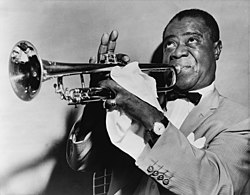
He saw Louis Armstrong in concert. You never did that. I've seen a LOT of great music (Clapton, B.B. King, Robert Plant...), but none of it can compare to Satchmo.

He taught me to love God and science. In his day these two things were not by pushed apart by society. Grandpa was an engineer and a church deacon. He could (and would) diagram an airplane wing to demonstrate lift or talk about water chemistry to explain why the coffee was bland that day, but he was just as likely to explain the Resurrection or something theological.

He knew Johnny Cash. It was back in Cash's wilder days so my grandpa wasn't exactly a fan, but it makes him cooler than you.

He hired women to do men's work. My grandfather was in charge of people at a large company that handled engineering and technological challenges all over the world. Long before it was cool, he hired women to solve engineering problems and oversee building crews. I grew up hearing his stories of women who were computer programmers and scientists.

He introduced me to Columbo. And I learned that TV's best detective was Grandpa's inspiration for everything. Everything.

He couldn't afford a radio when he was younger so he built one. (Not pictured.) I don't even know how to start making my own radio. Not a problem - he was always ready to explain the process. I still don't get it.

He stopped to smell the flowers. That's not just a saying - he actually did that. Why pass by a bloom when you can pause to take in the smell? Isn't that what flowers are for? Mind you, it wasn't easy for him to bend over like that due to his age and some severe back troubles, but he thought it was worth it. He also collected art and listened to jazz records, because life should be beautiful.

He retired and then spent time every day feeding the needy. Until his back gave out, my grandparents spent every morning collecting food and giving it to a local charity group. It wasn't easy on grandpa because his body was in bad shape, but he never complained. How many mouths did they feed? A lot more than I can take credit for.

He went everywhere. Russia. Hawaii. Borneo. Poland. Italy. You name it and Grandpa had been there.

He stole hundreds of rolls of toilet paper in the war. His crewmates were out of paper, but a nearby ship had plenty and wouldn't share - Grandpa took care of that. I've kept his secret until now.

He taught me to love jazz. If that's not cool then I don't know what is.

He enjoyed cartoons. As a result, I didn't always know that cartoons were for children. (Apparently no one ever told grandpa, either.) The bigger lesson? Do what you want - even if it's unpopular - and you'll be happier.

He once took me to the park and we played with a little wooden plane that was powered by a rubber band. It was fun, even though the darned thing wouldn't fly straight. When the plane finally flew into the sunset like it was supposed to we both nearly shed a tear. If I could go back in time and re-live one day, it might be that one.
He made these bookends by melting down a ford truck engine. He poured the metal into a cast of Lincoln. I asked him what he used to melt the engine and all he said was, "fire." Fair enough.
He captured this boat in WWII. Grandpa's the one on with the machine gun. He and his shipmate went exploring (they were somewhere in the Pacific) and found a boat that was being secretly built inland, so they captured it.
He saw Louis Armstrong in concert. You never did that. I've seen a LOT of great music (Clapton, B.B. King, Robert Plant...), but none of it can compare to Satchmo.
He taught me to love God and science. In his day these two things were not by pushed apart by society. Grandpa was an engineer and a church deacon. He could (and would) diagram an airplane wing to demonstrate lift or talk about water chemistry to explain why the coffee was bland that day, but he was just as likely to explain the Resurrection or something theological.
He knew Johnny Cash. It was back in Cash's wilder days so my grandpa wasn't exactly a fan, but it makes him cooler than you.
He hired women to do men's work. My grandfather was in charge of people at a large company that handled engineering and technological challenges all over the world. Long before it was cool, he hired women to solve engineering problems and oversee building crews. I grew up hearing his stories of women who were computer programmers and scientists.
He introduced me to Columbo. And I learned that TV's best detective was Grandpa's inspiration for everything. Everything.
He couldn't afford a radio when he was younger so he built one. (Not pictured.) I don't even know how to start making my own radio. Not a problem - he was always ready to explain the process. I still don't get it.
He stopped to smell the flowers. That's not just a saying - he actually did that. Why pass by a bloom when you can pause to take in the smell? Isn't that what flowers are for? Mind you, it wasn't easy for him to bend over like that due to his age and some severe back troubles, but he thought it was worth it. He also collected art and listened to jazz records, because life should be beautiful.
He retired and then spent time every day feeding the needy. Until his back gave out, my grandparents spent every morning collecting food and giving it to a local charity group. It wasn't easy on grandpa because his body was in bad shape, but he never complained. How many mouths did they feed? A lot more than I can take credit for.
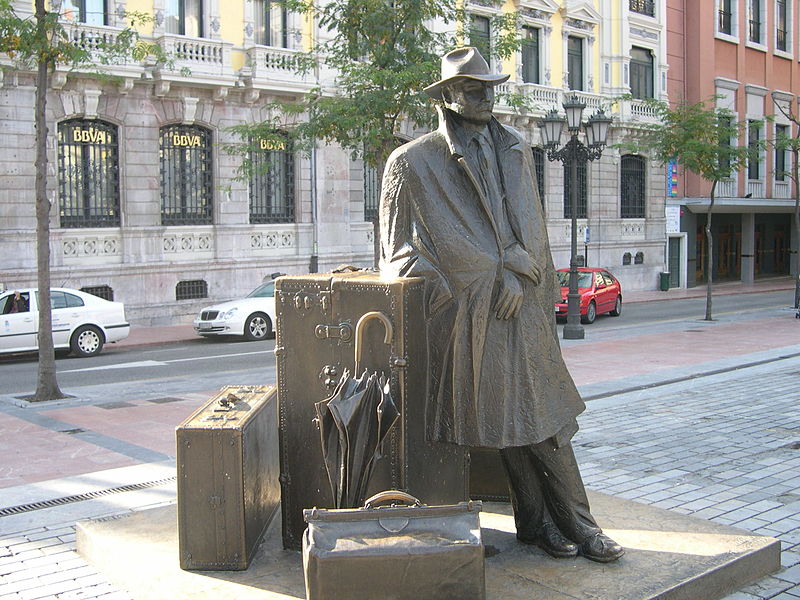
He went everywhere. Russia. Hawaii. Borneo. Poland. Italy. You name it and Grandpa had been there.
He stole hundreds of rolls of toilet paper in the war. His crewmates were out of paper, but a nearby ship had plenty and wouldn't share - Grandpa took care of that. I've kept his secret until now.
He taught me to love jazz. If that's not cool then I don't know what is.
He enjoyed cartoons. As a result, I didn't always know that cartoons were for children. (Apparently no one ever told grandpa, either.) The bigger lesson? Do what you want - even if it's unpopular - and you'll be happier.
He once took me to the park and we played with a little wooden plane that was powered by a rubber band. It was fun, even though the darned thing wouldn't fly straight. When the plane finally flew into the sunset like it was supposed to we both nearly shed a tear. If I could go back in time and re-live one day, it might be that one.
Thursday, May 1, 2014
Self Service. Not the kind at the grocery store.

Recently, Christianity Today published an article in response to all this chatter (some of it in house) about female self-pleasure boldly titled, “The Real Problem with Female Masturbation.”
First, the good. Jordan Monge gets several things very right, I think. The first being her premise that reducing women, and especially women's sexuality, to emotional psychology is problematic. White Protestant America in particular has a looooong history of desexualizing women. And Monge rightly observes how this part of our worldview is unhelpfully informing the current conversation surrounding women and self pleasure.
Unfortunately, too often the conversation doesn't overcome the unhelpful stereotypes about the female sex drive…or lack thereof. Time and time again, Christian leaders explain that women masturbate because they want to "fill a void" or have "attachment issues."
...
Christians remain uncomfortable with the idea of women possessing sexual desire. Even as they talk about the ideal Christian woman being a steamy hot wife willing to fulfill her husband's every desire by not depriving him once married, we don't want to imagine the wife's own libido.
The doublespeak here—that women are supposed to be simultaneously sexually adventurous, available, and willing yet without possessing lust themselves—is an impossible contradiction to embody. It treats sex as a man's playing field, reinforcing the notion that women should cater to men's desires without possessing similar desires of their own.
To fully address female masturbation, we don't need more psychoanalysis about sex that implicitly negates female sexuality. We need a biblical approach that recognizes both the immense pleasure of the female orgasm and the inherent goodness of sexual desire while reserving its proper place for within marriage.
These are, as I said, very old cultural attitudes Monge is fighting against here; they're attitudes that the culture at large has largely moved beyond, but of course, as is sadly the norm, conservative Christians are way behind the curve. All of which is to say, this part of Monge's premise is spot on and very helpful.
Unfortunately, where Monge goes right is also where she goes wrong. In an effort to acknowledge and even celebrate the ways in which women and men are fundamentally similar, Monge proceeds to treat male and female sexuality as more similar than they are.
After rightly applauding men for calling a spade a spade (though whether masturbation outside of marriage is always lustful--Monge's other major premise--is another conversation for another day), Monge takes a leaf from a man's guide to combating lust. She does follow this up with a nod to the distinctions regarding what triggers sexual desire in men and women (presumably visual versus emotional/intellectual or even purely physical stimuli), and she even provides a valuable tip about the importance for women of knowing their bodies, specifically their ovulation cycle, when a woman is both most fertile and arouse-able.
After rightly applauding men for calling a spade a spade (though whether masturbation outside of marriage is always lustful--Monge's other major premise--is another conversation for another day), Monge takes a leaf from a man's guide to combating lust. She does follow this up with a nod to the distinctions regarding what triggers sexual desire in men and women (presumably visual versus emotional/intellectual or even purely physical stimuli), and she even provides a valuable tip about the importance for women of knowing their bodies, specifically their ovulation cycle, when a woman is both most fertile and arouse-able.
Where Monge falls short, however, is when she states "there is no good moral outlet for these natural [and in some sense good sexual] desires before marriage” perhaps forgetting that men do experience a natural outlet for the sexual tension in their loins... and women do not. And this is why Piper's ANTHEM solution is helpful but inadequate.
Subscribe to:
Posts (Atom)