Friday, March 25, 2011

Toledo, Spain - The Last Medieval City

I just returned from a great trip to Spain with my colleagues and professors, and I've the pictures to prove it!  We spent most of our time in Toledo which is maybe the most medieval city left in the world.  A lot of European cities still look and feel like the Renaissance, but they say that the city of Toledo really fell asleep during that time and now it's still there in all of its medieval glory.  (By the way, that applies to the city's wifi connections, as well.)

Also, in medieval Spain the three religions of Christianity, Judaism, and Islam worked very hard to make peace and live together.  It wasn't perfect, but these three groups managed to get along better than in other parts of Europe.  Many of the sights in Toledo still preserve the unique culture that came from this blending of cultures and that may come out in some of the pictures.


Here's my mentor, Dr. Adams, showing us the sights in Madrid's Museum of Archaeology.

The average street musician in Madrid is about a million times better than what I'm accustomed to from such performers.  This guy got a few Euros from me for his excellent playing outside of the Prado Museum.

 People will tell you that the horseshoe arch on these doors is a Muslim design, but they are wrong.  The Visigoths made this sort of doorway popular, and the Muslims who moved to Spain would use them in their own buildings (adding their own artistic contributions to them along the way, of course).

Those aren't my bags, no, all of my luggage fit into a single backpack.  My fellow travelers were always impressed with this, and they would say that they couldn't figure out how I had fit nine days worth of clothing into an average sized backpack.  (Hint: I didn't bring nine changes of clothes.  Not even close.)

 Toledo is a beautiful city, and my pictures do not do it justice.

The Hotel Cardenal is the best hotel in the world as far as I'm concerned.  It's actually built into the medieval walls that surround the city, and it's absolutely breathtaking to step into the courtyard.


Here's more of the hotel courtyard.  The heraldry of Cardenal Cisneros (an important late medieval Spanish guy) was on the wall of my room and I thought it was awesome.  My professor told me that I'm probably the first person to enter the room and geek out over Cisneros' family crest.  I'm achieving new levels of nerd-dom.

Staying in Toledo means walking through beautiful medieval gates like this one to get anywhere.  I loved it.


There's me stading on top of one of those awesome gates.  (We found a random door and it led up there.  Being a tourist in a medieval town often means you make up your own route, because no one's going to tell you that there's a door to the top of the gate.  Fortunately, there's also no one around to tell you not to walk into random doors - which is how I found myself accidentally wandering into a city officials' office.  No one seemed to mind.)


This is a nightclub that was built out of a medieval church.  (We found another club situated in some very old caves.)

Me and the guys explore an old Roman sewer.

The Cafeteria Wamba (named for the medieval Visigothic king of Spain, as you know) has long been the lunch of choice for students on a budget.  It may be the cheapest cafeteria in town, but they've got a ham sandwich that will blow your mind.  (I know, it doesn't sound like much, but Iberian ham is rather special.)

La Synagoga de Santa Maria la Blanca (The Synagogue of St. Mary the White) is a medieval synagogue built in the shape of a mosque and dedicated to a Christian saint.  A very odd building that scholars still don't understand.

 Yours truly, delivering a boring lecture about the historiography of La Synagoga de Santa Maria la Blanca.  A tall order considering we don't have any primary documents to help understand the building's past.  By the end of my discussion they had all learned how to sleep while standing up with their eyes open.

 Beautiful cloister within Monasterio de San Juan de los Reyes.  One of our group walked in there and took an orange off of the tree and the next day they had a lock on the gate.  Oops.  (No, it wasn't me...)

 The chapel in Lorenzana's palace, which (apparently) few people get to see.

The church of San Roman is amazing.  More pictures of it here.

This is a mosque called "El Cristo de la Luz" or, "The Mosque of the Light of Christ."  An odd name for a mosque.  Legend states that when Christians converted this into a church they found a hidden closet with a painting of Christ inside being lit by candles.

This is Adolfo, who runs one of the most well reviewed restaurants in Europe.  After eating there, we all agreed he was amazing.

 Sharing a great meal with Dr. Pamela Patton, author of Pictorial Narrative in the Romanesque Cloister (which is in its second printing).

Here's the gang that had to put up with me for whole trip.  They're a great group of scholars and friends.

 This is the only picture in which she's not making fun of me.  Oh, the memories.

What part of "seat's taken" doesn't she understand?

"Lost?  No, don't be ridiculous.  I just like staring at the map in the dark, that's all..."

It was a great trip, and I hope you enjoyed my recap (more pictures can be found here).  There may be another blog entry about this trip if I can recover some lost pictures.  I highly recommend visiting Toledo if you get the chance, because it's the closest you'll ever get to going back in time to see the middle ages for yourself.

Monday, March 21, 2011

In Defense of the Monasteries

In my previous post I asked the question, "Why Aren't There Any Protestant Monasteries" and my readers responded by accusing monks of being closeted Believers who irresponsibly ignored the world.  I was horrified, because this is great misunderstanding (though, a very common one).

Here's one comment that summed up many of your responses:

I don't believe God would bless any decision to place yourself in a long-term situation of literally doing no earthly good or good for His kingdom. It's a selfish act and utterly useless for His kingdom.

Is that really common perception of a monk?  It's true that there have been a few groups who disappeared into their monasteries never to be seen again, but most ascetics were known for their community work and their interaction with the local church and city authorities.  It was the monastics (monks and nuns) who copied the Bible and other important works (both Christian and secular) so that we didn't lose them, ran nearly every school in the middle ages, and worked with the sick and needy.  For example, when no one else would tend to the leper population, the Lazarite order was begun under which monks moved in with leper groups to take care of them - even though it meant probably catching the disease themselves.  That is truly a noble life.

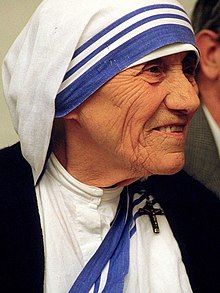
If you think about it, you already knew this.  Remember Mother Teresa?  She's probably the only monastic that pop-culture can name, and she's famous for her charity work.  Instead of assuming that monasteries are filled with selfish people who are hiding from responsibilities, we should understand that as these men and women meditated on Jesus' teachings they were naturally moved to help those around them.  History tells us that this is so, because in many places the local monastics were the only source of charity and learning in a community.  John of the Cross is well known for his writings on meditation and solitary living, but his neighbors knew him as a compassionate and generous man.

Of course, there were exceptions.  The Carthusians (for some reason) locked themselves in cells and only left once a week.  They normally had some other people employed in the monastery who would go out and do normal things, but those few in the cells never left.  It's the most strict form of monasticism I can think of in the Christian tradition, and rarely did being a monk or a nun actually mean to live a life of pure isolation.

So, go easy on the monks.  When done correctly, the monastic life was enriching for the individual and for the community and local church, as well.  It would be very interesting to see how monastics would affect our culture, today.

Monday, March 14, 2011

Why Aren't There Any Protestant Monasteries?

I don't know why, but the Protestant Reformation found no room for monastics.  I understand why Luther fought the selling of indulgences and the notion that sin could be forgiven by anyone other than Jesus.  But why did the leaders of the Reformation decry the monasteries?

The purpose of the monastery was to be a place where its members could spend their lives focusing on their spiritual lives.  Most of them spent time doing charity work in the community as well, but the core of the experience was studying, working, and praying or meditating.  The distractions of the world make it difficult for a Believer to focus their mind on God as a effectively as a monastic could.  This made the monastics into spiritual leaders and it gave them very rich internal lives.

So, why didn't the Reformation pick up this tradition?  I have no idea.  I suppose they didn't see the value in it, but I don't understand how that's possible.

I do understand, however, why we don't care about it, today.  The monastic could not have a family, because the ascetic life was simply incompatible with raising children and seeing to a spouse.  That's not meant as an insult to families - it's just a fact.  The hours a monk could spend in prayer, or pouring over a religious text, are simply unmatchable for a married person with a normal job.  It is currently popular in Protestant circles to believe that a person with a big family is somehow very holy because of their progeny.

So, if someone in a Baptist church told everyone that he was going to be a hermit they would probably not take it too well.  What if he said that he intended to live on the street so he could pray all day without other responsibilities getting in the way?  Would that be a noble thing to do?  Or an irresponsible one?  Would his parents be proud of his choice?

When St. Augustine found God, he told his mother that he was going to leave the things of the world and devote his life to Christ.  His mother, Monica, had been pining away for him to have another grandson (which meant finding him a wife - this had been her favorite hobby since his childhood), but that desire was pushed aside when he told her his news.  She energetically supported his monastic efforts and saw this as the highest calling one could have; this meant so much to her that she no longer needed to see more grandchildren.  How many parents today would be that supportive if their only child announced their intention to avoid marriage?

Our society doesn't treat non-married adults well.  We assume that they are all just pining away for a spouse and few people can imagine that they actually enjoy being single and use their free time wisely.  I know single people who get a lot out of their lives, and they are constantly frustrated when someone says, "When are you going to start dating?"

Of course, there are a few radical Protestants out there who are trying to revive the tradition, but it's going to be very challenging in our social climate to get any sort of support.

Wednesday, March 9, 2011

Rob Bell's New Book, 'Love Wins,' Finally Gets A Real Reivew

I've been hearing for about a month now that Rob Bell's new book is either a great heresy or the best Christian writing since the works of St. Paul.  But none of the people who told me this had actually read the book, so I didn't care.

Today, my friend Brian sent me a link to the first review of 'Love Wins' written by someone who actually read it before writing their opinion.  (I know reading is hard, but you still have to do it before you claim to understand a book.)

The review is not encouraging for Bell's supporters.  I won't steal thunder from the reviewer, but it seems that Bell has a Universalist message wrapped up in some very vague language.  And they've included a lot of quotes from the book in order to let Rob Bell speak for himself as much as possible.  But don't take my word for it (since I haven't read it, either), just read the review.