Also, in medieval Spain the three religions of Christianity, Judaism, and Islam worked very hard to make peace and live together. It wasn't perfect, but these three groups managed to get along better than in other parts of Europe. Many of the sights in Toledo still preserve the unique culture that came from this blending of cultures and that may come out in some of the pictures.
Friday, March 25, 2011
Toledo, Spain - The Last Medieval City
Also, in medieval Spain the three religions of Christianity, Judaism, and Islam worked very hard to make peace and live together. It wasn't perfect, but these three groups managed to get along better than in other parts of Europe. Many of the sights in Toledo still preserve the unique culture that came from this blending of cultures and that may come out in some of the pictures.
Saturday, March 13, 2010
The 2010 DBU Paideia Conference - Part 2: Student Papers
The heart of the Paideia Conference is the student papers where topics of from all fields of scholarship are discussed. (If you don't believe me, check out my post from last year when I attended lectures ranging from theoretical mental states in alternate realities to medieval literary theory.) This year's selection was excellent and I had a pretty hard time choosing which papers to attend.
My old friend, Mark Boone, gave an excellent discussion on Plato and theology. Obviously, Plato wasn't a theologian, but many Christian philosophers embrace his ideas and Mark was able to explain why.
Renea McKenzie (who writes an excellent blog over at ReneaMac.com) gave a lecture on two of Shakespeare's works ('King Lear' and 'A Winter's Tale') in order to show how the two complimented one another. Renea doesn't write about this sort of thing on her website all that often, but she has a graduate degree in this field and it really showed. She's pictured here chatting with James K.A. Smith, our keynote speaker.
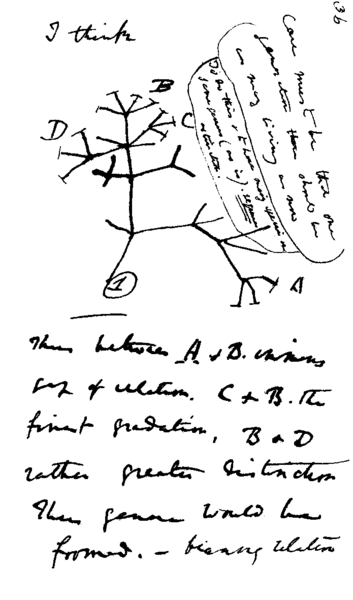
Brent Stevens discussed Darwin's theories of evolution from a biographical standpoint. We had to agree to disagree about the implications of Darwinism (I'm always afraid they're going to ban me from Q&A time) but I was very impressed with his use of primary sources. Rather than quoting books about Darwin he was using Darwin's letters and other documents to get as close to the source as possible.
My friend Natalie Stilwell discussed authority in the Catholic church. Does that sound boring, to you? Well, no one is riveted to hear about church hierarchy, but Natalie gave this paper because there are so many misunderstandings about the subject. Do Catholics think you will go to Hell if you read Harry Potter since the Pope doesn't like it? What happens if the Vatican screws up and makes a theological mistake - does it nullify the whole religion? Natalie discussed these commonly misunderstood issues with us and cleared up much confusion.
NERD ALERT! Many of us showed up to hear Kevin Neece discuss Star Trek. This TV show (particularly The Next Generation) gave our culture the best representation of a humanist vision that we have. What if mankind worked together to see what we could accomplish? Gene Roddenberry thought that Star Trek was a good idea of what humanity would be like if we could share such a vision. Kevin used this to explain the ideals of humanity and remind us that being people of faith is not merely about being spiritually minded, but it is also about taking care of our earthly responsibilities. Then I asked him to speak in Klingon. He did. I was impressed. This lecture was easily the highlight of my day.
During Kevin's lecture I sat next to this computer; I used to work in the IT department at DBU and I'm pretty sure I built this computer...
Scott Perry discussed the sacrament as seen in medieval stories when it confronted monstrosities in different forms. I've read a lot about the sacraments in the middle ages, but I've never heard anyone discuss them in literature like this. It was very interesting and Scott was able to answer some pretty tough questions that came at the end of his discussion.
Yours truly delivered a paper about Augustine and some of his peculiar views on predestination that were ignored and covered up by the church. I assumed I would just be putting people to sleep, but it was a well received paper. (Last year I gave the lamest paper in the history of academic conferences, and I was determined to do a better job this time.)
That's it for this year's Paideia Conference at Dallas Baptist University. This conference is always one of the highlights of my year and Dr. David Naugle really outdoes himself every year with the organization and leadership of these events. Thanks everyone who attended!
Tuesday, March 9, 2010
The 2010 DBU Paideia Conference - Part 1 Tom Kimmell & James K. A. Smith
From the moment his show began I felt like I was really in the presence of a great American songwriter. (Which is appropriate, since he has written songs for famous musicians like Waylon Jennings and Johnny Cash.) His music tells stories in the beautiful songwriting craft that is so hard to find in musicians today. (I don't think it's too cynical to say that the craft mastered by people like Paul Simon and Bob Dylan seems to be lost.) Tom told stories, read poems (I liked the one about the cat), and charmed all of us with his humor and his excellent musicianship. I really felt like I had seen the last of a certain type of musician. It's very difficult to find people like Tom Kimmell anymore, and seeing him in concert was a real privilege.
Our speaker for the entire weekend was James K. A. Smith, who is a proponent of something called 'Radical Orthodoxy.' (I haven't studied radical orthodoxy much, but I hope that it turns out to be something I like, because it's a much cooler name than "fundamentalism" or "supralapsarianism." It's about time someone gave one of these things a good name.)
Smith told us about a lot things. He's the kind of guy who can show you scenes from indie films in between discussions of Heidegger and Derrida in order to make sense out of modern theology. Very cool stuff. He was very approachable and loved answering questions from the audience on a variety of subjects with each lecture. Also, according to this discussion of Augustine (written by Smith and Dr. David Naugle - the guy who organizes these conferences) it appears that Smith and I read some of the same books.
Smith's views are very relevant. They address issues that Christians are asking today and Smith himself is a person people enjoy knowing. But most importantly, I didn't throw anything at him when he insulted my Dallas Cowboys. That means a lot. (Although, I didn't promise not to pick on him through the photo captions on my blog. No one is safe...)
(Click here to read part 2!)
Thursday, March 19, 2009
The Southern Baptist Meets the Evolutionist...and Finds Out He's Really OK!
He gave us a fantastic description of Darwin and how he developed theories that seemed to decry special creation (as it was understood at the time).
Darwin was sailing near the Galapagos Islands hoping to check out a nearby volcano (he had been trained as a geologist and was also preparing to enter a seminary) when he made his well known observations. While visiting the Galapagos he noticed that the same species on two different islands had developed differently, which was something that, at the time, was not allowed under the theory of special creation. Being sensitive to the religious, Darwin would lightly promote his findings, in conjunction with similar finding of other biologists, without pressing the matter in a way that would offend the church.
While listening to this lecture, something occurred
Now, let's get a few things clear:
- I believe that the Bible is without error...
- ...that God created man in His image...
- ...and, that everything in the Bible happened just as it says.
Thursday, March 5, 2009
Blogging the DBU Paideia Conference - Part 3
The heart of the Paideia Conference is when papers are read. Each attendee is able to attend a number of papers about a great variety of topics read by some remarkably intelligent students. These papers discuss almost everything an intellectual could ask for, including issues of faith, purely scientific papers, and examples of literary theory, such as an analysis of "The Love Song of J. Alfred Prufrock" (Which my wife attended, but I didn't, so I asked her to keep a copy of it). A list of all the papers can be found here (pdf).
The conference was a rousing success. Dr. Naugle never ceases to amaze me with his connections, his wisdom, and his ability to put on professional enjoyable conferences that include some of the smartest people I will ever know. (He also writes good books.) You will do yourself a favor to try and join in on the excitement next year.
Wednesday, March 4, 2009
Blogging the DBU Paideia Conference - Part 2
I was impressed at how well he knew church history and how competently he was able to discuss theology alongside philosophy. His knowledge is very up to date and relevant, which made him an excellent speaker for such a conference.
His main topic at lunch was the emergent church. Even though they sound really neat, the emergent church is full of theological issues that put them at odds with actual Christianity. In a respectful manner, Mike Wittmer pointed out these problems and discussed his experience in confronting actual leaders of the movement. It's good to have a sound theologian out there combating the problems that the emergent church is creating for the rest of us.
In the evening, he discussed the topic of how we can really know anything at all. Can we know there is a God? Are we just hoping to be right in the end when we place our faith in Him? What do we say when non-believers say our faith is silly? God proves Himself to us, but we can't exactly prove Him to others; it's tough to be an intellectual in this type of conversation and our speaker discussed this delicate issue very proficiently. If people like Matt have anything to do with it, the damaging postmodern trends that are showing up in our churches will not have lasting negative effects.
(Notice I didn't say all post-modern trends, not all of them are bad, but the bad ones are often the result of abusive post-modernism, but enough of that for now.) Here's Mike's blog where you can buy his books and interact with him through his posts.