Thursday, June 28, 2012

The SBC's First Black President ... And Why it Matters

Fred Luter, an African-American pastor from New Orleans, was recently elected as the first black president of the Southern Baptist Convention.  You can read more about it here.

Regardless of how many of our readers may or may not be Southern Baptists, here are some reasons you might be interested in this.

*The Southern Baptist Convention was formed in 1845 years ago in explicit support of slavery.  The Presbyterians and Methodist also split into northern and southern contingents around this time ... and of course, the nation itself would do so soon afterwords.  Believe it or not, the SBC did not issue a formal apology for supporting slavery until 1995 -- 150 years after its founding.  Electing an African-American president is an important historical moment for the Convention.


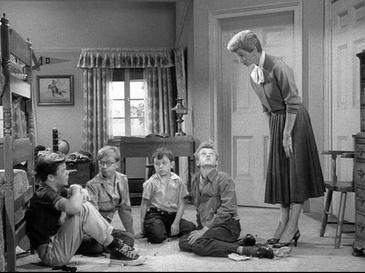
Pictured: NOT 1845
(PS: That's Luter on the left)


*The SBC is the largest Protestant religious group in the United States, and is by far and away the largest conservative evangelical group in the nation.  Anything that happens in the SBC has the potential for tremendous impact in the religious life of the nation.  If you're interested in thinking about religious life in America, you should keep an eye on what's happening in the Convention.


*Segregation is still a de facto reality in most Christian denominations.  This is not to say that black and white Christians won't welcome each other into their churches (though some won't), but rather that most racial and ethnic groups in American tend to worship with their own kind.  Sometimes there are pragmatic reasons for this (e.g. shared language, shared cultural expressions that drive worship), but it's still a sad state of affairs.  Having a multicultural leadership structure in place in a large Christian denomination is significant.


Having these men in your congregation does NOT make you multicultural.   
Also, my wife is wrong for hating this song; that's important to mention.


*Luter opposes Barack Obama on many issues, in particular gay marriage.  What happens when the head of a large conservative group -- and the largest evangelical constituent -- opposes Obama ... but he's black, too? What happens when none of the media or internet pundits can play the race card? I would expect Luter to be in the headlines quite a bit during this election season (whether he wants to be, or not).  How will Luter, and other African-American conservatives, change the conversations we have about race and politics in this country? Should be interesting!


What do you think? Does Luter's election matter to you? Why or why not?


Friday, June 22, 2012

6 Common Ways Scripture is Abused All the Time

I will admit up front that I've been guilty of some of these abuses on more than one occasion.  Chances are you have, too.  And, by the way, we're not alone: the Bible is probably the most abused book ever written.  So, there's no need for anyone to be defensive here, and hopefully we can have a helpful conversation! :-)

These are the six ways that I see Scripture abused the most commonly.  In particular, I had in mind ways that Scripture is referenced in an abusive manner.  So, yes, we could argue that reading Scripture, then refusing to obey it is a grave abuse, but it's not the sort of abuse I had in mind.  That said, are there any categories you would add?


1) THE "STRETCH" REFERENCE
There is a certain strand of Christian teaching that still insists on seeing the Bible as a big ole book of answers.  Everything you'll ever need to know (or perhaps everything worth knowing) can be found in the Bible.  Either because they embrace this view or because they feel pressure from those that do, many Christian writers, speakers, etc, feel the need to tie everything they say to Scripture somehow.  Often this means backing up everything with a Scripture reference ... whether the reference works, or not.  In my experience, the topics that inspire the most "stretch" references are marriage and finances.


I once read a book on Christian finances that used Genesis 14:21-24 as a reference when talking about credit card debt.  Now if you take the time to read the reference, you'll see that, well, credit card debt really isn't the message there.  The sad thing about "stretch" references is that they are often really good advice, and can stand alone as such.  Do you really need a Bible verse to convince you that being in massive credit card debt isn't a great situation? There's no reason to abuse Scripture to try to justify the advise or prove your credentials to your intended audience.


2) THE "SKETCH" REFERENCE
Christian business are the worst offenders when it comes to this one (though that's not to say that all, or even most, Christian business do this).  Basically it's an attempt to harness the sacred authority of Scripture to support what it is your doing.  The absolute worse example I've seen lately was a Christian dating site.  Quoting verses like "seek and you will find" and "God will grant you the desires of your heart," they went well beyond acceptable bounds.

It would have been fine to say something like, "Look, it's hard to meet other singles, much less other Christian singles.  Come join our online community." (I personally have no problem with online dating sites in theory.)  But instead, they used these Scriptures as part of a larger campaign to guilt and bully people into using their services.  The overall sense of the ad was basically, "Hey, if you don't want to be single, just do what God says in Scripture ... and use our service to help!"


3) THE FLIPPANT REFERENCE
Okay, I bet this would be the category where we would have the most disagreement if we actually tried to start putting Scripture references into these abusive categories.  What I might argue is flippant, you might say is totally harmless, and we might flip flop answers on the next reference.  Basically, these are references to Scripture that don't treat Scripture with the seriousness and sacredness it deserves (the subjectivity of those categories being the reason we probably won't agree across the board on this one very often).

These might range from light offenses (and maybe in your opinion, non-offenses), like a Christian company putting "Your Word is sweeter than honey" on their honey bottles, to (what I hope we would agree) is a grievous offense, like putting Bible verses on toilet paper.  Note that it's not necessarily the motivation for the action that makes the reference flippant, but rather the treatment of Scripture.  The honey peeps may have just been trying to be cute, while the toilet paper peeps may have been trying to evangelize the captive audience of people in public restroom stalls.


4) THE OUT-OF-CONTEXT REFERENCE
Oh my! If we wanted to, we could easily do a 25-year blog series with daily entries on examples where we've seen Bible verses used out of context.  Christians and non-Christians are both guilty of this, and the internet is plagued with these sorts of references! My favorite examples of this particular abuse, though, come from Christian jewelry.  I'll give you an few example.

Has anyone ever seen the friendship necklace that has "May the Lord watch between you and me" engraved across the front, then is cut into two pieces so each friend can carry a piece? Seems kind of sweet, doesn't it? But when you read the actual reference, it's pretty hilarious! It comes from the story of Jacob and his father-in-law, Laban.  Okay, it still seems sweet, though, right?

Well, Jacob and Laban couldn't stand each other.  Worse, they didn't trust each other, not even a little bit.  They had spent the first fourteen years of their relationship tricking and cheating each other as best as they could.  So when it came time to part ways, they created a little stone monument between them and said those "sweet" words on that friendship necklace.  The idea was this: "Look, I can't watch my back 24/7, so I'm trusting God to protect me from your trickery and untrustworthiness."


5) THE IMPOSED-DEFINITION REFERENCE
This is another one that both Christians and non-Christians are guilty of quite frequently.   Basically it's using the Bible to defend your point of view without taking the time to figure out how the Bible defines the terms being used.  People find verses with the words "love," "freedom," "judgment," "authority," etc, and then scream, See? See? The Bible says it, too, so you have to listen to me! Personally, I think "love" is the most abused term in this category.  People know the Bible says "God is love," but don't bother studying how Scripture defines love (especially God's love), so they assume that God automatically approves of anything they are convinced is done out of love.


6) THE -UM-IT-DOESN'T-ACTUALLY-SAY-THAT REFERENCE
For reasons that can only be described as masochistic, I sometimes read through the comment sections on various internet news sites.  I'll often seen non-Christians trying to nail Christians on hypocrisy charges by saying things like "Don't they know that their own Scriptures tell them to __________" or "Jesus taught ____________.  I don't know why his follower can't get that."  The strange thing is that the vast majority of the time, the Bible actually doesn't say that, or Jesus actually didn't teach that.  There are a ton of misunderstandings -- or just plain false claims -- about what the Bible contains out there, and the ease of access and lack of accountability associated with the internet has only exacerbates the problem.  I have heard some truly weird ones in this category from, "The Bible says that Christians have to think of themselves as better than other people; they don't have a choice." to "Baptists drink the blood of babies; their Scriptures tell them to." (I promise I'm not making that last one up!)


What are some of the worst examples you've seen?

What are some of the worst examples you've personally committed?


Tuesday, June 19, 2012

Don't Be a Crappy Firefighter

I want to tell you about the day I died in a fire on my university campus.


Three times.


And most of the half dozen or so firefighters in the building did nothing to help me.


Firefighters: local heroes of angels of death? You decide!


One of my part-time jobs in college was in the Residence Life and Student Housing Department (think RA's and the like).  Each year, the department, in conjunction with the city's fire department, put on a fire safety activity in one of the dormitories on campus that was no longer in use.  Basically, students were placed in old dorm rooms, then the fire alarm went off, and students had to work their way through the simulated fire to the safety of outside.  Naturally, as residence life folks, we had to go through it ourselves before our students did.

Now I want to emphasize, mostly as a shameless attempt to save face, that the firefighters gave us almost no instructions before the drill began.  So there I was in an abandoned dorm room, wondering what it might feel like to stop, drop, and roll down two flights of stairs to the first row, when suddenly, the fire alarm went off.

I started off brilliantly! I got down on my hands and knees, and started crawling through the "smoke" that was filling the hallway.  Suddenly, I spotted a firefighter standing behind a glowing lantern! Piece of cake, I thought! Firefighter = base power.  I am now officially rescued and can stop this dumb little demonstration.

However, when I reached the firefighter, he slapped a "death" sticker on me, then stood there silently as I naturally asked quite a few questions meant to clarify how exactly I had failed.  Fine, whatever, I thought.  It wasn't too long before I spotted another firefighter.

Death sticker.

Okay, listen up, third firefighter! you're going to at least answer some of my ...

Death sticker.


Just a friendly reminder that not everyone who comes 
leaping through a wall of flames screaming, I'm coming for you!" is there to help.  


I found out later that those lanterns were supposed to be "fires," and that the firefighters weren't really part of the scenario.  They were just there in case there was an actual medical emergency, like someone having a panic attack.  Oh, and of course, they were there to let you know you were dead if you got too near to one of the lanterns.


And so the people who should have been the most helpful served only to confuse me and to confirm my hopelessness.


On more than one occasion, I've heard a speaker describe sharing the gospel like running into a burning building to try to warn and/or rescue people inside.  I suppose the metaphor works to some extent.  After all, the gospel does claim that humanity is in serious trouble (and most don't realize it).  And in some sense, sharing the hope of the gospel is similar to seeing someone in a burning building and trying to help -- if nothing else, to shouting, "Hey, um, I think your building is on fire! Might want to check on that!" (though, hopefully, as with a real fire, most would be willing to do more).


The problem is that sometimes we are pretty crappy firefighters.


*Just like my silent firefighter friends, sometimes we hang out with "lost people" to relieve our evangelism-based guilt, or to feel better about ourselves.  We're not really there to help or get involved, mind you, but just to do our duty or convince ourselves we are more caring than we are.  It's like the church member who brags about going to a bar or a rock concert that way someone else might brag about surviving a game of Russian roulette.  

*At other times we are content to hand out "death stickers" to everyone we see.  We tell people exactly how we think their lives are screwed up, exactly why we think God is particularly angry with them, etc, and we call this Christianity, but that is the extent of our "helping."  On a more personal note, that's one of the real dangers and difficulties of online blogs like this one.  Without knowing each other and showing any willingness to invest in each other as people, we've come together to try to sort out what are sometimes pretty touchy topics.  That said, I can always be bribed with free coffee for a face-to-face conversation!


Come back here! You still haven't heard all the reasons you're on fire right now! 
Also, could you stop screaming?! I can barely hear myself talk!


As with any metaphor, we could keep unpacking (and abusing?) my symbolism-(and frustration-)laden experience with the fire drill on my campus that year.  But hopefully we will spend some time thinking through  our words and actions in the midst of the fire.  And maybe those who don't believe in the fire, who are even insulted by my suggestion that there is a fire, will at least be willing to admit that I was trying to help -- that I treated them as more than a number or a duty, and that my presence in their lives didn't make things worse ... and that my homemade firefighter costume was super cool!.

Monday, June 18, 2012

Washed and Waiting: Reflections on Christian Faithfulness and Homosexuality

This book was recommended to me by a friend in the business of recommending good books, and once again, her recommendation has turned out to be one of the most important books I've read this year.

Washed and Waiting is, at its most basic level, a spiritual memoir of a gay Christian who does not believe the Bible's prohibition of homoerotic sex is outmoded or culturally bound---he believes homoerotic sex is a sin. At the same time, however, Hill's experience as a homosexual Christian does not jive with the metanarrative from other theologically conservative Christians that same-sex attraction is a choice that can be changed.* Hill, therefore, practices celibacy.

Here are the reasons I found Washed and Waiting so important:


  1. Understanding. Conservative Christians are generally told homosexuality is a choice that can be changed or a coping mechanism that can be healed. While this is true for some, it is not true for all or even most people who experience unwanted same-sex attraction. It's time we stop being so one-dimensional, which generally leads to a lack of understanding and therefore a certain lack of empathy.
  2. Empathy. As a spiritual memoir of sorts, Washed and Waiting provides heterosexuals the human super power of walking in an other's shoes. Even for those who can skip number one on this list, the glimpse of the immense and unrelenting loneliness and frustration Hill experiences is invaluable.
  3. Relief. For those with similar stories to the author's, Hill's brave telling of his story is an affirmation and encouragement, if nothing else, that they are not alone.
  4. Challenge. Washed and Waiting ends with an afterword from Kathryn Greene-McCreight who challenges the church: "Can we [heterosexual Christians] continue to ignore the isolation these brothers and sisters experience within the body of Christ?" The answer, of course, is no.


For a well organized and more in-depth review of Washed and Waiting, click here.


*Neither of these points is up for debate in this post, the goal of which is simply to point to one book; anything else would be beyond the scope and therefore counterproductive here.

Friday, June 15, 2012

Is This How We Worship?

Click on the picture if you can't make out the words:

This isn't how we should worship. But I think this is how we do worship sometimes, or at least how we sometimes wish we could worship.

  • We try to ascend to heaven on the hot-air balloons of our emotions.
  • We care little what the songs we worship God with actually mean, but we prefer them to mean very little. Otherwise, we might have to reflect on the words, and that might mean reflecting on theology, and we don't like reflecting on theology, because it doesn't feel as good as getting emotionally worked up.
  • If the music is loud enough to risk damage to our ears, we don't care. Loud music makes the emotional experience better, and having strong feelings for God is a higher priority than our health. (Never mind what the Bible says in 1 Corinthians 6:20.)
  • We leave the worship service and go about our daily lives. We haven't been transformed, but we do have the satisfaction of feeling like we really, really liked God at church this morning. We have nothing to remember from the worship service throughout the week--except for how much we really, really liked God last Sunday.
  • It's ok if our lives are no better this week than the last, if we aren't any holier or more virtuous this week than the last, because come next Sunday we'll sing some upbeat songs again and really, really like God again.

That's how we think--sometimes. But, of course, we're wrong.

Tuesday, June 12, 2012

Complementarians, You Have Some 'splaining to Do!

Last week, the Christian section of the blogosphere erupted with posts about the role of women in Christianity, and after reading many of these posts I'm left with lots of questions about the Complementarian movement.  (For those of you just joining us, they're the group that thinks women should take a submissive role to men.)

I must say that I envy Rachel Held Evans, the blogger who started last week's blog topic.  With the sleight of her hand, she got the blogosphere talking about this topic, and even my own writers were stumbling over themselves to meet her deadline.  (Why don't they meet my deadlines with that sort of enthusiasm?)

Anyway, here's some of the issues that you complementarians out there need to work out:

1 - You're Inconsistent.  You claim that women shouldn't act in authority over men, but it happens all the time.  (For example, every married complementarian man that I know asks his wife for permission to do everything.  The domestic implications are never taken seriously.)  Women who can't be preachers or music ministers are allowed to become missionaries and take up those leadership roles as long as they are in other countries.  And the churches that espouse complementarian beliefs have women speak from the pulpit as guest speakers or lead worship for the church once in a while without anyone complaining.  I am told that this is different because these women are "acting under the authority of a man."  Well, if that's the case, then we should be able to promote women to senior pastors as long as the president of the association is a man, right?   Since none of these things exist in the Bible (senior pastors, denominational associations, worship leaders, etc...) we are all just making up our own rules.

These inconsistencies exist, in my opinion, because the complementarians can't make heads or tails of this issue any more than the rest of us.  They've set up some rules but can't back them up absolutely, so they bend those rules with ad hoc explanations and expect us to ignore the problem this creates.  But if it's OK for women to be in authority sometimes then why not at all times?

2 - You've Confused Your View with Patriarchy.  Is the 1950s housewife something your church believes in as an icon of womanhood?  Is that Biblical, or just traditional?

 The ideal woman, according to most complementarians.

Of course, it's not Biblical.  The Bible describes the ideal woman in Proverbs 31, and, among other things, she buys land with her family's money without discussing the deal with her husband - she's that good and she doesn't need his advice or approval.  Can you imagine a complementarian husband coming home to find that his wife had purchased a house or a field without his input?

The ideal woman, according to the Bible.  (image)

3 - Stop Assuming that Egalitarians Don't Respect the Bible.  Every single defense of complementarianism I've seen includes a phrase like, "we complementarians take the Bible seriously," or, "in these situations we must turn to the Word of God and not our social agendas," or, my favorite, "egalitarians simply are not submitting to God."  These are childish character attacks, and I don't see why every defense of complementarianism needs to be limited to an assumption that no one else respects the Bible.  Your Egalitarian friends are Bible-believing Christians, like yourselves, who are not convinced that the Bible agrees with your views.  (Besides how would you like it if I accused you of using your views to keep women in line?  Surely, no one would use complementarianism as an excuse for their own bigotry, right?)  You like to say that "it all comes down to how we read the Bible," but you're wrong.  The Bible passages about women are confusing, and people with the same hermeneutic approach will come to different opinions.

4 - The Bible Never Says that Women in Ministry is "Not Ideal" or the Result of Men Not "Stepping Up."  When women do ministry work in the Bible they are praised for it, and there are no caveats that say that the women were only there because the men were absent - that's something that complementarians like to throw in.  I'm told by complementarians that if men would "step up" then women would not have to do ministry work, but that's not a real argument - it's just rhetoric.  (If cats would "step up" then men and women wouldn't have to do things, but that doesn't prove anything.)  Of course, that argument also insists that women, for some reason, shouldn't have to work.  Once again, that's not Biblical.   The Bible does not ask men to shield women from responsibility.

This is especially funny to me, because the complementarians are always accusing the egalitarians of following social agendas (those uppity femenists!) rather than the Bible, but I see that complementarians are merely imposing Father Knows Best into their theology.

"You've got your cultural traditions in my theology!"  "No, you've got your theology in my cultural traditions!"

5 - There's No Reason to Oppose Women Having Careers.  I read the entire Bible as a teenager looking for answers, and I was very surprised to find out what was not in there.  Why would anyone insist that a woman should stay home while the man works?  There's nothing in the Bible about that sort of thing.  Again, this is a chauvinist, patriarchal fantasy.  Some Christian leaders teach that women should avoid working to stay at home with the kids, but they are only giving us their opinions based on their own Leave it to Beaver Nostalgia - the Bible does not limit a woman's career choices.

---------

OK, I'm done, and I hope to never discuss this again because (1) I like this site to be appealing to non-Christians and this is the sort of topic that drives the away, and (2) I'm tired of typing the word "complementarian."  I mistype it every time.

Monday, June 11, 2012

In Favor of Complementarianism

The posts on the egalitarianism vs. complementarianism issue have been very good. The most important thing I can add to the discussion has already been added.

I'm a complementarian, but I won't attempt a thoroughgoing defense of it here. A very good defense of what I would call a very soft complementarianism has already been made at TTC. Instead, I'm just going to make a few useful points which, as it happens, tend towards supporting the complementarian view.

First, we should remember that, given the authority of Scripture, it only takes one biblical passage to guarantee that a position is correct.

Now I'm not aware of a lot of passages that can plausibly be interpreted as supporting egalitaranism. (Several of the more plausible candidates, such as Galatians 3:28, have already been ably addressed at TTC.) But quite a few passages can plausibly be interpreted as supporting complementarianism.

So here is the second consideration: It seems that the burden of proof is on the egalitarian to show that Scripture does not support complementarianism.

Third consideration: Egalitarians should be very careful trying to read Ephesians 5 as promoting their view. Paul says in verse 21, "Submit to one another out of reverence for Christ" (NIV 1984). Many assume this command is both universal and symmetrical: Every Christian X must submit to every Christian Y, and vice versa. This is a lovely reading, and something very like it is a correct reading of Philippians 2.

But I don't see how this could be a correct reading of Ephesians 5. Does it even make sense for masters to submit to servants, and how could Paul, who knew the Torah so well, command parents to submit to their children?

Fourth, don't confuse a refutation of the "doormat theory" for a promotion of egalitarianism. Preferring and laying down one's life for another is not the same thing as submitting to that person. Christ does this for the Church (Philippians 2), but this doesn't mean He submits to her; it only means he loves her.

Saying that sacrificial giving equals submission is at best a confusion of categories. At worst, it borders on blasphemy because it suggests that God submits to us created beings.

Fifth, let's remember that all Christians are under the authority of God and Scripture. If women are to submit to their husbands, it is for the sake of Christ, for whose sake also husbands are to love their wives as Christ loves the Church. That is no easy job, for the Cross is no picnic. The Bible tells us all to submit to God in some way that makes us uncomfortable.

Saturday, June 9, 2012

Slaves, Women & Homosexuals: The Gender Debate and Biblical Interpretation

As Christine mentioned, Rachel Held Evans is dedicating her blog to egalitarianism (or mutuality) this week, and we here at Thinking through Christianity are eager to chime in on (both sides! of) this important discussion.


Egalitarianism and complementarianism are the two major players in the contemporary debate about biblical gender roles and gender differences. [For a refresher of terms, revisit Evan's site and the resources she links to.] The root of the different approaches is the method with which each group interprets Scripture. That being the case, the most helpful book for me on the issue has been William J. Webb's Slaves, Women & Homosexuals: Exploring the Hermeneutics of Cultural Analysis. Webb is an adjunct professor of New Testament and Biblical Studies at Tyndale Seminary (semi-retired might be more accurate, for he does quite a bit of writing and speaking), and is the author of a number of books, but is most known for Slaves, Women & Homosexuals (http://redemptivechristianity.com/?page_id=2 (Webb's site)).

As the subtitle implies, Slaves, Women & Homosexuals is a hermeneutics book. Hermeneutics is a big fancy word to describe how we do interpretation, and it usually refers specifically to biblical interpretation. Webb is interested in answering the question: Which passages of Scripture are still applicable to modern Christians "exactly as they are articulated 'on the page'" and which are not (13)? And how do we decide? Answering the how question requires a good hermeneutic: a logical, consistent, Bible-honoring method of interpretation.

Growing up in a complementarian church, I was always bothered and confused about why they considered passages about women's attire in church... hair, makeup, hats... "culturally bound" (no longer applicable today) but stuck strictly to the mandate that women should not teach men (in church or in a spiritual capacity), believing that verse to be universal---applicable as articulated on the page to all cultures in every era. No one could ever give me a satisfactory hermeneutic, and so I never could bring myself to hold that position, but I didn't have a good hermeneutic for why either. When I read Slaves, Women & Homosexuals, it was as if someone had finally put into words what I had always felt. It was like Webb put muscle on my bones so I could stand.

In his book, Webb outlines his method of interpretation, describing it as a "redemptive-movement approach" which posits a "trajectory of redemption" that applies to the whole of Scripture and is particularly helpful when thinking through the Bible's more difficult pronouncements on cultural matters such as slavery, patriarchy, and homosexuality.

Besides being a handy hermeneutic, that God reveals himself to us through a trajectory of redemption absolutely jives with how we experience God's gracious work in our lives! God doesn’t require that we clean our lives up before we come to him. He doesn’t even require that we get everything sparkly clean immediately after we come to him. Hebrews 10:10-14, a favorite of mine, notes that we both have been made perfect (through Christ’s atonement---salvation) and at the same time are being made perfect (through the continued work of Christ’s redemption through the Holy Spirit---sanctification). We are on a path toward redemption.

So what is a redemptive-movement hermeneutic (RMH)? Essentially, it is a method of interpretation that accounts for the way in which God, in his infinite grace, meets his people where they are, revealing himself and his kingdom ethos to us in baby steps (well, you know; one small step for God; one giant step for humankind). By aligning ourselves with God's Word as it is revealed to us through the Holy Spirit, we put ourselves---and the cultures we impact---on a trajectory, or path, toward ultimate redemption. [You can find a more detailed overview of the RMH on Webb's site, here.]

To better show what this looks like, allow me to quote extensively from Webb:
[An] example comes from those Scriptural passages that speak of taking female virgins as spoils of war. [...] In defense of the biblical text, we should note that Deuteronomy 21:10-14 is at least somewhat redemptive relative to the original culture... After all, the Israelite male had to wait one month, marry the girl, and in the case of divorce he could not sell her or treat her as a slave (cf. Num 31:32-35; Judg 5:30; 21:11-12, 15-23). Compared to the horrible rape scenes that often accompanied ancient warfare (not unlike the rape camps of modern Bosnia) these biblical texts are clearly redemptive. [...] One might expect such a redemptive movement, since the core of a biblical ethic is to love God and to love one's neighbor. When compared to the ancient treatment of women in war, the biblical text represents a measure of, or greater movement toward, love and compassion. 
What we should live out in our modern culture, however, is not the isolated words of the text but the redemptive spirit that the text reflects as read against its original culture. In applying the text to our era, we do not want to stay static with the text... Rather, we need to move on, beyond the text, and take the redemptive dimension of those words further.... (32-33, bolded emphasis mine) 
Webb goes on to explain how Western culture (which finds its roots in Judeo-Christian ethics) considers equality and human rights important precisely because God put his people on a path toward a Kingdom ethic with laws and mandates that seem barbaric to us, but which were quite revolutionary for the original audience. Westerners often find the Bible barbaric precisely because of the redemptive movement within the Bible! Here's a helpful picture to illustrate Webb's trajectory of redemption:

(Webb 32)
[Click to enlarge]

Understanding this was such a relief because it synchronized that which had formerly been out of sync with the overarching Message of Scripture and the character of God. When I read through the Bible cover to cover for the first time as a young teen, I was horrified and angry when I read God's laws about rape and slavery---Pay the father a fee and marry her? What the hell kind of justice is that? You’re God for crying out loud! Can’t you do better than that? God can of course. But he condescends to us. Such grace.

So far, complementarians and egalitarians may not disagree much, if at all, with Webb's assessment of the Old Testament texts; however, the tension comes in when deciding which New Testament texts have similar movement. Suffice it to say, Webb generally understands the patriarchal New Testament "women texts" as catalysts of redemptive movement (Webb makes the same conclusion about NT slavery texts, but not about those regarding homosexuality), and he dedicates the bulk of the book, 148 pages, to establishing the 18 different criteria involved in deciding which texts have what kind of movement and why. Throughout, Webb not only outlines and supports his hermeneutical methods, he critically and civilly engages with his complementarian "opponents" (and his fellow egalitarians whose hermeneutic he finds weak or lazy). It's impressive. And I haven't seen anything like it anywhere else (from either camp), nothing so thorough, well-balanced, and convincing. 

So how about a NT example? (After this, you'll just have to pick up the book yourself!)
Throughout church history the traditional interpretation of 1 Timothy 2:14 has been that women are more easily deceived than men. This fits well within the context because it explains why women were to have subordinate teaching roles to men---they were more vulnerable to deception than men. [...] According to this view, men should have the authoritative teaching positions in the church. [...]
The only problem with the traditional interpretation is that most Western Christians today, patriarchalists included, recognize that this perspective is factually incorrect. Women are not inherently (by virtue of their gender alone) more easily deceived than men... it simply does not square with the hard data... (see criterion 18 and appendix C). 
[...]
What Paul was saying to the original audience could have been validated in that particular culture. Women probably were, in general, more easily deceived than men because of gender differences in education, marital age, social exposure, financial vulnerability, etc. (113)
After diving into Paul (and Moses's) cultural context(s) to show such a broad statement about women was in fact validated by culture, Webb concludes his discussion of this passage by positing:
The best solution, then, is not to discount the historical teaching of the church but to say that the social data has changed from Paul's day to ours. [...] So the text was suitable and accurate in its day due to cultural factors of an associative nature. Applying 1 Timothy 2:14 today, however, requres that we move up the ladder of abstraction and work with the underlying transcultural principle: seek teachers and leaders who are not easily deceived. (230)

A neutral illustration picturing the "ladder of abstraction" (53).

Webb wraps up SW&H by suggesting the bulk of the data from the intrascriptural and extrascriptural criteria support egalitarian positions, but readily admits where the weak spots are in his argument and never completely eschews what he calls an "ultra-soft patriarchy" (many of the tenets of which are described quite thoughtfully in TTC's earlier post "Complementarian or Egalitarian? Yes... And No" (which is not to suggest soft patriarchy is the author's position)). I greatly appreciate this about Webb, whose final chapter preceding his conclusion is called, "What If I Am Wrong?" Webb is honest, humble, and extremely serious about the authority of Scripture.

Even before reading Webb, this too was my position; perhaps somewhat ironically, however, Webb's book not only put words (and scholarship) to my thoughts and inclinations about egalitarianism, it also turned my inklings about not eschewing soft patriarchy into convictions. I'm an egalitarian, but I have few qualms with soft complementarianism. We get along... in ways I do not agree with Chris from "A Tale of Three Christians" nor the egalitarians he represents. Slaves, Women & Homosexuals is a scholarly book but it isn't just for scholars. If you pick up this book, and I recommend you do, you'll find Webb engaging and accessible.

Lastly, hat tip to Evans for getting the conversation rolling, to my fellow TTC writers for writing with their brains and their hearts, and to our readers for hanging in there with these frequent and often long posts! It's our hope you've benefited from this discussion as much as we have.

Friday, June 8, 2012

Is the feminist issue really a slippery slope?

I wanted to join in the fun on the complementarian/egalitarian debate!  After reading the posts from other women on this blog, thinking through my own experiences through the years and taking into account plenty of reading and studying on the topic, I still feel a sense of confusion and lack of intellectual integrity in many (all?) the arguments on both sides.  

The lack of intellectual integrity for complementarians show when they let women missionaries be pastors.  Or when they limit roles of women in a church but when needs arise or someone they like wants the job the rules get bent.  It's shown when they act like anyone interpreting passages otherwise are decidedly not Christian.

On the egalitarian side, lack of intellectual integrity shows when roles really aren't equal--men still hold the majority of leadership positions and receive more serious training in most settings.  Or when a husband and wife are both listed as 'pastor' when clearly it is one or the other that is the pastor and has the training. It's also shown with an unwillingness to admit even a hint of complementarianism in the Bible exists.

Many of us were taught to use a 'slippery slope' mentality on issues of 'serious' theology.  Changes in non-essential theology do not always, in fact rarely, end up dragging one down into non-Christian thought as the slippery slope idea suggests.  Simply build a wall however high and strong you like to keep yourself from falling.

In my first graphic we see that both sides traditionally believe the slipperiness begins at a very specific point: where male authority has any (or no) say.


Let me say first, part of me is still saying, "No, No!! This can't be true, there is a specific point with a slippery, slippery slope."  But, I contend we should believe the slipperiness begins at a very specific point but a very different point--at the point where people are not believing in the creeds, in the Trinity or in things that make you actually Christian.


The kicker, for me, is that this 'oval' is reality.  It just is.  I know of no church or person that espouses anything considered close to traditional, orthodox Christianity that holds entirely to what either side on this debate says they believe.  If you split the argument the way the first chart does, the extreme view on each is the only way to maintain any intellectual integrity. Real life just doesn't work that way.

We can still have complimentarians and egalitarians but we should shift our focus to those on the extreme edges that are decidedly not Christian and work to minister to those hurt by non-Christian thought patterns and practices.  Both extreme submission and extreme equality dehumanizes and is something Christians should unite in standing against.

Albert, Beth, and Chris: A Tale of Three Christians

A Tale of Three Christians

Albert gets up on a soapbox and says, "A woman can't be the head pastor of a church because Paul says she can't. If she says she's called to be a pastor, then she must be confused about her call!"

Albert steps down. Beth steps onto the soapbox and says, "A woman can be the head pastor of a church! If Scripture said otherwise, then of course I would change my thinking. But what Paul says in those passages isn't entirely clear, and I don't really understand it. But he is quite clear about loving one another. And loving one another means welcoming all women who are called to be pastors."

Beth steps down. Now Chris gets up on the soapbox. He says, "A woman can be the head pastor of a church! Paul says they can't, but he was wrong."

The Obvious Agreement

These are generic figures. They stand for countless individuals and churches and a number of denominations.

These days Beth and Chris typically get along, sometimes forming their own churches or denominational affiliations. It's easy for them to work together because they share an obvious agreement: They both agree that a woman can be the head pastor of a church.

The Obvious Disagreement

Beth and Albert often don't get along. Sometimes they just split and go their separate ways. A degree of separation between them is understandable, and may be necessary; if they worship together week by week, eventually Beth is probably going to want to preach, and Albert will have a crisis of conscience when she does.

But sometimes they go further than just not worshiping together. Sometimes they fight. Sometimes they call each other names; Beth might call Albert a narrow-minded fundamentalist; Albert might call Beth a liberal heretic.

It is easy for them to disagree because they have an obvious disagreement: They disagree on the rightness of a woman as the head pastor of a church.

The Underrated Disagreement

Beth and Chris disagree on the authority of Scripture. Beth submits to the authority of Scripture, and Chris does not. This disagreement concerns the importance of the very book on which their religion is based, the Bible. This disagreement is about what a Christian takes to be authoritative. Beth believes Scripture is a sovereign authority. Chris does not.

The Underrated Agreements

Albert and Chris actually agree on what Paul says. If they were all performing a disinterested analysis of the biblical text, Albert and Chris might well get together to convince Beth that her exegesis of Paul is poor!

But here is the really important point: Albert and Beth agree on the fundamental issue, the authority of Scripture, and they should treat each other accordingly: with love and respect.

Albert should try to explain to Beth what he thinks he (and Chris) can see in Scripture that she can't. And Beth should try to explain to Albert why she thinks he's not seeing so clearly, or what she thinks she can see in Scripture that he can't.

In a word, Beth's agreement with Chris runs shallow, but her agreement with Albert runs deep.

Thursday, June 7, 2012

Complementarian or Egalitarian? Yes ... And No


PLEASE NOTE that I am NOT the author of the following entry.  A friend of mine heard about the series of entries so far this week on TTC, and I thought she had some very interesting perspectives to share.  For personal and professional considerations, she asked to publish anonymously through me, and our awesome editor, Adam Jones, agreed to this.

On a side note, the fact that my friend felt the need to publish anonymously should be a sobering reminder to all of us about the need for Christian maturity and grace in discussing topics that admittedly can leave us a little heated.  

Anyway, read her thoughts below.  I'm sure she will keep up with the comments left on this entry, and if she has any further thoughts in response to your comments or questions, I'll be sure to pass them on!

-----------------------------------------------------------

I recently discovered that as a woman teaching in the Church and Christian academia some assume I’m egalitarian. When I first realized this I was genuinely puzzled, “I’m not egalitarian. Why would anyone think that?” Then a friend explained why this might be. It is rare to hear about women who are active teachers in the church and Christian academia who are not egalitarian.

I’m not egalitarian. In fact, I’m not complementarian either. At least I refuse to accept either label. After all, six syllables is just too long of a label. And aside from too many syllables each label comes with excess baggage based on others who use the label. I have enough baggage of my own without having someone else’s attached to me by default. Anyway, I’m more of a hybrid.

Let me explain.

Well, first, let’s define some terms. Christians throw around the terms egalitarian and complementarian without defining what they mean. So, for the sake of simplicity here are my basic generic definitions of the two major camps. Of course, within each camp there are variations. But for simplicity sake we will use these definitions.

Egalitarian = men and women are equal in worth, moral status, gifting, and in their ability to serve in any ministry roles. (Some say there are no distinctions in any roles, others acknowledge distinctions such as how women tend to be more nurturing to children.)

Complementarianism = Men and women are of equal worth, moral status, and gifting. (Some think that there are spiritual gifts not given to women.) Men and women complement each other in their given roles and responsibilities in marriage, family, and religious roles. (Some include secular roles as well.) Women play a supporting role while men take the lead in marriage, family, and the church.

Where I currently stand on this issue – as of today – is somewhere in between. In order to not make this a long and boring post I will attempt to provide a somewhat short synopsis of how I view some of the major passages related to this area. This is not intended to be a theological treatise on the issue – just a snapshot.

Genesis 2 = This passage is more in line with what we today would consider a history book account of creation. In this passage the male (Adam) is the first thing created, then animals, then the female (Eve). Eve is created to be a helper (a good thing not a negative thing) corresponding to Adam. Both sides can use the “helper” idea and exegesis/hermeneutics to defend their view. So, really, the fact that Eve was created as a helper doesn’t help the discussion.

But notice four things: 1) man is created first, 2) both are given authority over creation, 3) Genesis 2 takes place in a pre-fall state and 4) the man names the new creature “woman”, which shows some sort of authority over the woman. (In the OT to name something is to display authority over what is named.)

Genesis 3 = The fall happens. The punishment given to Eve is that she would desire to rule over her husband, but she would fail at this and her husband will rule over her. (This is seldom translated correctly – but the NET Bible does a great job in this verse)

Remember that this is a CURSE. The curse is that the marriage relationship is tarnished under the fall. The woman has a sinful desire to have authority over her husband. So, we can conclude that before this the woman did not have the sinful desire to rule over her husband. But this is all that we can conclude. This does not mean that they were equal before hand – that is reading into the text what is not there.

That the man would rule over the woman as part of the curse, does not mean that before the fall there was no authority structure. It is very possible that this simply means that the woman will continually struggle to dominate but will continually fail. It does not speak to the pre-fall state. It only speaks to the pain that is the curse of the fall.

Galatians 3.28 = Woohoo! The Bible states that there is no difference between male and female! Sweet! Party!  Or, you can stop using one verse to ignore other verses and pause and look at the context. This verse is talking about how people relate to God in salvation. Neither male nor female has an advantage in how they relate to God. This verse IS NOT talking about how God wants males and females to relate to each other.  So take off the party hat, sit down, and stop taking verses out of context.

Ephesians 5 =  Many women don’t like this passage because it has been so abused. There is a way in which all Christians are to submit to others (vs21). This has to do with mutual respect and position in relation to Christ. This does not mean that there is no authority structure in the church. Even though all Christians are to submit to each other, God still places the pastor and elders as authorities. So, obviously this mutual submission does not negate authority

Also, this is not a slam dunk as to there being no authority structure in male-female relationships. To say this is misguided when the same person who writes verse 21 also writes verse 22.

Yes, Paul tells wives to submit. But scrub the image from your mind’s eye of a women groveling in the dirt pleading with her husband to forgive her for asking him to take out the trash. You cannot understand verse 22 without understanding 23-30. The husbands are called to love their wives sacrificially. Marriage presents a picture of how Christ relates to the church. The husband is to sacrificially love his wife just as Christ loves the Church, and the wife is to follow the leading of the husband just as the Church is called to do with Christ. If you want to argue against this, then how do you separate the wife’s responsibility from the Church’s responsibility?

As a single woman I think that sounds stinking awesome! If I had a husband and he strived to love me the way Christ loves the church I would (in theory) have no trouble respecting him and deferring to him because I would know that he was putting me first and not himself. A husband like this would let his wife be herself and strive to encourage her and use her gifts to encourage the Church. The marriage relationship in Ephesians 5 is a beautiful thing.

1Cor 11:8ff and 1 Tim 2.9ff = These are some of the verse that I sincerely wish were not in the Bible. They are hard and I.Don’t.Like.Them. But they are there and I must deal with them.

I am well aware of how the two sides tend to take these verses. One side takes them as “literal” in that they mean what they say and they say what they mean – so woman, get thee quite! The other side tends to appeal to a midrashic interpretation and say Paul was pulling the OT passages out of context to serve his purpose. (Short overy-simplified explanation of midrash: during the NT times it was acceptable for theologians to use midrash. Midrash was partly the use of OT texts for other than originally intended uses. To our modern ideas of interpretation it would seem that they were “playing fast and loose with the text” – but that is not so.)

While I desperately want to appeal to a midrashic interpretation I cannot. I, personally, feel that to do so takes the easy way out. The study of midrash is long and involved and while familiar with the issues, I am no midrash scholar. But I do know human nature. Human nature will look for any way to justify their view. I know because I do this all the time. (I can eat this huge batch of frosted sugar cookies because I will drink less Dr. Pepper this week – so it all balances! *sigh*) So, when it comes to serious theological issues, before one takes a position that negates another view you better research it completely yourself and know why you take the view. Don’t take it because a book talks about it, or because it seems to make sense. Know all the pros and cons and even then you should hedge your view. In other words, “Based on my current understanding of Midrash I think that _____ is a valid interpretation.”

That being said (and, boy, that took longer to type than I thought it would) I do not claim midrash on these passages. I feel that claiming midrash here is a slippery slope. If you claim midrash here without having a solid grasp of the features of midrash or the theological support and implications of midrash, you might as well claim midrash whenever you don’t like a passage.

Without going into any more tedious details here’s my current understanding of these verses. Paul meant what he said. In 1 Corinthians the women were trying to establish themselves in a way that was over the men. They were refusing to follow cultural norms and were trouncing on the men by refusing to follow the authority God had placed over them (husbands, fathers, church authority). Similarly, in 1 Timothy 2 the women were flaunting their freedom in Christ in a disruptive way and trouncing on their husbands, fathers and church authorities. In both situations the women were pulling a Genesis 3.16! And doing so in the name of Christ!! Yikes! (Their defense: Christ had freed them so they did not have to show respect.)

My understanding of these verses is that Paul is going back to Genesis 2 (pre-fall) to explain why the women should not act like Genesis 3. A Christian woman should not try to flaunt her freedom in Christ. While still living during the fall and waiting for the re-creation (post-fall) we as Christians are called to live like we are not under the fall; hence, the appeal to pre-fall conditions. At the very least this means that the women needed to stop trouncing on the men and respect them. Paul does not appeal to Genesis 3 where it says the men will win the domination battle (which he could have used as a “booyah!” trump card; “women you screwed up so get thee behind me!”). Instead, he appeals to the pre-fall state. The ideal.

There is something to the order of creation. I don’t like it. But it’s there. I think that taking passages such as these and punting to midrash is to deny the significance of what Paul is doing. He is calling people living in the fall, who are members of the Kingdom of God, to live contrary to everything around them and contrary to the sin nature that still resides within us. Paul was calling for them to live like they were in the pre-fall. To live looking forward to the re-creation that will be like pre-fall but oh, so much better.

There are, of course, many more passages that I could address, but this post is getting way long.
So here is a summary of my current views on the relationship of women to the church.

·        I believe both genders were fully created in the image of God. Yet there is something distinct within both that the other does not express – hence why there are 2 genders.

·        I believe that Adam was created before Eve and Eve was not created “lower” than Adam. Yet there was something special about the man being created before the woman. And that by naming the woman, “woman,” before the fall Adam was exercising some form of authority over her.

·        I believe the fall screwed up everything about how we perceive the genders. So everyone’s attempt to arrive at a theology of this will always fail in some way. (Yup, even my attempt.)

·        I believe Paul was not using midrash to get the women to sit down and shut up. I believe he was telling them to act like children of the kingdom who are not subject to the fall. And somehow, someway, this has to do with the privilege man has of being created before women. BUT, remember Ephesians 4 – the men are called to treat their wives as Christ would – sacrificially

·        I believe that women are gifted with the same spiritual gifts that men are. Yet I believe there are just a few minor ways in which women are asked to step aside and let men lead. The role of head pastor (pastor – not preacher) is reserved for men. And, although I am not fully convinced of this I currently lean towards the idea that the biblical role of elder is reserved for men. I believe that other than this, women are not limited in the Church. And while women are fully capable of filling those roles the issue is not capability but submission to God even when we don’t like it.

·        I believe the only other limitations on women are cultural. Thus, in Paul’s time the culture held women to show modesty and respect in certain ways that modern American culture does not. This is why I do not cover my head in church or while teaching; but, I do show respect to my pastor in other ways. For example, if he were ever to misspeak about the Bible. I would not jump up from my chair on the back row and shout “Wrong! Wrong! You mistranslated/quoted/etc the text! Boo! Boo! Rubish! Filth! Slime! Muck! Boo! Boo! BOO!!” (If you did not catch that Princess Bride reference you should feel greatly ashamed)  No. Just no.  I would find a respectful way to privately pull him aside and say, “Uh, you might want to rethink what you said.”

Nor would I pull out my phone and start making phone calls during a sermon.

·        I know I have a big giant gaping hole in my view becuase not only do I believe everything I just wrote – but I also believe that God has called single women missionaries. Women such as Jo Skaggs, who was a missionary to Africa – by herself. She taught the gospel and preached.  She is only one of thousands of single women who have served as pastors (at least pastors by default) on the mission field. I believe that these women have been called by God to preach His word to those who need to hear. So here is where I am inconsistent. I can’t explain why I think this still fits. Perhaps this situation is not ideal, and God uses women in these situations because the men won’t step up. Perhaps the women were His first choice. I don’t know. This inconsistency I have is why I refuse either label. God uses these women in amazing ways.

·        I have had numerous opportunities to teach in the church. And I gladly take them. I currently teach a Sunday School class where I teach *gasp* women and men! I have no problem with this. My pastor was in on the decision to place me in that position. He knows me. He knows my theology. He trusts me. I teach under his authority. He doesn’t review my lessons ahead of time or place spies in the class. But he chose me, he looked at my gifting and knowledge and abilities and as the authority of my local church he placed me in this position. I teach women and men because my pastor has given me the authority to do so.

In conclusion, I think the first question to ask is not why can’t women do X, Y or Z. Rather the question for all women (including me) is why am I not content to follow? Am I pulling a Genesis 3.16? 

Hello. I'm a woman. And I'm a minister.

Since I was old enough (and confident enough) to get on a stage in front of people, I’ve been singing for them. It’s been almost that long that I’ve been singing in the church. As I got older, I started writing my own songs and sharing them in the church.

The thing about being a songwriter is that people expect that the songs you write come from a place of authenticity. This is especially true when you write songs of a personal nature about your faith, so, naturally, as I began to share the songs that I wrote with (the very supportive and loving) members of my church community, I was expected and encouraged to share the stories of the songs. Sometimes, these stories would be purely testimonial -- as in “this is what God has done in my life.” Sometimes, especially as I matured in the faith, these “song stories” started to sound a lot more like mini-sermons.

At the same time that this was going on, I became in demand in my small circles of influence to employ my guitar and singing skills for leading worship music in my youth group, my High School Bible club, and, eventually, in the main church service. When I was in college, I was occasionally entrusted with the task of leading a whole worship service when the music minister was out of town. Obviously, I did not do this alone; a whole band was there to lead alongside me, but I had been given the responsibility of choosing and arranging songs, leading them, greeting the congregation, publicly praying, etc. I enjoyed serving God and using my gifts in this way. It seemed natural, and the church’s lead pastors trusted and encouraged me.


What I do.

But never once did I consider being a worship pastor as a career. Why? Because I had always heard that women, though equally valuable to God as men, had certain roles that they were not meant to fill, and pastoring was one of them.

But it all started to seem a little strange to me. No one minded that I was taking on certain traditional pastoral roles, such as leading, choosing songs (which is tantamount to choosing which theological content will be emphasized in a service), speaking both about my own faith and about the content of my self-penned songs (the previously-mentioned mini-sermons), and praying publicly. So, I started to wonder: where is the line? If women as pastors is so bad, then how could we tell the difference between what I was doing and what an officially pay-rolled pastor would be doing? I certainly didn’t want to be doing anything “sinful.”

Since my experiences as a teenager and young(er) adult, I have had the opportunity to serve, in an official capacity, as an interim worship leader, and I currently serve in the band of my current church, filling in as a leader when it is needed. As an important disclaimer here, I have never had anyone in the church treat me badly or imply that I should not be leading music; I have been extremely blessed with church leadership that has nurtured and encouraged my gifts.  However, all my experiences in this capacity have caused me to question the lines the church tends to draw about what is and isn’t “okay” for a woman to do in church. It seems like as long as I can hide behind the music and the temporariness of my position, anything goes. In my last post, I alluded to my current stance on women’s roles in the church. I haven’t figured out the details of the often quite-confusing Biblical teachings and writings on the subject, but my experience, as a person who has felt, unmistakably, the call of God on her life to minister to people through music, and who has, as a result, found herself in roles that were not so “traditionally” feminine, has pushed me to err on the side of mutuality and inclusion when it comes to frankly unclear Scriptures about women.

I’m Christine. I’m a woman. And I’m a music minister.

Wednesday, June 6, 2012

C. S. Lewis as Theologian and Christian Philosopher

In recent months I have said a lot about C. S. Lewis. Here is a short summary:

First, I recommend reading John Stott's Basic Christianity and N. T. Wright's Simply Christian alongside Lewis' Mere Christianity.

Second, I state two theological disagreements with Lewis.

Third, I tell how I learned that Lewis really does reject the penal substitutionary atonement.

Fourth, I explain why C. S. Lewis is one of the great philosophers.

Fifth, I explain why C. S. Lewis is one of Christianity's great rhetoricians.

Sixth, I defend C. S. Lewis from the charge that he is a universalist heretic.

C. S. Lewis' face again. I'm all out of ideas for captions. (Picture from here)

I think a very, very short summary would be in order. It's coming up soon. But first we need to make a distinction between two things Christian thinkers can do.

First, there is biblical exegesis, the practice of discovering and explaining what the Bible means.

Second, there is everything else Christian philosophers and theologians do: developing a Christian worldview, understanding Church history, discovering a Christian perspective on everything not explicitly mentioned in the Bible, figuring out how Christianity relates to Plato and other non-Christian philosophers, etc. Since these other modes of Christian thought ought to be guided and governed by good biblical exegesis, I think we could call them "theology" in a broad sense. Another good term is "Christian philosophy" since it includes seeking wisdom in the manner of a Christian.

Now here is the very, very short summary. When it comes to biblical exegesis, I think we should approach C. S. Lewis with a degree of caution. (This is probably true of anyone who doesn't know Hebrew; it's certainly true of me!) But when it comes to Christian philosophy, or theology in the broad sense, Lewis is great. He's among the best of these Christian thinkers, and he might be the most helpful one to write in a century or more--or at least the most helpful one to write in English.

Tuesday, June 5, 2012

Christians and Gender Roles: A Resource

Author Rachel Held Evans has announced a theme for her blog this week: “A week of mutuality,” which she describes as a week of blog entries “dedicated to discussing an egalitarian view of gender—including relevant biblical texts and practical applications.  The goal is to show how scripture, tradition, reason, and experience all support a posture of equality toward women, one that favors mutuality rather than hierarchy, in the home, Church, and society.”


This topic -- of a Christian view of gender roles, including the debate between complementarianism and egalitarianism -- is one that has been weighing heavily on me for some time, and my inability to address it adequately in writing has accounted in large part for my silence as a contributor here at Thinking Through Christianity. But now, Rachel Held Evans is dedicating a whole week to the issue, and her training and writing style are a treasure for anyone who has struggled with this issue and wants to know more. Now, I should be clear that Ms. Evans is clearly aligning herself with one side of the debate -- and, I'll just come out and tell you that I agree with her; however, this week of blog discussion is valuable no matter which side of the gender-roles debate you find yourself on because it offers thoughtful, well-researched, respectful conversation about a difficult issue, and that is something we value here at Thinking through Christianity.

So, I’m writing to direct you to this resource. It’s only Tuesday, and with two posts a day, there’s already a lot of reading material, but I recommend starting at the beginning with her blog entry on defining the very confusing terms, complementarian and egalitarian. These are the two main, broad views on the roles of men and women in Christianity, and the first time somebody told me about them, it took a long time for me to stop being confused by the terms and definitions. Rachel's explanation is quite helpful.


Her next post tackles the Genesis creation account and some of the ideas about men and women that Christians tend to take away from that text. Her post, 4 common misconceptions about egalitarianism will help clear up any nasty rumors you may have heard about egalitarians, and today's post on the role of women in the Greco-Roman world of the New Testament writers helps to provide cultural context for some of the instructions Paul gives for men and women in his writings.


We here at Thinking Through Christianity also want to join the discussion, so be on the lookout for more posts this week from one or more of us giving our own perspectives on this issue.

C. S. Lewis Is Not a Universalist heretic

Apparently there is a nasty rumor going around that C. S. Lewis is a universalist heretic. This isn't true.

Is this the face of a heretic? Nay, 'tis the face of THE DEVIL HIMSELF! (Picture from here)

For starters, Lewis isn't a universalist. He's an inclusivist.

That should be enough to refute the charge that he's a universalist heretic. But there's more: Inclusivism isn't a heresy.

There are four generic views that need distinguishing:

Exclusivism: This is the view that there is one way to be saved, Jesus Christ, and that only those who follow Christ in this life will be saved.

Inclusivism: This is the view that there is one way to be saved, Jesus Christ, but that some who do not follow Christ in this life will nonetheless be saved through Him.

Pluralism: This is the view that there are many ways to be saved.

Universalism: This is the view that all are saved.

There are, no doubt, different versions of each view and some hybrid views between the generic views. But these are the generic views it is most helpful to remember.

The best instance of Lewis' inclusivism is the story of Emeth, the Calormene in The Last Battle who was accepted by Aslan (who represents Jesus) because his worship of the false god Tash was a true worship. (There is actually an interesting Wikipedia article on Emeth.) The opposites of Emeth were those characters who had a false worship of Aslan and were not accepted by him, such as Shift the ape.

There is also a beautiful description of inclusivism in That Hideous Strength: "This is the courtesy of Deep Heaven: that when you mean well, He always takes you to have meant better than you knew."

Now this view may not be correct. But I don't see any convincing reason to call it a heresy. Of course, this all depends on using the right definition of "heresy." I'm not quite ready to attempt a precise definition of heresy, but I do want to say this: All heresies are theological errors, but not all theological errors are heresies. Heresies are not just theological mistakes, but impermissible ones. (I happen to think Dispensationalism, for example, is mistaken, but it's definitely not a heresy. Arianism, on the other hand, definitely is a heresy.)

The nasty rumor about Lewis comes from an exclusivist perspective. Now inclusivism and exclusivism are not both right, so one of them is wrong. All the same, I don't think we should call either view a heresy.

At any rate, if we do call inclusivism a heresy, we should give a very careful definition of heresy while we're at it. If you think inclusivism is a heresy, I'd love to hear why! I'd also like to hear what definition of heresy you're using.

But we have to look to the Bible to see which view is correct; I'd recommend a very careful reading of the first few chapters of Romans for a start. I also recommend chapter 8 of Michael Wittmer's Don't Stop Believing.