Showing posts with label bible. Show all posts

Wednesday, April 16, 2014

That's not in the Bible?! Re-Reading Three Stories You Thought You Knew

We are all products of our environment.  Families, friends, neighborhoods, religious fellowships, and media influence us in more ways than we can possibly understand.

One small but telling example of this is in the way many people (including Christians) remember Bible stories.  We would all like to believe that our knowledge of the Bible or any other religious text is based on things we have actually read, understood, and filed away.  But oftentimes, the stories we remember come from a host of influences, and are different from what the text actually says.  Here are three surprising examples of Bible-story elements which you might have had wrong all this time:

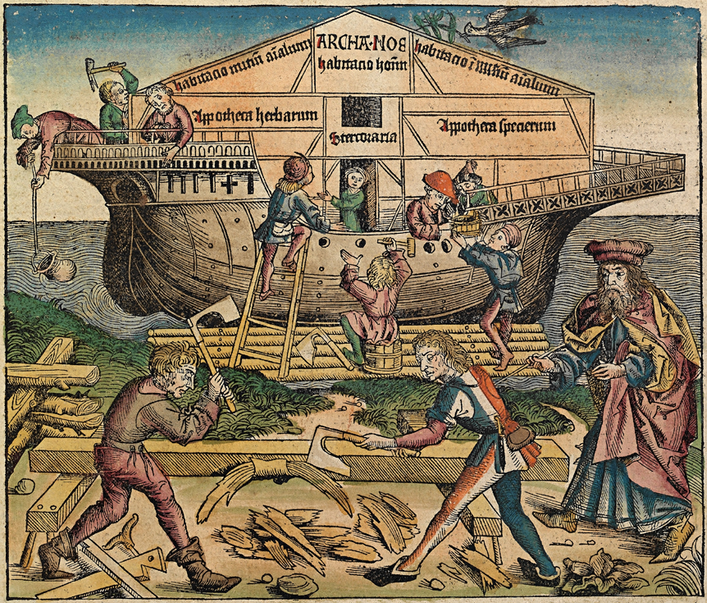
1. Noah was not Mocked by Anyone while Building the Ark
Thanks to Darren Aronofsky's recent movie Noah, the great biblical shipbuilder is back in the news.  Many Christians have gotten upset about all of the artistic liberties that Aronofsky has taken with the text.  What many Bible-readers don't realize is that they themselves have often taken liberties with the text, including one common story element - the presence of mockers while Noah built the ark.  Go read Genesis, chapters 6-7.  You won't find any mention of anyone saying anything to Noah during the time he was building.  Might there have been mockers?  Likely.  But the text doesn't directly support it.

P.S. - The text also says that there were more than 2 of many animals, including 14 of many kinds of livestock and birds.


2. There were no Wise Men or Magi at the Manger
Despite what every nativity scene in the whole world depicts, there were no magi/wise men at the manger the night Jesus was born.  Shepherds, yes.  Angels, yes.  Cows, probably.  But Magi - nope.  Matthew 2 says:

"After Jesus was born in Bethlehem...wise men from the east came...and behold, the star that they had seen when it rose went before them until it came to rest over the place where the child was. When they saw the star, they rejoiced...and going into the house they saw the child."


By the time the Magi show up, Mary and Joseph had apparently had enough time to move out of the manger and find a more suitable temporary living space in a small house or dwelling.  If you consider that later in Matthew 2, Herod decides to kill all baby boys under the age of 2 in Bethlehem, it is possible that the Magi may not have arrived until Jesus was a toddler.

P.S. - The Bible never says that there were 3 Magi.  It mentions three gifts - gold, frankincense, and myrrh - but never says how many Magi.

3. Jesus did Not Enter Jerusalem During his "Triumphal Entry"
You know the story about how on the Sunday before Passover, Jesus entered the gates of Jerusalem riding a donkey, and the people cried "Hosanna!" and they laid palm branches and cloaks at his feet.  Well, the part about him entering Jerusalem didn't actually happen.  In Luke 19, we find Jesus telling his disciples to acquire a donkey and colt from the village of Bethphage, outside of Jerusalem.  When the people greet him as he rides, he is near Bethphage, or on a small country road around there.  Then, he approaches Jerusalem and weeps over it from afar.  THEN, he enters Jerusalem and goes directly to the temple, where he proceeds to clean house.  The "triumphal entry" was actually quite humble, and was more of an approach than an entry into Jerusalem.

P.S. - You might hear on Easter morning that the same people who cried "Hosanna!" the Sunday before Passover were crying "Crucify him!" before the end of the week.   It's a common sermon example of how human hearts can be fickle (which is true!).  But, because these two events happened in different places, it's very unlikely that there were any people (outside of Jesus and the disciples traveling with him) who were in both places at all, much less likely that the same people changed their minds on something so crucial, so quickly.

CONCLUSION
What can we learn from realizing that we've had stories wrong all our lives, stories which we thought we had all right?  I know what I have learned - that I can always stand to give my Bible another reading, another careful, focused, and close reading.  As we prepare for Easter, the highest Christian holiday of all, we could use a little bit less of our own concoctions, and a little bit more of what the Bible actually feeds us.


Friday, January 17, 2014

Even Worship Songs Need Good Writing!

Question: Since our worship songs generally consist of more than "na-na-na-na," doesn't the meaning of a worship song matter?

Question: Since the meaning of a worship song evidently matters, shouldn't we try to get it right?

But we don't always get it right.  Consider these examples.

Natural and Legal Metaphors Mixed Up

My personal favorite is this line: "And like a flood his mercy reigns."  Do we really want to proclaim the message that God's mercy governs in the manner of a natural disaster?  (And if a flood governs like a king, I wonder what sort of weather events legislate like a parliament.)

Perhaps we could use on our overhead projectors on Sunday mornings the alternate spelling that actually makes a little sense: "And like a flood his mercy rains."

They're not the same thing.
(Pictures from Hobbes' Leviathan and from Edal Anton Lefterov.)
Plain Old Bad Grammar

And then we have this one: "And if our God is with us, then what can stand against?"  Why don't we give that preposition an object?  The Bible does (Romans 8:31): "If God is for us, who can be against us?"

I can't see what good the bad grammar does in this situation, unless it creates the illusion of good poetry.  But this would only be an illusion.  Of course, poetry doesn't always have to follow the rules of grammar.  But it takes more than bad grammar to make good poetry.

Adding "us" on the second repetition of the final line would not sabotage the meter: We already stretch "against" to occupy the space of about seven syllables, so we can afford give the space of one syllable to "us."  Nor would adding "us" ruin a rhyme (if there is a word that rhymes with "against," you won't find it in this song).

Biblical Oddities

"Days of Elijah" is such a nice song, but often a painful one for me.  If David (instead of, say, Ezra) is "rebuilding a temple of praise," I wonder when the first temple of praise was built.  I've heard this altered to "building a temple of praise"; I like that; I understand it.

For years I was annoyed by the line about "the days of Your servant, Moses, righteousness being restored."  One Sunday morning last summer I realized that this actually makes sense as part of the biblical narrative: Some of the righteousness lost when Adam sins is restored in the Mosaic law, especially the Ten Commandments.

Still, I wonder how many people are actually thinking about two Bible characters and more than a thousand years of biblical history when they sing that bit; maybe we could just sing "And these are the days of your servant, Josiah, righteousness being restored."

Et Cetera . . .

Some worship songs I'd do better not to mention are, it seems to me, much, much worse in theology, poetry, etc.

And hymns aren't excluded.  I would need another blog post (or another dissertation) to analyze the unbiblical dualisms and Platonisms that appear in some hymns.

Giving Our Best to God

We should be giving our best to God.  If you're like me and you don't sing very well, then go ahead and sing; for you and me, maybe bad singing is the best we can do if it's all we have.  But the Church has more than bad poetry, bad spelling, bad grammar, and bad theology to put in our worship songs.  We can do better.

In particular, these songs I've mentioned are nice songs!  I don't want us to stop singing them.  But can we maybe sing them a little better?

Friday, January 10, 2014

Ancient-Future Biblical Authority

TheOoze.com is, or rather was, a sort of website for postmodern Christianity and/or for the emergent church. Since my bachelor's thesis at Dallas Baptist University was about postmodernism and on biblical inerrancy, it is only fitting that I would eventually have something published at The Ooze.

The ideal opportunity came when Kurt Willems wrote a piece on "Postmodern Biblical Authority?" for The Ooze. The Ooze published my reply, "Ancient-Future Biblical Authority," in July 2009.

The Ooze is no longer online, however, and my article is nowhere to be found. But it ought to be somewhere. So now it can be here. My full article is copied below. (I have updated the link in the second footnote, and added some pictures.)
________________________________________

ANCIENT-FUTURE BIBLICAL AUTHORITY: A REPLY TO KURT WILLEMS1
by Mark J. Boone

WILLEMS' TIMELY PIECE

Kurt Willems' article "Postmodern Biblical Authority?"2 is engaging, well-researched, and timely. Willems asks the right question: What account of Biblical authority is appropriate for the post-modern era? He answers that Biblical Christianity and postmodernism can converge on the Biblical narrative's authority in the lives of believers. The believer must immerse himself or herself in the Biblical narrative, let his or her life become the application, expression, and continuation of the narrative.

Willems is also right to criticize what he calls fundamentalism for its hyper-literal reading of Scripture and its attempt to justify Scripture on wholly objective, universal, and non-Biblical grounds, a move that risks setting up Reason as an authority over Scripture. But Willems leaves huge stones unturned, for he gives no account of that "traditional biblical authority" which the Enlightenment tried to do away with. A pre-modern account yields different, but compatible, answers to the question of Biblical authority. It also answers a question of interest in any era but especially important to the postmodern: Where is the meaning of the Biblical text?


Willems' remarks suggest the legitimacy of looking to the pre-moderns. Postmodernism conceived as Lyotard's "incredulity toward metanarratives"3 is specifically a rejection of the modern metanarrative. If we are serious about rejecting modernism, we are within our rights to consider pre-modernism a live option; at the least, we owe the pre-moderns and their insights a fair hearing. Some of these insights are common to postmodernity; some are uncommon, but commensurable.

ANCIENT HERMENEUTICS

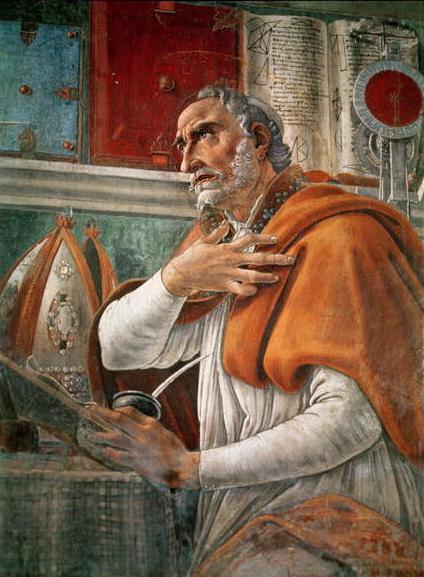
Where better to start than Saint Augustine: philosopher, theologian, mystic, and priest—at once among the last Church fathers and the first medievals? Let's take a look at four elements of the patristic hermeneutics represented by Augustine in his Teaching Christianity4 and in Book XII of his Confessions.5 This hermeneutics ties together Biblical meaning, authority, and application, both the human-composed elements of the text and those written by God, those characteristics of the Bible loved by fundamentalists and those loved by postmoderns.

Saint Augustine
First, the most basic kind of Biblical authority extends to the text's original meaning; it is the authority of the Bible's human authors, who always speak truly: "let all those depart from me who deem that Moses spoke things that are false" (Confessions XII, chapter 23); "let us so honor this same servant of yours, dispenser of this Scripture and filled with your spirit, as to believe that when he wrote these words by your inspiration he intended that sense in them which supremely excels both in the light of truth and in the fruit of profit" (chapter 30). The authority of the Biblical authors gives us the rule of faith: the command to love God and neighbor (Teaching Christianity Book I, chapter 35) and the tenets of basic orthodoxy—truths given in Scripture and acknowledged by the Church as fundamental for Christian faith (Book III, chapter 2).

Second, the meaning of Scripture transcends what its human authors intend, meaning no less than what its divine author intends. Thus Augustine prays: "while every man tries to understand in Holy Scripture what the author understood therein, what wrong is there if anyone understand what you, O light of all truthful minds, reveal to him as true, even if the author he reads did not understand this . . . ?" (Confessions XII, chapter 18).

Third, what the human authors say is our guide in exploring whatever Scripture says beyond their words. The rule of faith guides our interpretion of Scripture; when we encounter a passage whose full meaning we do not understand, we must look in it for an expression of the rule of faith (Teaching Christianity, Book II, chapter 9). We don't go searching for meaning in the sacred text without keeping the original meaning on hand as a compass.

Fourth, the truth in Scripture must be lived. John J. O'Keefe and R. R. Reno explain how important it was to the early Church to live Scripture; The rule of faith "has a behavioral as well as doctrinal component"6 and "was a rule for life as well as a rule for reading Scripture and interpreting its meaning."7 The sacred meaning of Scripture cries out to be lived. As Willems says, the Biblical narrative has authority in the life of the believer.

This hermeneutics acknowledges the authority of the Bible's original meaning, but it is open to meaning that transcends it and emphasizes the relationship between the two. It is also swift to apply the meaning of Scripture in the life of the Church. But Scriptural authority in its most basic sense safeguards our participation in the Biblical narrative. Without the authority of the human authors of Scripture, "faith will start tottering," "charity itself also begins to sicken," the authority of the Biblical narrative over the lives of believers is undermined, and the life goes out of the Church (Teaching Christianity Book I, chapter 37).

ANCIENT AND POST-MODERN HERMENEUTICS

This hermeneutics achieves several postmodern desiderata. First, the entire world of the Church becomes, in a somewhat Derridean fashion, the interpretation of the text. There is no external referent to which the Biblical text refers and upon reaching which interpretation ceases. The life of the believer is immersed in the text. The very life of the Church is its ongoing act of interpretation.

Second, the Biblical narrative will not be made to fit inside our minds or be justified by our intellects. Merold Westphal in Overcoming Onto-theology explains that two of the reasons the Christian narrative is distinct from the modern meta-narrative are that it does not seek to be legitimized by science and that its origins are in revelation rather than autonomous reason.8 Augustine's hermeneutics likewise begins with the Biblical text. It sends reason on a mission to understand what is learned by faith, rather than prove faith in the court of reason as a prerequisite for belief.

Jean-Luc Marion (picture from http://en.wikipedia.org/wiki/Jean-Luc_Marion)
Third, the sense of the Bible is not limited to the intent of its human authors. Jean-Luc Marion, the preeminent voice on Christianity's relation to postmodern philosophers such as Heidegger, Derridas, and Levinas, says that the Biblical text "escapes the ownership of its literary producers in order to be inspired, so to speak, by the Word" (Christ).9 Biblical meaning transcends that of its human authors. Marion and Augustine both remind us that only God knows the full meaning of the text.

"FUNDAMENTALISTS" AND POSTMODERN CHRISTIANS: ESTRANGED BRETHREN

In acknowledging the authority of the original meaning of Scripture, this ancient hermeneutics also satisfies a major concern of the "fundamentalists" Willems mentions, for it relies on the fundamental authority of the authors of Scripture. The doctrine of Biblical inerrancy seeks to preserve this authority. The central thrust of The Chicago Statement on Biblical Inerrancy is the attribution of infallible authority to the intent of its human authors.10

In other words, the first element of patristic hermeneutics is an overriding goal for the inerrantist, and postmodern Christians emphasize its second and fourth elements. The hermeneutics of the Church fathers unites these elements together with the third. The original meaning of Scripture and that which transcends it are meant to be pursued and lived together.

The Biblical narrative's authority over the life of the Church is real, and Willems does well to acknowledge it; it is also well to acknowledge the authority of Scripture's original meaning; it is best to acknowledge the unity of both regions of authority. In this process there is room for friendship between postmodern Christians and fundamentalists, estranged Christian brethren whose reconciliation is long overdue. Reconciliation will not be easy, but we both share in the hermeneutical heritage of the Church fathers, and a way forward together is possible if we listen to them.

NOTES

1. The title "Ancient-Future Biblical Authority" is influenced by Robert E. Webber, especially his Ancient-Future Faith: Rethinking Evangelicalism for a Postmodern World (Grand Rapids: Baker Books, 1999). 

2. Kurt Willems, "Postmodern Biblical Authority," TheOoze: Conversation for the Journey, http://www.patheos.com/blogs/thepangeablog/articles/unpublished-papers/postmodern-biblical-authority/ (October 29, 2008).

3. Jean-François Lyotard, Introduction to The Postmodern Condition: a Report on Knowledge, translated by Geoff Bennington and Brian Massumi (Minneapolis: University of Minnesota Press, 1984), xxiv.

4. Augustine, Teaching Christianity, translated by Edmund Hill (New York: New City Press, 1996).

5. Augustine, The Confessions of St. Augustine, translated by John K. Ryan (New York: Doubleday, 1960).

6. John J. O'Keefe and R. R. Reno, The Sanctified Vision: an Introduction to Early Christian Interpretation of the Bible (Baltimore: Johns Hopkins University Press, 2005), 124.

7. Ibid., 128.

8. Merold Westphal, Introduction to Overcoming Onto-theology: Toward a Postmodern Christian Faith (New York: Fordham University Press, 2001), xiii-xv.

9. Jean-Luc Marion, God Without Being, translated by Thomas A. Carlson (Chicago: University of Chicago Press, 1991), 156.

10. The International Council on Biblical Inerrancy, The Chicago Statement on Biblical Inerrancy (Chicago: 1978).

Friday, December 13, 2013

This is How We Should Read the Christmas Story

Think about this for a moment:
  • A miracle baby is born to a couple too old to have children.
  • A son is born as a sign that God's people will be redeemed.
  • Someone named Yeshua will lead God's people into enjoyment of the blessings promised to Abraham.
  • A shepherd-king comes out of Bethlehem.
  • A wicked king tries to kill all the male babies, but one escapes: the one through whom redemption will come to God's people.
  • God speaks through dreams to a man named Joseph, the son of Jacob, who comes to Egypt for the redemption of God's people.
You may recognize these as the stories of Zechariah and Elizabeth and John the Baptist; of Mary and Jesus (in Hebrew, Yeshua); of the birth of Jesus in Bethlehem; of the escape from king Herod to Egypt; and of Joseph, the son of Jacob and husband of Mary.

These are also the stories of Abraham and Sarah and Isaac; of Isaiah; of Joshua (also Yeshua in Hebrew); of king David; of Pharaoh and Moses; and of Joseph the son of Jacob and grandson of Isaac.

The characters in the Christmas story recorded in the early chapters of Matthew and Luke re-live the stories of the redemption of God's people.  In this way we see a confirmation that all the old stories were pointing to this story.  This is how we need to see Christmas: as the beginning of the climax of a long history of redemption, which begins with Adam and leads all the way to Mary.

Wait; this picture's not accurate!  They left out the little drummer boy!
(from Abraham Hondius, 1663)
Of course, a story that has been going on for a couple of millennia will have a climax that lasts a few years.  It lasts about thirty, in fact, and the other end of it is captured in two other holidays: Good Friday and Easter, where some of the other stories of redemption are re-lived:
  • The seed of the woman defeats Satan—the story of Eve, and the story of Mary.
  • A holy God must punish sin, but people can be saved through the wooden way God provides—the story of Noah's ark, and the story of the Cross.
  • God tells his people how a lamb may die in their place for their sin—the story of the Passover, and the story of the Cross.
  • A prophet is in darkness for three days.  His message is a light to the Gentiles, a preaching of repentance and forgiveness of sins for them—the story of Jonah, and the story of the death, burial, and resurrection of Jesus Christ.
The last prophet to hail the coming of the Christ sums it all up nicely: John the Baptist:

"Behold the lamb of God, which taketh away the sin of the world!"

Friday, August 17, 2012

Friday Stuff: Elvis' Bible, Playmates Looking for the Ark, and Honoring Aretha

  • A Bible owned by Elvis will go on sale, next month, and it's expected to sell for at least $30,000.  It's got some of the King's writings in it, including this phrase that Elvis wrote in the margin: "To judge a man by his weakest link or deed is like judging the power of the ocean by one wave."

  • Speaking of music, Aretha Franklin was just inducted into the Gospel Music Hall of Fame.  Her Gospel recordings are not as famous as her Motown work, of course, but she's been very influential in shaping how we think Gospel music should sound. 
  • If you don't know much about that side of Aretha's work, then you might enjoy listening to her upbeat version of the Beatle's morose tune, 'Eleanor Rigby.'
    •  


Have a good weekend.