Showing posts with label national book month. Show all posts

Wednesday, October 24, 2012

Virtue Recovered: Friendship in Harry Potter

Friendship is one of my favorite literary themes, but it's difficult to find these days. When it does show up in contemporary literature, it usually surfaces in what we oddly call Young Adult Fiction. Classically, friendship is one of the most powerful of the four loves---affection, friendship, romance, charity---but in modern American culture, friendship gets the short shrift. We have eyes only for eros. From chick flicks to shoot-em-up blockbusters, from Taylor Swift to Cee Lo Green, from the Disney Chanel to the History Chanel, romance rules the day. Don't get me wrong, I'm a fan of romantic love; I'm for it. But friendship gets cheated. (And when friendship gets cheated, so do affection, romance and charity.)

Friendship receives very little serious treatment in our cultural avenues largely due to the Freudian sexualization of the whole of the human experience. Intimate friendship is suspect in our culture. We've lost friendship, and we desperately need to rediscover it. True friendship is rare enough as it is, and philios is one of the most essential expressions of being human. We were designed for deep, human connections.


So when friendship does receive serious treatment in contemporary literature, such novels, plays, short stories are particularly noteworthy. In our series this month on fiction, we've talked a lot about how reading fiction has the potential to make us better humans. In the same vein, stories that embody authentic friendship provide us the opportunity to be better friends.


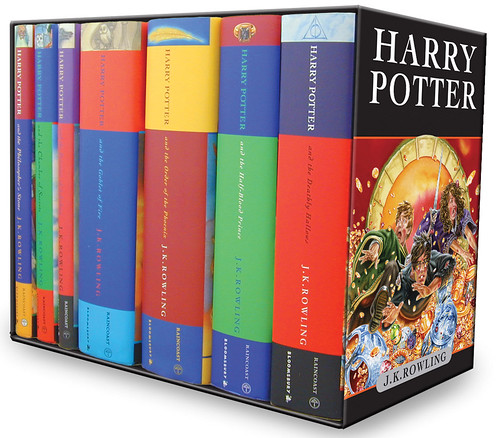
Harry Potter, one of my favorite stories, takes friendship seriously. Through the young protagonists, Harry, Ron, and Hermione, we learn quite a lot about friendship. We discover friendship as a virtue and a discipline; as a form of hospitality and a means of learning forgiveness, sharpening character, and cultivating both self-sacrifice and a sense of self.


Here are the highlights:


"Bad company corrupts good character." That's not from Harry Potter, it's from the Bible. But the idea is deeply embedded in the Hogwarts Saga. Right at the start of Harry's life as a wizard, The Boy Who Lived has the opportunity to ditch the red-headed boy he befriended on the train and become friends with the cool, rich, powerful Draco Malfoy. Referring to Ron and his hand-me-down robes, Draco informs Harry, "You'll soon find out some wizarding families are much better than others, Potter. You don't want to go making friends with the wrong sort." Harry doesn't need to know Latin to understand Draco Malfoy is a character of the wrong sort, a character of 'bad faith' (mal-foy). Harry rejects Malfoy's offer of an alliance (of power more than of friendship) and pleads with the Sorting Hat, "Not Slytherin. Not Slytherin," house of the snake; he is placed instead in Gryffindor, house of the lion. (The Philosopher's Stone)


Harry and Ron, only two-thirds of the literary "soul triptych," are incomplete without Hermione (as John Granger discusses here and in more depth here). It is when these three become friends that things really start rolling. Hermione becomes trapped in the girls' toilets by a troll, partly due to Ron's insensitivity toward her---"No wonder she hasn't got any friends." Owning their responsibility and their need to make it right, Ron and Harry go to find Hermione and the three work together to defeat the troll. Grateful, Hermione, the rule-follower and sometimes annoying or at least inconvenient truth-teller, lies (to a teacher no less) and takes the full blame in order to keep the boys out of yet further trouble. After all, “There are some things you can't share without ending up liking each other, and knocking out a twelve-foot mountain troll is one of them” (Philosopher's Stone). This marks the beginning of the trio's great friendship, and I can't think of a more apropos signpost. Throughout the rest of the series, they will face hardship, heartbreak, betrayal, and various forms of evil, both in the world and in their hearts, but they will face them together. Without saying it directly, Rowling hints at the essential nature of friendship, that it derives from shared experiences, and that those which are difficult and painful, those which expose our vulnerable humanity, those experiences create the strongest bonds.
It's important that Harry, Ron, and Hermione learn this lesson early. When Voldemort returns to power in The Goblet of Fire (Book 4), Dumbledore, often the voice of truth, makes clear the necessity of friendship in the cosmic (and everyday) fight for love and truth and beauty against corrupt power and malicious deception: "We are only as strong as we are united, as weak as we are divided. Lord Voldemort's gift for spreading discord and enmity is very great. We can fight it only by showing an equally strong bond of friendship and trust." Would that the Church grasped this truth. Is it just me, or is Dumbledore/Rowling channeling the apostle Paul who writes, "Make every effort to keep the unity of the Spirit through the bond of peace. There is one body and one Spirit, just as you were called to one hope when you were called; one Lord, one faith, one baptism; one God and Father of all, who is over all and through all and in all!" (Eph. 4:3-6)?

After struggling throughout the majority of The Order of the Phoenix (Book 5) with the part of himself he shares with The Dark Lord (it's not a perfect analogy, but think, sin nature), Harry comes out on the other side of his harrowing darkness realizing the light is stronger, and when he does, he finds pity for his enemy. Voldemort views love and friendship, and the vulnerability required therein, as weakness, and therefore he ever underestimates their power. And Harry, after trying all year to shut out his friends and shut off his love for them in an attempt to save them from his burden and numb himself from his emotional turmoil, after all this, Harry finally understands and finds compassion akin to that of Frodo for Gollum (another great saga about friendship). “You're the one who is weak." Harry declares to Voldemort. "You will never know love or friendship. And I feel sorry for you.” In the end (of Book 7), The Chosen One actualizes the full power of love by sacrificing himself for his friends. It's the Gospels Rowling echos now: "Greater love has no one than this, that he lay down his life for his friends." And Harry's sacrifice covers them.

Harry is a fierce friend; reading his story challenges me to be a better friend. He isn't perfect, but he is exceedingly loyal. He makes mistakes, but he makes it right. He is a friend to those on the margins,"the least of these," he shows compassion to his enemies, and he willingly lays down his life for his friends. Harry has the capacity to be a good friend in part because he has good friends. They accept him for who he is, the light and the dark, and in them he has a home like he never had at number four Privet Drive. If I can learn to be half the friend these fictional teenagers are, I might come to "live a life worthy of the calling [I] have received" (Eph. 4:1).

Wednesday, October 17, 2012

The Importance of Being Earnest

My second-favorite play is the only real play I've ever played anyone in: The Importance of Being Earnest by Oscar Wilde. I am forever in debt to my high school senior English teacher, Miss Penner, for having us read both Earnest and Hamlet, my favorite play.

But reading Earnest wasn't enough; she wanted us to perform it; and that, as it turned out, in Shakespearean style, since we had more males in the class than there were male characters available in the play. I still remember pretty well some of my lines as Miss Prism in Act 1. ("Cecily! Cecily! Surely such a utilitarian occupation as the watering of flowers is rather Moulton's duty than yours. Especially at a moment when intellectual pleasures await you.")

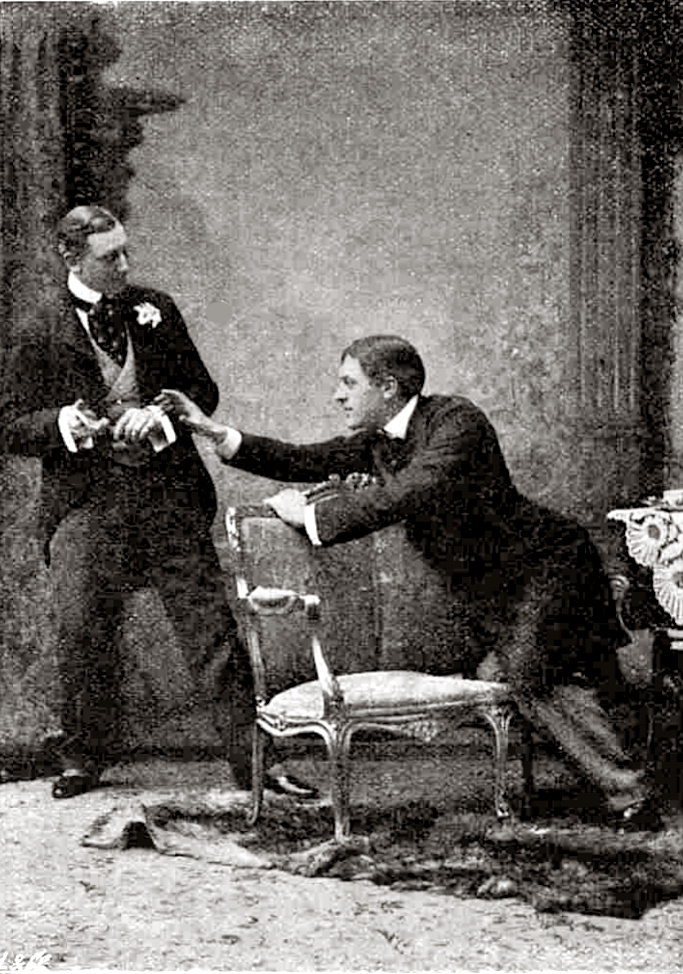
The last time I checked, an oldish movie was still streaming at Netflix. It is very good, especially in its portrayal of Lady Bracknell. Yet I still cherish most my memory of Kevin's Lady Bracknell saying "I am glad to hear it," the it she has heard being the fact that Jack smokes.

Jack tries to snatch his private cigarette case from Algernon.
 
So what is the point of Earnest? Do we learn anything important from it?

As far as I know, there is only one really important truth illustrated in The Importance of Being Earnest, and it is this: We humans are capable of being very, very, very ridiculous.

Being ridiculous is not the same thing as simply being silly. Larry the Cucumber is silly, and we love him for it. Algernon Montcrieff is ridiculous, and we love watching him be it, but we do not admire it.


Wednesday, October 10, 2012

On the Road


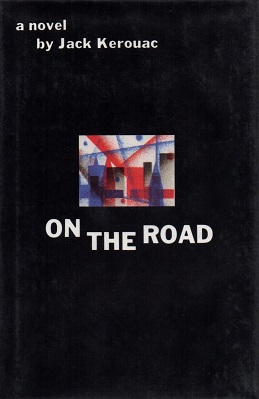
Jack Kerouac's On the Road, from 1955, is the standard text of the so-called Beat generation, as it includes all that the Beats valued: jazz, freedom, sex, and drugs. Exchange “rock n' roll” for “jazz” and you have the perfect recipe for proto-hippies -- so the novel's influence is easy to see. On the Road follows its narrator, Sal Paradise, on several impromptu road trips across the country, most of which are inspired by or done in quest of beatnik cowboy, Dean Moriarty, who seems to embody “the ragged and ecstatic joy of pure being.” His crazy, no-holds-barred approach to living inspires Sal, even though it frequently wounds him and their group of friends. Sal and Dean spend a lot of time raving about the concept of “IT,” and the book functions, in some ways, as their quest after this noble ideal. Just what is “IT?" Well, in the words of Dean Moriarty, “now you’re asking me impon-de-rables...” but the closest the characters seem to come to experiencing “IT” is in jazz clubs. Speaking of experiencing “IT” in the music of an alto sax player, Moriarty enthuses: 
All of a sudden somewhere in the middle of a chorus he gets it -- everybody looks up and knows; they listen; he picks it up and carries. Time stops. He’s filling empty space with the substance of our lives, confessions of his bellybottom strain, remembrance of ideas...with such infinite feeling soul-exploratory for the tune of the moment that everybody knows it’s not the tune that counts but IT --
As a Christian, it’s hard not to see the protagonists’ quest for “IT” as a quest for spiritual fulfillment. That they come closest to finding it in the beauty of complex free jazz is telling for me, as it speaks to the pull of the human soul toward beauty, leading to that which is truly Beautiful. However, for all that is beautiful, joyous and exuberant in this classic novel, it is important to note that On the Road is pervasively lonely. Love is almost never kept and goodbyes are prevalent; such is life on the road, and the narrator, Sal, constantly speaks of his lonesomeness. Sal is also a veteran of World War 2 --  though this is not something that the novel plays up -- and each GI check that Sal receives is a reminder that, to the characters in On the Road, life is undeniably altered, post-war. This post-war setting may account for the novel's simultaneous joy and darkness: joy, because life is recognized as short and precious in light of war, and darkness, because ordinary life will never be dangerous or fulfilling enough after the war, and the spectre of loss and death will continue to haunt Sal no matter how many road trips he takes. The book’s tension between joy and loneliness is the tension of every human being living in a world that is both already redeemed, yet caught in the in-between place where life does not live up to what we feel, in our hearts, that it should be. Like Sal, we’re all just on the road, looking for “IT,” maybe enjoying some good music on the journey. But I didn’t need to tell you that -- Kerouac already told us that “the road is life.”

(this has been another entry in our series of book discussions for National Book Month)