Wednesday, May 8, 2013

On the Distinction between Analytic and Continental Philosophy


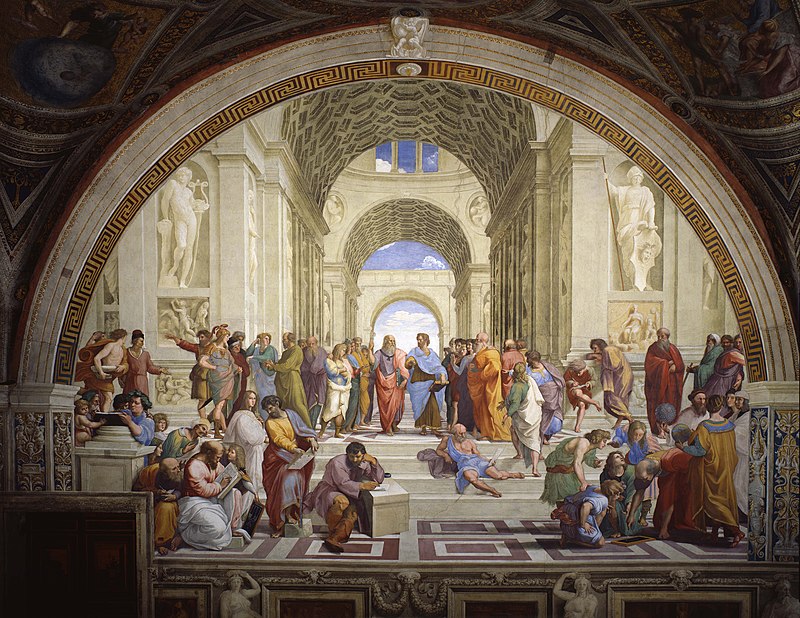
            For those outside of the discipline, the distinction between analytic and continental philosophy may seem trivial. After all, both traditions explore many of the same philosophical problems and often examine the same primary texts. But while the two each strive to clarify our knowledge of the world and our human nature, they carry out these projects with the aid of different intellectual toolsets. In applying these different tools to the same questions, analytic and continental philosophers yield distinct types of knowledge. As we’ll learn, one tradition tends to complement the other, but in some cases the subject matter dictates a specific approach that favors either analytic or continental methods.

Continental Philosophy

            The older of the two traditions, continental philosophy incorporates the philosophical subfields of metaphysics, ontology, epistemology, ethics and aesthetics. The majority of its practitioners reside in continental Europe, where during the late 18th century Immanuel Kant inaugurated the tradition that became known as German Idealism. His Critique of Pure Reason attempted to provide a solution to the skeptical empiricism of David Hume and founded a school of epistemology that remains influential today.
            Kant and his intellectual successor Hegel indulged in highly abstract metaphysical speculation about the fundamental foundations of our knowledge of the world. They attempted to construct all-encompassing systems that subsumed disparate fields of philosophy under one meta-narrative, and their scope was comprehensive in that they believed philosophy could function as the explanatory cornerstone of human experience.
            In the 19th century, continental philosophers responded to the apparent disparity between the advances of science and philosophy by rejecting the ambitious extravagancies of Kant and Hegel. Thinkers such as Kierkegaard and Nietzsche scoffed at the notion that philosophy could neatly embody the principles of every field of learning and became suspicious of systematic attempts to formalize human experience. Out of their influence emerged the existentialism of Sartre and Camus in the early 20th century.
            While the priorities of continental philosophy changed over time, much of its style and basic tools remained intact. Works by the early German Idealists and Kierkegaard and Nietzsche share stylistic traits that distinguish them from analytic philosophy. Both engage in prose that sacrifices formal rigor in an effort to convey abstract meaning. Much of 19th and 20th century continental philosophy reads more like literature than philosophy, at least by analytic standards, and it's true that the continental thinkers are typically more dynamic stylistically than analytic philosophers. For the continental philosophers, language does not function as a rigid set of symbols conveying strict denotations, but rather as a malleable instrument by which to explore the boundaries of human comprehension.

Analytic Philosophy

            Against this perception, the analytic philosophers of the United Kingdom and the United States attempt to limit their usage of language to demonstrably logical statements about the world. Originating in the early 20th century with works by Bertrand Russell, G.E. More and Ludwig Wittgenstein the analytic school of philosophy views the abstract indulgences of the continental tradition as complicating our knowledge of things by introducing confusing language that is ultimately devoid of meaning.
            Philosophers should, they argue, limit themselves to logically verifiable statements of the world that can provide reliable knowledge. By employing formal predicate logic, analytic thinkers attempt to validate their achievements with a rigor rivaling that of the natural sciences and mathematics. The prevalence of this methodology reached a peak in logical positivism, whose practitioners insisted that all philosophical statements must derive from either empirical observations or analytic tautologies.
            But logical positivism, it turned out, couldn’t meet its own strict criteria for justification and essentially died out by the late 20th century. There was nothing logically necessary about its rules for valid statements, nor did empirical observation provide warrant for believing those rules to be fundamental. As a result, positivism has all but disappeared.
            Other less dogmatic forms of analytic philosophy are practiced throughout the English-speaking world, and the tradition remains the dominant school of philosophy in Western universities. Analytic philosophers employ formal logic to reveal inconsistencies and errors in arguments that otherwise appear plausible, and have contributed a great deal to our understanding of how language often functions not to communicate objective facts, but to reinforce our prejudices.
           
Application

            To illustrate the relative strengths of the analytic and continental approaches, let’s consider a particular set of philosophical problems. The philosophy of religion is concerned with the philosophical underpinnings of religious claims, such as arguments for the existence of god, god’s attributes, the problem of evil and the existence of the soul. Let’s briefly consider how the analytic and continental traditions handle the question of god’s existence.
            The analytic school employs logic and linguistic analysis to determine whether the claim “god exists” has any significant meaning. Does such a statement consider the actual conditions of the universe, or does it represent an emotional response to subjective experiences that cannot be verified empirically? Christian philosophers in the analytic tradition such as Alvin Plantinga and Richard Swinburne have used logic to argue that such statements are in fact coherent claims about the universe and warrant our consideration.
            Continental philosophers will employ a different approach to the same question. Free from the formal strictures of the analytic school, continental philosophers can indulge in metaphysical speculation to explore the broader implications of the statement “god exists.” How might god’s existence shape our theories of beauty and justice? In questions where formal logic offers little insight, continental approaches reveal stimulating avenues of inquiry. The orthodox theologian and philosopher David Bentley Hart is a contemporary practitioner of continental philosophy of religion.

            This brief overview of the two dominant schools of Western philosophy cannot cover the many subtle distinctions or subfields within each tradition. They are broad disciplines that incorporate diverse approaches, but our characterization clarifies the fundamental differences between them and gives at least a general indication of their respective merits. 

Monday, May 6, 2013

Praying with Billy Joel

For someone who loves 70s singer-songwriters, I am sorely deficient in my knowledge of Billy Joel. I mean, I can sing along to "Piano Man" in a heartbeat, but that's as far as it goes. So when "Only the Good Die Young" came on the radio the other day, I turned it up, hoping to further my Billy Joel education. At first I was disappointed. After the first few lines, I thought I had the song pegged as a an anti-church cliche with a little bit of Marvell's "To His Coy Mistress" thrown in:
Come out Virginia, don't let me wait.
You Catholic girls start much too late.
Aw, but sooner or later it comes down to fate.
I might as well be the one.
Well, they showed you a statue, told you to pray.
They built you a temple and locked you away.
Aw, but they never told you the price that you pay
for things that you might have done.
Only the good die young.
But I kept listening, and I'm glad I did, because of this line in the bridge:

You say your mother told you all that I could give you was a reputation
She never cared for me
But did she ever say a prayer for me? 
Wait a second -- did Billy Joel just remind me of an important truth about prayer? I think he did.


According to Wikipedia, Billy Joel has said that "...the point of the song wasn't so much anti-Catholic as pro-lust," but it is also, in its own way, pro-love as well, since praying for someone is a good way to learn how to love them. The song reminded me of this article, in which a man with opposite political views of President Obama learns to love him just through the habit of praying for him. It reminded me of how it only takes a second to pray for that person who overshares personal information in the facebook feed for me to begin to care about that person and their otherwise "TMI" statuses. It reminded me of how I'm a better friend and family member when I remember to pray for the important people in my life. When I do, suddenly my excuses about being too busy to write or call seem silly; when I pray for them, I start to love them better. And as the song suggests, praying for someone is a good way to stop judging them as well. So thanks, Billy Joel, for that lesson -- I better catch up on your body of work just to see what else you have to tell me!


Friday, May 3, 2013

Why would a loving God let so many bad things happen?

In a recent post, I presented three questions I've heard young people ask--people who think highly of Jesus and even seem to want to become Christians and follow Him, but worry they can't without sacrificing their rationality, their decency, or both. I addressed the first and second questions in my last three posts. Here is the third question:

Question 3: Why would a loving God let so many bad things happen?

This is the problem of evil, a problem as important as it is ancient. Boethius in The Consolation of Philosophy memorably compared this problem to a Hydra: Every time one version of it is dealt with, two more versions sprout up in its place.

I suspect that the biggest problem with evil is not that it is very hard to find answers to this question; answers are easy to find. The biggest problem is that evil hurts, and having a few answers doesn't automatically make it stop hurting.

But, as Boethius says, there is still a big problem with finding answers: While it is easy to find some, finding them all is a never-ending affair. So is articulating all the old answers perfectly. These are two reasons I will not pretend to answer Question 3 here, in a single blog post.


Boethius and Lady Philosophy discuss the problem of evil.
   
Instead, I will do something better. I will point you to some places where some of the best answers are articulated. As God says in Time Bandits, "I think it has something to do with free will," but that's not all there is to it.


To sum up: There are good answers to this question, starting with free will. But you will have to do some studying if you really want to understand this issue.


To sum up my last four posts:

There are three big questions that keep people away from Christianity.

Question 1 is: Can I be a Christian and still believe in evolution? And the answer is: Yes. (But you don't have to.)

Question 2 is: Why would God send people to hell just because they haven't heard about Jesus? Maybe the best answer to this is another question: Who says God does?

Question 3 is: Why would a loving God let so many bad things happen? And the answer is: There are reasons. Maybe you can't understand all of them perfectly, but you can understand a little bit. If you really want to understand it all, you will have do some studying.

Wednesday, May 1, 2013

Studying History is Important, After All

The retired professor started his lecture by saying that it was going to be his last lecture - ever. He was finishing his career before us, and he started with this story:

"A student once asked me, 'What is history going to do for me when I graduate,' and I said, 'No!  Don't ask 'what can it do for me later, but ask, What will history do to me before I graduate.'"


I loved it. People have been criticizing the humanities a lot, these days, and it would be a shame if we forgot the importance of studying our past, our art, and our culture.

And, yes, it does have practical value. Did you know that economics is a humanities course? Not only that, but it's best understood alongside history. How about Philosophy? It sounds like a useless major, but did you know that Plato's Republic, the cornerstone of Western philosophy, is a book that is (mostly) about how a state can be run justly? (If I were ever on trial for a crime I didn't commit, it would make me glad to know that the judge had read Plato.) An understanding of ethics and righteous law-making is central to western philosophy in every century, so a politician, lawyer, or activist will most definitely benefit from having a background in philosophy.

Don't forget that students of the humanities must usually learn a foreign language, or two. Americans are often criticized for not knowing other languages, and its the humanities students who are required to break this mold.

But what about history; does it matter? Imagine a diplomat who hadn't studied international history, or a governor who did not know how his state was founded. It's important that the leaders of our communities and nations understand our own past and the cultures that surround us. This sort of thing is learned in history classes.

The Christian community has learned the importance of this; as our culture drifts further and further away from antiquity, we need linguists and historians to help us understand the context in which the Bible was written. Church history is also a difficult subject that only makes sense when we know how the old world worked - something that is impossible without the humanities.

On a more "everyday" level, I think that most people appreciate the humanities more than they realize. Have you ever enjoyed a Ken Burns documentary, or a History Channel special on the pyramids? What are you going to do with that? How is a documentary about Jazz going to help you sell auto parts, or design software? It won't, but the enlightenment that comes from such understanding is valuable.

Then again, maybe these things are more practical than we think. Humanities courses teach us critical thinking skills, because each text/document/piece of artwork requires deep study to comprehend fully. Someone who has taken the time to really understand the Magna Carta in its historical context is someone who can apply that problem-solving skill to whatever field they decide to work in. A successful humanities student is not just someone who has memorized a set of obscure dates and stories, but they've learned to think around corners and solve complex problems alongside some of the world's most celebrated thinkers. That is not a useless skill.