While everyone is arguing about homosexual marriage and DOMA, I can't stop wondering about role some Christians think they play in culture. Do we have the right to tell other people what to do? I sometimes feel like members of the church want the government to strong-arm their neighbors into accepting a Christian worldview. (Of course, this attitude isn't just found in the church.)
You are entitled to disagree with homosexual lifestyles if you want - it's a free country - but that doesn't mean you should force your gay neighbors to do what you say. I've never seen a Bible verse that charged Christians with being the behavior police for the un-churched.
In the book of John, chapter 6, many disciples leave Jesus when they find His teachings to be too difficult, and He lets them go. He doesn't chase them down or even try to stop them - He just lets them go. In the same way, I believe in respecting people's choices; it is not my job to force my way of life on people. It is my job, however, to maintain my own devotion to Jesus. (Furthermore, no one ever followed Jesus because someone else forced it on them. If that worked, then the Christian governments of our history would still be in place.)
Jesus' followers were not expecting him to be a vagrant; some of them wanted a ruler who would overthrow Rome, or lead their nation as a king on a throne. But Jesus left the corrupt Roman government in place while teaching his followers to love their Roman persecutors, and each other. (By the way, are we kind to our own government leaders in this way? I didn't vote for President Obama, but I'll never post disrespectful pictures of him.)
I understand that it would be nice if the government was a reflection of my personal belief system - and modern U.S. politics seems to be a struggle to see which group's personal convictions will rule us - but I don't think the church has been tasked with forcing everyone to behave as we do. Trying to control culture is impossible, but loving our neighbors and showing them the beauty of God through our own devotion is an attainable goal.
Monday, July 1, 2013


Friday, June 28, 2013
The Dark Ages Weren't So Dark (But Maybe We Are)
I just read an article about the myth of unicorns over at Mental Floss, and I had to leave the author a correction after he accused the middles ages of being a time when "science famously took a back seat to illogical hunches."
This is a problem.
I've been reading the works of St. Bede, lately, for my M.A. Thesis, and his works on natural science are fascinating. Sure, he was limited by the confines of a civilization that lacked telescopes and x-ray machines, but his scientific observations were done with the sort rigor and objectivity that would make a modern-day scientist proud.
It's true that medieval European minds took revelation at face value, but they also believed that reason and logic were necessary to find the truth. The works of Aristotle were revered (Tertullian described the Trinity in Aristotelian terminology, and his definition is the one that stuck around) and natural phenomenon were to be understood through observation, not merely superstition.
 These thinkers believed that natural reasoning and theology were both required in order to understand our world. St. Augustine, for example, left the religion of the Manichaeans in part because they're religious texts made scientific claims that he knew to be false. After his conversion to Christianity, Augustine would write about science and faith, finding ways to combine the two into a comprehensive worldview that made sense of both disciplines. (Not unlike the ancient Greek philosophers who made great strides in science while also discussing the soul and life after death.)
In the 13th century, a medieval monk named Roger Bacon would write up something that we now call The Scientific Method, even though he was known as a renowned theologian. In the 16th century, a priest named Copernicus, who did mathematical work for the Pope, would write a twelve volume work explaining that the sun was the center of the solar system - not the earth. Galileo would later prove this claim with his uniquely powerful telescopes, leading to a life of persecution from the church (even though the pope thought his work was just fine). Galileo's writings clearly show him to be a man of faith who had managed to threaten a certain powerful segment of the church - not the entire church. When Franciscans later visited China to establish some of the earliest Christian missions there, they brought copies of Galileo's works with them so they could exchange something from their culture that they were proud of.
Until recent times, Christianity and science were not enemies. In fact, the church was the only institution that kept science alive in Europe during those "dark ages," but things are different, now. People outside of the church sometimes try to use science to attack God, while some people within the church feel a need to antagonize the scientific community, feeling threatened by it.
Founders of the Christian religion would not have understood this opposition. It's time to remove the border in between faith and science and see how the two can help each other, once again.
This is a problem.
I've been reading the works of St. Bede, lately, for my M.A. Thesis, and his works on natural science are fascinating. Sure, he was limited by the confines of a civilization that lacked telescopes and x-ray machines, but his scientific observations were done with the sort rigor and objectivity that would make a modern-day scientist proud.
It's true that medieval European minds took revelation at face value, but they also believed that reason and logic were necessary to find the truth. The works of Aristotle were revered (Tertullian described the Trinity in Aristotelian terminology, and his definition is the one that stuck around) and natural phenomenon were to be understood through observation, not merely superstition.
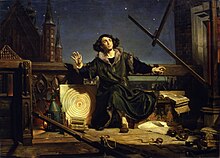 These thinkers believed that natural reasoning and theology were both required in order to understand our world. St. Augustine, for example, left the religion of the Manichaeans in part because they're religious texts made scientific claims that he knew to be false. After his conversion to Christianity, Augustine would write about science and faith, finding ways to combine the two into a comprehensive worldview that made sense of both disciplines. (Not unlike the ancient Greek philosophers who made great strides in science while also discussing the soul and life after death.)
In the 13th century, a medieval monk named Roger Bacon would write up something that we now call The Scientific Method, even though he was known as a renowned theologian. In the 16th century, a priest named Copernicus, who did mathematical work for the Pope, would write a twelve volume work explaining that the sun was the center of the solar system - not the earth. Galileo would later prove this claim with his uniquely powerful telescopes, leading to a life of persecution from the church (even though the pope thought his work was just fine). Galileo's writings clearly show him to be a man of faith who had managed to threaten a certain powerful segment of the church - not the entire church. When Franciscans later visited China to establish some of the earliest Christian missions there, they brought copies of Galileo's works with them so they could exchange something from their culture that they were proud of.
Until recent times, Christianity and science were not enemies. In fact, the church was the only institution that kept science alive in Europe during those "dark ages," but things are different, now. People outside of the church sometimes try to use science to attack God, while some people within the church feel a need to antagonize the scientific community, feeling threatened by it.
Founders of the Christian religion would not have understood this opposition. It's time to remove the border in between faith and science and see how the two can help each other, once again.
Wednesday, June 26, 2013
DOMA and Texas Abortion Bill
Today the Supreme court ruled part of the DOMA (Defense of Marriage Act) of 1996 unconstitutional. For states that allow same sex marriage, the couples are now able to receive the same federal benefits as heterosexual couples.
Last night in Austin, TX, democrat Wendy Davis spoke for 10 hours in an attempt run down the clock to have a bill killed that would ban abortion after 20 weeks and require abortion facilities to upgrade their facilities. Thanks to a loud mob at the capitol, the bill was killed, but it is already being suggested that it will have another hearing.
It is interesting that these two issues are in the news on the same day and it causes me to wonder about the cultural implications of these rules.
The first rule suggests that all people should be treated as equal, while the second treats unborn children as less than human....essentially removing all of their rights.
Abortion is not as black and white an issue as many would like to think it is. And while banning abortions over 20 weeks is not the most desired ruling, it is a step in the right direction, at least for Texas.
When will people see all human life as the same equal? When will pro-choice individuals realize that the unborn life has no choice? When will the world see that all people are to be valued regardless of age, gender, ethnicity, vocation, education, and economic status?
Humans are created in the image of God. God created humans to care for his world, and he loves humanity. Because God loves humanity, all humans are intrinsically valuable to God.
Last night in Austin, TX, democrat Wendy Davis spoke for 10 hours in an attempt run down the clock to have a bill killed that would ban abortion after 20 weeks and require abortion facilities to upgrade their facilities. Thanks to a loud mob at the capitol, the bill was killed, but it is already being suggested that it will have another hearing.
It is interesting that these two issues are in the news on the same day and it causes me to wonder about the cultural implications of these rules.
The first rule suggests that all people should be treated as equal, while the second treats unborn children as less than human....essentially removing all of their rights.
Abortion is not as black and white an issue as many would like to think it is. And while banning abortions over 20 weeks is not the most desired ruling, it is a step in the right direction, at least for Texas.
When will people see all human life as the same equal? When will pro-choice individuals realize that the unborn life has no choice? When will the world see that all people are to be valued regardless of age, gender, ethnicity, vocation, education, and economic status?
Humans are created in the image of God. God created humans to care for his world, and he loves humanity. Because God loves humanity, all humans are intrinsically valuable to God.
Monday, June 24, 2013
Great Expectations
I'm struggling with expectations. I'm 33, recently married and in (I feel) a mediocre job. I stand at a crossroads. Years ago I created a simple plan to accomplish by the time I turned 30. I wanted to achieve a good education, solid and varied work experience and travel overseas at least a few time.
I'm proud to say I accomplished those goals. I expected at 30 I could then shift into career mode and easily find a great job. I never expected to get married young; not before 25, I thought. The extra eight years of waiting, though, became increasingly confusing and conflicting.
I look at my friends and my parents and their friends and wonder, "Are they living up to their expectations?" For the most part I'd say no. The economy hit everyone hard recently and many of my parent's generation ended up laid off or with hours cut. Many in my generation are underemployed and over-educated. Many of my friends want marriage but have no prospects.
(I do live in Portland where 'young people go to retire', so perhaps my views are skewed.)
Standing at 33 and looking forward to the rest of my life I think, "What now?" Kids? Should I start adjusting my life now for children I may bear in the next few years? Career? Should I continue to search for the career I dream about? Do I even know what that is anymore? House? Should I get a part-time job on top of my full-time one to help save for the down payment? And the real question: Do I want any of this struggle?
And the most real question through all this: Where is God? I am faithful, work hard, pray, go to church and even went to seminary. Why don't I get my heart's desire? What expectations should I have of God and of God to deliver on the things I expect?
In my very limited experience with people in cultures with less access to material resources, I realized they rarely struggle with similar expectations. Why? They never thought they could 'have' all these things. Maybe they can and will, but it was never expected.
As hard as it is to realize, especially when popular Christianity espouses otherwise, we shouldn't expect God to give us any of these things. Nor should we expect to be able to necessarily achieve them through hard work.
What can we expect of God? I think we can expect Him to treat us with the respect commanded by His creating us in His image. I think we can expect Him to follow-through on loving us. I think we can expect Him to forgive us over and over and over.
Unfortunately, we aren't taught to expect those things. We're taught to expect perfect relationships, material objects and full realization of all our dreams.
I'm proud to say I accomplished those goals. I expected at 30 I could then shift into career mode and easily find a great job. I never expected to get married young; not before 25, I thought. The extra eight years of waiting, though, became increasingly confusing and conflicting.
I look at my friends and my parents and their friends and wonder, "Are they living up to their expectations?" For the most part I'd say no. The economy hit everyone hard recently and many of my parent's generation ended up laid off or with hours cut. Many in my generation are underemployed and over-educated. Many of my friends want marriage but have no prospects.
(I do live in Portland where 'young people go to retire', so perhaps my views are skewed.)
Standing at 33 and looking forward to the rest of my life I think, "What now?" Kids? Should I start adjusting my life now for children I may bear in the next few years? Career? Should I continue to search for the career I dream about? Do I even know what that is anymore? House? Should I get a part-time job on top of my full-time one to help save for the down payment? And the real question: Do I want any of this struggle?
And the most real question through all this: Where is God? I am faithful, work hard, pray, go to church and even went to seminary. Why don't I get my heart's desire? What expectations should I have of God and of God to deliver on the things I expect?
In my very limited experience with people in cultures with less access to material resources, I realized they rarely struggle with similar expectations. Why? They never thought they could 'have' all these things. Maybe they can and will, but it was never expected.
As hard as it is to realize, especially when popular Christianity espouses otherwise, we shouldn't expect God to give us any of these things. Nor should we expect to be able to necessarily achieve them through hard work.
What can we expect of God? I think we can expect Him to treat us with the respect commanded by His creating us in His image. I think we can expect Him to follow-through on loving us. I think we can expect Him to forgive us over and over and over.
Unfortunately, we aren't taught to expect those things. We're taught to expect perfect relationships, material objects and full realization of all our dreams.
Subscribe to:
Posts (Atom)