Showing posts with label marriage. Show all posts

Tuesday, December 3, 2013

There's Nothing More Traditional than a Woman Who Brings Home the Bacon

People love to throw around the phrase "traditional family" when defending what they think is a long-standing practice of a single income family, but this household pattern is not as historically sound as is widely believed. There's nobility in sacrificing one's career to be a homemaker, but history tells us that there's nothing necessarily "traditional" about this.

(Before you get excited or angry you should know that I'm not pushing anyone's political agenda. Just the facts.)

After the first world war the U.S. economy was booming. One person could make enough money to feed an entire family, which sounds pretty great. Sadly, those days are long gone and many of today's families need both spouses, and maybe the kids, to get a job if they're going to pay the bills. (My wife and I have four jobs between the two of us, and we're not exactly shopping at fancy stores.)

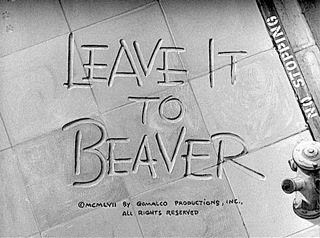
This nostalgia we have for the 1950s has sometimes led us to think that these were better, simpler days, and if we returned to doing things that way then we would all be happier. I love nostalgia as much as anyone. (I study medieval history. For fun.) However, we can't depend on our love for the past to guide us through life. The truth is that the "Leave it to Beaver" family model isn't how things were always done.

I just read the life story of Margery Kempe, a medieval document that is probably the first English autobiography. Even though it's mostly about her spiritual life and her world travels, it also tells us a lot about the way women lived in the fifteenth century. While she was married, Margery invested her money in a brewery and a mill and ran those two businesses on her own. She managed her finances separately from her husband's and even bailed him out when he was in debt. Did I mention that they had fourteen children during all of this?

It's true that Western culture has been a Patriarchal one, but the idea of keeping women from working is not how it has worked. Until recent times, the idea of "going to work" would not have made sense. Work was part of your life if you wanted to eat, and it didn't involve going to an office. Women and men worked together to make ends meet throughout each day. That is traditional.

This might explain some things about the ideal woman who is described in the Bible. She manages finances, dispenses wisdom and instruction, and decides which land the family will invest in without the need to consult a husband. She is a decision maker as well as a caregiver.

The idea of "traditional" gender roles in marriage is a romantic ideal for many people, but it's not an accurate depiction of our culture's history. The past is filled with women who led armies and wrote important books with full support from the men in their lives. Plenty of families have benefited from having a stay at home spouse, but we should never assume that everyone is required to live that way. Following tradition means spouses working together to provide for a family, not blindly following nostalgia.

Monday, November 11, 2013

Why should I get married?

That may seem like a strange question, and perhaps it is, but I'm not the only one asking it. Numerous reports remark upon the trend among young adults toward "delaying" marriage, sometimes indefinitely. Women and men are focusing on their education and establishing their careers before entertaining thoughts of "settling down." For many, including Christians, putting off marriage doesn't feel like a sacrifice since a certain amount of instant gratification comes with their having embraced the false ideal of cohabitation, or worse, the hookup culture. That being said, I realize that as a proponent of marital chastity, the question Why should I get married? is perhaps even stranger.

Here's why I'm asking it. For the last decade or so, we have routinely told one story about marriage: "As iron sharpens iron, so one man sharpens another husband and wife sharpen each other."

We have done this for good reasons. We want to be, and indeed we must be, honest about how difficult married life often is. We don't want to set people up for failure. (Though, perhaps somewhat ironically, there are more failed marriages today than ever before. Not that divorce is the only way to fail a marriage.) In fact, it is, I think, partially in reaction to the climbing divorce rate that we have begun to focus on this "sharpening" aspect of marriage.

We do need to tell this part of the story. But we also need to remember that it is only part of the story. We must guard against overcorrecting and being so laser-focused on marriage as purifying fire that we neglect the rest of the story, thereby developing a truncated view of marriage.

We must discipline ourselves to tell whole truths.

Teenagers and 20-30-somethings listen to sermon after sermon, small group after small group, blog post after blog post, dating book after dating book... declare that "marriage is the number one tool (second only to having children) God uses to make us less selfish and more Christ-like"---while simultaneously watching their parents and friends' parents and peers divorce. And then those same sermons, small groups, blog posts and books turn right around to lecture young adults for delaying marriage, calling them lazy and selfish. Are we insane? (Now, there is certainly some truth to the lazy-and-selfish critique; young adults are, after all, human. But again... not the whole story.)

As a single young 30-something myself, every time I hear this refrain about marriage, a not so small part of me thinks, The Lord's got several sharpening instruments at work in my life, and if that's the main thing marriage does... Why should I get married?* Fortunately there's a part of me that knows better; there's a part of me that reminds the rest of me of the blessings of, for example, companionship. But the world we live in is fast-paced, fragmented, and isolating (and propagates its own narratives about marriage). I need reinforcement! I need whole narratives and complete pictures. Or at least not tragically truncated ones.

As good as it is to communicate the character-building hardships of married life, when we allow this single narrative to dominate our definitions of marriage, we shouldn't be surprised that young adults grow more and more wary of it.

While we should want to be sharpened and disciplined, seldom do we deliberately put ourselves into difficult situations solely so that we can build character. And, in the case of marriage, I'm not sure that's actually good motivation---Darling, will you marry me so that God can use you to make me more spiritual? Lamesauce. Plus, kinda selfish, no?

No. We put painstaking practice into our work and craft because we love. Skateboarding, painting, accounting, teaching, guitar. It's that I-feel-God's-pleasure-when-I-run kind of love. Because we are created to enjoy the triune God and the fullness of life he supplies.

Question: In addition to being a sacrament,** what is marriage? How can we paint a more complete picture?


__________________________________
*Yeah, but I'm sure that nothing in your life is as sanctifying as marriage. It's in the Bible... somewhere. So you really need to stop being a self-centered slacker and get married (and have children!) already. In the meantime don't forget that before you do get married, singles have more time and energy on their hands to devote to the Church, not having any sanctifying relationships like a spouse and kids, so you really ought to spend all of your free time here. Don't worry; if you're doing it right, God will bring someone to you.

** I know we Protestants tend to have a visceral reaction to the word sacrament, but as sanctification is a divine grace, and married life is often a channel of that divine grace...
Tuesday, April 17, 2012

A Radical View of Marriage (That I Think Would Help the Church)

I like being married, but there is something about the whole institution that I think needs to change.  And I think the church would benefit from it:

I think it's time we ask the government to get out of the way.  (You knew I was going to say that.  That's my answer to everything.  But hear me out.)

When I got married I was baffled by the application for a marriage license.  Why did the state of Texas (a place I truly love) want to tell me if I was going to be married?  Why did I need the permission of lawmakers?  I wasn't applying for a government job, I was promising myself to a woman.

In my opinion, marriage is about the vows I took with my wife before our community.  The government was not involved.

In the old Roman days, marriage was a state affair.  And, probably, for good reason.  A household was run like a business and a wife was not just a life partner, she was a business partner/employee of the estate.  Romance was not unheard of, but neither were marriages of convenience.  (Which is why brothels were considered acceptable - men who married for money didn't always have passionate marriages.  I pity them.)

But those days are over.  My wife doesn't need a state document to be my wife.  But that's not all.  As I'm sure everyone is aware, state governments are changing how they view marriage.  Suddenly, this sacred institution is becoming a government-regulated status and we are entering into marriages that are defined by the state, not by us.  No matter how you feel about marriage, I don't think it makes sense for a government to decide what a marriage is when marriage is a cultural/religious construct to us.

I'd be happy to see the government ignore marriage, completely.  Churches could abide by their own community standards when marrying couples.  Does this mean that the church next-door might adhere to a definition of marriage that you disagree with?  Yes, it does.  (They probably do a lot of things you don't like, don't they?)  But the alternative is to ask the government to enforce your religious views on others, and I don't want to live in a world where religious zealots control our lives from Washington.  (Even if you think you would agree with those zealots, imagine how difficult life would be if they were replaced with leaders you didn't agree with.  Will you rebel when these leaders insist that you do things their way?  Will you go to war when your faith is incompatible with the one that is being forced on you?)

Certain war-torn countries give us evidence of just how badly government and religion mix; history tells the same thing.  
And I'm pretty sure that cat has some things to say about it.

So, I'd be happy to see the government step aside and allow the cultural construct of marriage to be no longer governed by lawmakers.  To Believers, marriage can be a sacred thing, and no one in Washington is qualified to govern something like that.  To others, marriage might be a simple tradition, but traditions also should not be governed by federal committees.

What do you think?  Is this feasible?

Monday, February 13, 2012

Valentine's Day, Singleness, & The Church: Part II


A few friends of mine, who grew up in solid Christian environments as children of pastors, mentioned to me they didn't think the Bible said anything about singleness. No doubt exists in my mind that these friends knew, and could easily find, the passages in the Bible that dealt with marriage but the lack of knowledge that the Bible spoke into their lives of singleness seemed a significant issue.

A basic understanding of hermeneutics tells us that one comes to any text with preconceived notions of what it should or does say. The best exegete tries to compensate for this issue but cultural understandings may so influence their thinking that they can't see out of that paradigm.

I propose we do this with marriage when we read the Bible. We put our cultural views--our views that come from our current Christian culture-- into what the Bible actually teaches on marriage and singleness. We tend to believe it is a Biblical mandate to be married except, of course, for those few people who are called to singleness. So we read the Bible accordingly, only seeing those parts that talk of marriage and how it plays a role in our lives and represents our future with Christ. We do not see the parts that talk about singleness.

So, let's take a look starting in Genesis and look at creation with an eye towards singleness. In Genesis 2:18-22 it says:

The Lord God said, 'It is not good for the man to be alone. I will make a companion for him who corresponds to him.' The Lord God formed out of the ground every living animal of the field and every bird of the air. He brought them to the man to see what he would name them, and whatever the man called each living creature, that was its name. So the man named all the animals, the birds of the air, and the living creatures of the field, but for Adam no companion who corresponded to him was found. So the Lord God caused the man to fall into a deep sleep, and while he was asleep, he took part of the man’s side and closed up the place with flesh. Then the Lord God made a woman from the part he had taken out of the man, and he brought her to the man.
 
Many foundational insights exist in these passages of Genesis that tell us who we are as humans and who God created us to be. Most people look to these chapters to tell us about God's mandate for marriage. But take a moment to look at this passage from the perspective of God creating us also to be single--at least for a time.

The passage starts with God stating that it is not good for man to be alone. Of course, God knows that none of the animals are going to be the match for Adam but he still has Adam go through the naming process. Why would God do this? This question persists to be an interesting one with many commentators weighing in but I'd like to look at it from the perspective of singleness for some answers.

During this time of naming the animals Adam was going through a God-ordained period of singleness. Adam was waiting and hoping and expecting a companion to come along. At the very beginning God created this process of singleness in humans. It seems God wanted Adam to go through this. It seems that God wanted Adam to learn and grow during this time.

Singleness then, in some sense, seems to be our natural state. Marriage is something that God created for us while in this life—it doesn't exist in our eternal state. He created marriage as a teaching tool and as a way for us to experience a healthy way to feed our need for real relationships in this world. But, we need not act like being single is wrong. God creates us as singles (everyone is born single), as individuals, and even, as with Adam, requires us to be single for a time period in our lives.

Moving into the New Testament now, Paul says in 1 Corinthians 7:7-9:


I wish that everyone was as I am. But each has his own gift from God, one this way, another that. To the unmarried and widows I say that it is best for them to remain as I am. But if they do not have self-control, let them get married. For it is better to marry than to burn with sexual desire.

Again, in this oft quoted passage on singleness and marriage we tend to put on our 'marriage goggles' and look at it assuming that we should get married, often as quickly as possible. In the context Paul is addressing a question that the church in Corinth asked regarding abstaining from sex altogether. Paul is talking about when it is appropriate and not appropriate to have sex. If you read the previous verses this is clear, but we often just pull out a few verses making it easy to misinterpret the meaning. In 1 Corinthians 7:1-7 the verses right before the verses I quoted above it says:

Now with regard to the issues you wrote about: “It is good for a man not to have sexual relations with a woman.” But because of immoralities, each man should have relations with his own wife and each woman with her own husband....Do not deprive each other, except by mutual agreement for a specified time, so that you may devote yourselves to prayer. Then resume your relationship, so that Satan may not tempt you because of your lack of self-control. I say this as a concession, not as a command. I wish that everyone was as I am. But each has his own gift from God, one this way, another that.

Paul says both engaging in sex and abstinence are appropriate but in the correct contexts. It also seems we may fool ourselves into thinking that when Paul says that those who do not have 'self-control' should get married that he is speaking to anyone who has thoughts about sex and/or desires to have it. Most likely this was not his intent. The culture of that time was rampant with ways to express yourself sexually from temple prostitutes to brothels. If you are participating in those options, it is better to get married and have sexual relations in a marital context but he'd prefer if everyone stayed single as he was.

Obviously the Bible does address singleness through the passages I talked about as well as several others I've not looked at here. I'll continue to look at more Biblical passages on the topic and develop the theology of singleness and marriage more fully in upcoming posts.

Read more in the intro piece to this series:
Valentine's Day, Singleness, & The Church: Part I

.

Thursday, February 9, 2012

Valentine's Day, Singleness, & The Church: Part I

In honor of Valentine's Day I will post several entries on singleness and the church. Improper Christian thought on singleness is one of the greatest disservices Christians have perpetuated. Even now, with the single adult demographic at 50 percent or more in this country very little is said on the topic. We throw around comments about how Paul was single and Jesus was single. We mention that Paul said a few things on singleness in the New Testament and we sometimes talk that some may have that 'gift'. Beyond that, not only do we not talk or think about singleness in a theological way, the church adamantly promotes marriage as 'the way' for individuals and society to function properly at all. Many Christians don't realize the Bible has any comments on singleness whatsoever.

I'm 32 and unmarried. I've spent most of my life single in every sense of singleness. I've participated for about ten years now in healthy young adult singles ministries in two different churches. I just finished a year co-leading one of those ministries.

My thinking seriously on this topic started about four years ago. My friends and I were talking about how once someone has a boyfriend (or girlfriend) they automatically are moved into a different category. Singles treat the individuals in the newly formed couple differently and couples do also. They are out of one 'club' and into another. What necessitates this change? It seemed more fundamental than just that these two people may now have built-in plans for a Friday night. The change, we realized, has something to do with the beginning of the hope being realized of having a spouse.

At the same time as this conversation my discussion group at church was studying N.T. Wright's Surprised by Hope. Wright addresses the idea of the Christian hope -- what we hope for and what we tend as a church to be missing in the discussion. It struck me as a similar story to what I was experiencing as a single person. Could it be that God gave us singleness to teach us about the present in the same way theologians say God gave us marriage to teach us about the future?

I'll unpack that concept in my future posts. Until then, let me direct you to two very different views on singleness:

Albert Mohler has several entries on his blog regarding singleness.

John Piper takes a very different view. Read or view one of his sermons on the topic or you can download his book, This Momentary Marriage, which has a chapter on singleness.

See my next post in the series:
Valentine's Day, Singleness, & The Church: Part II

Monday, January 10, 2011

Concerning Marriage: Part #1 - Is Marriage a Broken Institution?

Is marriage a broken institution?  A lot of people say so.  They see the staggering divorce rates and the heartbreak of divided families and, quite understandably, wonder if it is all worth it.  In response, they declare the whole thing to be outdated or corrupted.

Sort of.  The truth is, they go on to pursue long term relationships that resemble marriage in every way.  They call each other "partners" and say that they don't like marriage, but they live together and pledge (in some ceremony) that they will remain exclusively devoted to one another forever.  (By the way, I'm talking about heterosexuals, here.  Gay couples are not the only ones using the term "partner" to refer to their life partners.)  They will put off having children until this ceremony is done and, and will take up the role of dual-guardians of their kids.  These sorts of people are one marriage document away from actually being married, but they insist that they do not like marriage.  The truth is, they just want to re-name it.

I propose that an institution is only as broken as the people that make it.  I've seen a lot of marriages struggle and fall apart, but that does not affect the strength of my own marriage.  The relationship I have with my wife is as as strong as we choose to make it, and it is not broken as long as we are not broken.

Getting married can be tough.  People have certainly had their lives ruined by marriages gone bad, but outside of marriage people still tell lies and hurt each other - running away from "marriage" will not prevent this.  Putting on a wedding band and making promises in front of a minister is not what causes people to neglect their children and cheat on their spouses, and plenty of "partnerships" have gone bad for the same reasons as our marriages.  This is human nature, and we can't fix it by attacking institutions like marriage.

But, we can take part in the process of redemption.  We can make sure that marriage is no longer a laughing stock by modeling for future generations what a proper relationship can be.  I was raised by a great family, but most of my friends grew up with parents who fought and often got divorced, so many of them assumed that romance could only led to arguments and separation.  That's depressing.  This cycle can end when we decide that we will not give that image of love and marriage to the next generation. 

Marriage might seem broken, but that's just because we are not doing it well.  Let's fix it.

(This is a big topic, so I'll be discussing it more later in the week.)

Tuesday, June 23, 2009

OK, any second now my marriage is supposed to fall apart...

Today, I have been married to my wife for two years - and it has been great.

When I announced my engagement, I endured the regular barrage of "jokes" that married men tell engaged men, such as:

"You'll always get the last word - yes, ma'am!"

These jokes are always accompanied with a clap on the back and uproarious laughter from the person telling the joke - and no one else. (Does this person realize that they have just broadcasted the failure of their own marriage to the entire room?)

Some single people at work told me that the whole thing was a mistake because married people didn't have sex. (I wonder where all of those kids at church are coming from...) Others told me that a pre-nuptial was critical - since they didn't think I could possibly have chosen a trustworthy woman. (Without a pre-nuptial agreement, how would we know how to divide up the cat toys and action figures? Seriously, I'm not Paul McCartney.)

After the wedding, I listened to everyone's prophecy discerning when "the honeymoon would be over." After a few months of happy married life the "wiser" men would tell me that "this was when it started for them" - which meant Christine and I were going to start fighting and would watch our happiness fall apart under the stress of marriage. (For some reason, people think it's normal to tell you these things.)

After one year, the prophets amended their visions - now that we had gotten through the first year we would start to hate each other and it would all break down. And they still thought this was funny.

Wrong again, Nostradmus. Christine and I still don't fight about anything. (OK, there was that one time we were discussing the role of metanarratives in post-modernity and we may have gotten upset at each other - but stuff like that is really important!) While the "wise" naysayers struggle within their marriages and smugly tell me I should expect the same, I remain happy in my marriage.

What makes people in bad relationships consider themselves experts on mine? Christine and I only need to look at our own respective parents for good examples of how to make a marriage work. With our parents as strong leaders and examples for us we are able to know how it should work.

As for the rest of you, the cynics who insist that my marriage will fall apart just like yours, I recommend you stop scrutinizing the Jones' and figure out why you blew it in your own marriage. I'll be here if you have any questions.

Sunday, June 17, 2007

Is the Bible Irrelevant?

Ecclesiastes 9:9
Enjoy life with your wife, whom you love, all the days of this meaningless life that God has given you under the sun— all your meaningless days. For this is your lot in life and in your toilsome labor under the sun.

In this interesting book of the Bible, Solomon talks about the futility of life.  Working hard, finding true love, all of it is meaningless (he goes on to say more about this in the next verses) because life is always difficult; you can't escape the hardships of life.  This is an ancient reminder of the human condition. 

Whenever someone says that the Bible is not relevant, I just remember Solomon trying everything to be happy and not finding true happiness.  It's like that John Mayer song, Something's Missing, where he says he has money, friends, girls, and everything he could want, but something is still missing.

After searching for happiness in the world, Solomon came to a conclusion and wrote about in the 12th chapter of Ecclesiastes:

 13 Now all has been heard;
       here is the conclusion of the matter:
       Fear God and keep his commandments,
       for this is the whole duty of man.
 14 For God will bring every deed into judgment,
       including every hidden thing,
       whether it is good or evil.