People love to throw around the phrase "traditional family" when defending what they think is a long-standing practice of a single income family, but this household pattern is not as historically sound as is widely believed. There's nobility in sacrificing one's career to be a homemaker, but history tells us that there's nothing necessarily "traditional" about this.
(Before you get excited or angry you should know that I'm not pushing anyone's political agenda. Just the facts.)
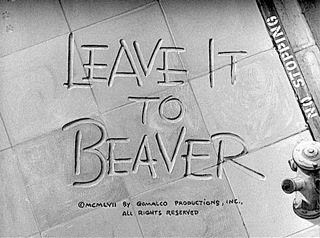
After the first world war the U.S. economy was booming. One person could make enough money to feed an entire family, which sounds pretty great. Sadly, those days are long gone and many of today's families need both spouses, and maybe the kids, to get a job if they're going to pay the bills. (My wife and I have four jobs between the two of us, and we're not exactly shopping at fancy stores.)
This nostalgia we have for the 1950s has sometimes led us to think that these were better, simpler days, and if we returned to doing things that way then we would all be happier. I love nostalgia as much as anyone. (I study medieval history. For fun.) However, we can't depend on our love for the past to guide us through life. The truth is that the "Leave it to Beaver" family model isn't how things were always done.
I just read the life story of Margery Kempe, a medieval document that is probably the first English autobiography. Even though it's mostly about her spiritual life and her world travels, it also tells us a lot about the way women lived in the fifteenth century. While she was married, Margery invested her money in a brewery and a mill and ran those two businesses on her own. She managed her finances separately from her husband's and even bailed him out when he was in debt. Did I mention that they had fourteen children during all of this?
It's true that Western culture has been a Patriarchal one, but the idea of keeping women from working is not how it has worked. Until recent times, the idea of "going to work" would not have made sense. Work was part of your life if you wanted to eat, and it didn't involve going to an office. Women and men worked together to make ends meet throughout each day. That is traditional.
This might explain some things about the ideal woman who is described in the Bible. She manages finances, dispenses wisdom and instruction, and decides which land the family will invest in without the need to consult a husband. She is a decision maker as well as a caregiver.
The idea of "traditional" gender roles in marriage is a romantic ideal for many people, but it's not an accurate depiction of our culture's history. The past is filled with women who led armies and wrote important books with full support from the men in their lives. Plenty of families have benefited from having a stay at home spouse, but we should never assume that everyone is required to live that way. Following tradition means spouses working together to provide for a family, not blindly following nostalgia.
Showing posts with label tradition. Show all posts
Tuesday, December 3, 2013
Monday, November 18, 2013
Tradition is Useless in the Marriage Debate
A local group was accused of "indoctrinating" children with a political bias. They were supposedly visiting schools to tell students about the election process, but parents started to notice that their kids were coming home quoting partisan rhetoric.
When reporters brought this accusation to the groups leaders, they responded with, "We've been doing this outreach program for more than twenty years."
And that was it.
What was that supposed to mean? Am I supposed to trust people just because they've been doing their job for a long time? Unfortunately, it's not unusual for people to reach for tradition when they don't know how to prove their point.
I hear this sort of thing often when people talk about homosexual marriage. One side insists that marriage has traditionally been between a man and a woman, while the other side points out that civilizations in the past have accepted and encouraged gay relationships. Both groups want to have tradition on their side.
For myself, I can't figure out why we're dragging tradition into this. My homeland was set up by rebels who defied cultural and religious traditions to start a new country. As a protestant, my worldview is largely shaped by thinkers who risked their lives to break sacred traditions - some of them involving marriage laws. Since when have I been expected to follow tradition?
Tradition is not sacred, to me, and I think most people feel the same way. Most of the conservatives I know pride themselves on breaking old religious traditions, and the liberals I know usually can't wait to take a "progressive" stance toward society by upsetting cultural norms. However, both of these groups think it's important to be "on the right side of history."
For the record, you'll be hard-pressed to find an older culture that allowed homosexual marriage because, until recent times, the main purpose of marriage was to make children. It used to be a matter of urgency for people to procreate, a town could cease to exist of one generation wasn't fertile enough, but in our modern age of medical science we are able to live longer and populate the globe without even trying. As a result, marriage is something we normally do for our own desires and not because we're running out of employees to work the mill. Marriage has changed since the Roman times of the New Testament. (There's certainly nothing traditional about my childless marriage.)
More on this is an upcoming blog entry, but, for now, I have to ask why both sides of the debate think that they need to be "traditional" when we need to be focused on doing what's right. Am I expected to be a Christian, or a Traditionalist? (They are not the same thing.) Since all of us are so proud of breaking traditions, let's take that out of our arguments and discuss the issue better.
Subscribe to:
Posts (Atom)