A local group was accused of "indoctrinating" children with a political bias. They were supposedly visiting schools to tell students about the election process, but parents started to notice that their kids were coming home quoting partisan rhetoric.
When reporters brought this accusation to the groups leaders, they responded with, "We've been doing this outreach program for more than twenty years."
And that was it.
What was that supposed to mean? Am I supposed to trust people just because they've been doing their job for a long time? Unfortunately, it's not unusual for people to reach for tradition when they don't know how to prove their point.
I hear this sort of thing often when people talk about homosexual marriage. One side insists that marriage has traditionally been between a man and a woman, while the other side points out that civilizations in the past have accepted and encouraged gay relationships. Both groups want to have tradition on their side.
For myself, I can't figure out why we're dragging tradition into this. My homeland was set up by rebels who defied cultural and religious traditions to start a new country. As a protestant, my worldview is largely shaped by thinkers who risked their lives to break sacred traditions - some of them involving marriage laws. Since when have I been expected to follow tradition?
Tradition is not sacred, to me, and I think most people feel the same way. Most of the conservatives I know pride themselves on breaking old religious traditions, and the liberals I know usually can't wait to take a "progressive" stance toward society by upsetting cultural norms. However, both of these groups think it's important to be "on the right side of history."
For the record, you'll be hard-pressed to find an older culture that allowed homosexual marriage because, until recent times, the main purpose of marriage was to make children. It used to be a matter of urgency for people to procreate, a town could cease to exist of one generation wasn't fertile enough, but in our modern age of medical science we are able to live longer and populate the globe without even trying. As a result, marriage is something we normally do for our own desires and not because we're running out of employees to work the mill. Marriage has changed since the Roman times of the New Testament. (There's certainly nothing traditional about my childless marriage.)
More on this is an upcoming blog entry, but, for now, I have to ask why both sides of the debate think that they need to be "traditional" when we need to be focused on doing what's right. Am I expected to be a Christian, or a Traditionalist? (They are not the same thing.) Since all of us are so proud of breaking traditions, let's take that out of our arguments and discuss the issue better.
Showing posts with label gay marriage. Show all posts
Monday, November 18, 2013
Tradition is Useless in the Marriage Debate
Thursday, September 2, 2010
Should Couples Live Together Before Getting Married? Good Question.
It's a hot button issue, these days. Everyone who's anyone knows that living together is hip, and it shows just how postmodern and progressive you are. Meanwhile, those who advocate waiting until marriage are seen as relics from the middle ages hanging on to outdated imperialist dogma. But there's an important discussion to be had here, and since marriages are falling apart all over the place it's wise for us to learn how married couples can make it.
Those who prefer co-habitation will tell you that living together can help you get used to a person and decide if there is any reason you should not move forward in your relationship. It's like testing the waters. This seems logical.
I could respond to that with this study I found over at ScienceBlog.com. It found that couples that lived together before marriage had poorer communication skills than those who did not. I'm not sure why, but it's always fun to quote studies.
Then there's this one, which found that there are higher divorce rates for couples who co-habitate before the wedding. This is getting pretty serious; couples who live together first run a higher risk picking up bad communication skills and getting divorced. Sounds dreary.
But, I really don't think we've gotten to the heart of the issue, yet. Are you in love with someone so much so that you want to get married and form a lifelong relationship with them? Do they feel the same about you? Then living together is not necessary. If you and your significant other are prepared to enter into such a serious commitment, then nothing you learn in cohabitation is going to change your mind. Do you think that such strong feelings could be swept away once you learn that the other person scrapes their toast, or watches dumb TV shows? Does true love yield to snoring and leaving the dishes for too long? Will you turn your back on your loved one when you realize that they like to watch movies with the subtitles on?
So if you want to get married, there's no need to debate co-habitation. There are few (if any) new things you will learn about someone when moving in, and if you're in it for the long haul none of it will matter. By the time you're ready to make your relationship permanent you will already know the other person well enough to know if you can live with them.
Those who prefer co-habitation will tell you that living together can help you get used to a person and decide if there is any reason you should not move forward in your relationship. It's like testing the waters. This seems logical.
I could respond to that with this study I found over at ScienceBlog.com. It found that couples that lived together before marriage had poorer communication skills than those who did not. I'm not sure why, but it's always fun to quote studies.
Then there's this one, which found that there are higher divorce rates for couples who co-habitate before the wedding. This is getting pretty serious; couples who live together first run a higher risk picking up bad communication skills and getting divorced. Sounds dreary.
But, I really don't think we've gotten to the heart of the issue, yet. Are you in love with someone so much so that you want to get married and form a lifelong relationship with them? Do they feel the same about you? Then living together is not necessary. If you and your significant other are prepared to enter into such a serious commitment, then nothing you learn in cohabitation is going to change your mind. Do you think that such strong feelings could be swept away once you learn that the other person scrapes their toast, or watches dumb TV shows? Does true love yield to snoring and leaving the dishes for too long? Will you turn your back on your loved one when you realize that they like to watch movies with the subtitles on?
If they had lived together before getting married he would have known that she collected mud in large jars. This guy totally blew it.
So if you want to get married, there's no need to debate co-habitation. There are few (if any) new things you will learn about someone when moving in, and if you're in it for the long haul none of it will matter. By the time you're ready to make your relationship permanent you will already know the other person well enough to know if you can live with them.
Friday, August 13, 2010
Friday Links: Ikea Ideas and Gay Rights Confusion
Instapundit had a link earlier this week to a blog called Ikea Hacker where people find new ways to put together Ikea stuff. Sometimes they rearrange the parts, and sometimes they put two different pieces of furniture together to make something new. For example, there's a cool hamster playground made from some desktop items (including an exercise wheel made from a lazy Susan) and a treadmill desk. I love Ikea (I know, everyone tells me I'm not supposed to say that) and I'll be looking for an Ikea hack next time I go. The site has some really good ideas.
Meanwhile, in Proposition 8 news, reader Joshua sent me this comic:
(Original is here.) This is a good reminder that there's more to politics than Republicans vs. Democrats, and that you can't assume that someone's voting record tells you everything about them.
Of course, not everyone would agree that the judge in this case was a Libertarian. The Gay Patriot, for example, doesn't completely approve of this exercise of judicial power because it doesn't use the constitution enough, but simply pushes the ideology of the judge into our lives.
But you're probably more surprised to find out that there are homosexuals who are law savvy that don't care for the recent proposition 8 ruling. Most people don't realize that this judge's decision was not unanimously popular with gay rights supporters who are of a more Libertarian mindset because of the precedent it sets for putting the judge's feelings above other parts of the lawmaking process. Rather than dancing in the streets at the downfall of proposition 8, they have been concerned about the role that the federal government is taking in our lives. (If you're still the type of person who jumps to conclusions about someone based on their politics, you should know that Glenn Beck things gay marriage is just fine, even though President Obama opposes it.)
Have a good weekend.
Pictured - A tiki torch that has been built from an Ikea oil and vinegar set.
Meanwhile, in Proposition 8 news, reader Joshua sent me this comic:
(Original is here.) This is a good reminder that there's more to politics than Republicans vs. Democrats, and that you can't assume that someone's voting record tells you everything about them.
Of course, not everyone would agree that the judge in this case was a Libertarian. The Gay Patriot, for example, doesn't completely approve of this exercise of judicial power because it doesn't use the constitution enough, but simply pushes the ideology of the judge into our lives.
But you're probably more surprised to find out that there are homosexuals who are law savvy that don't care for the recent proposition 8 ruling. Most people don't realize that this judge's decision was not unanimously popular with gay rights supporters who are of a more Libertarian mindset because of the precedent it sets for putting the judge's feelings above other parts of the lawmaking process. Rather than dancing in the streets at the downfall of proposition 8, they have been concerned about the role that the federal government is taking in our lives. (If you're still the type of person who jumps to conclusions about someone based on their politics, you should know that Glenn Beck things gay marriage is just fine, even though President Obama opposes it.)
Have a good weekend.
Thursday, August 5, 2010
Christianity and the End of Proposition 8
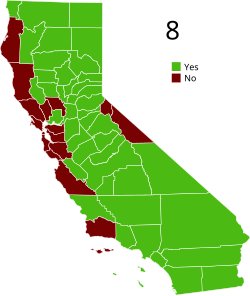
As you surely know by now, a federal judge has ruled Proposition 8 to be unconstitutional in California. This ban on homosexual marriage has been struck down because the judge felt that "moral disapproval" was not enough to save the voter-passed Proposition 8.
You might be surprised to find out that I'm not very concerned about this. Proposition 8 didn't interest me much when it was written, and it's removal today doesn't get me out of my chair. It just doesn't mean much to me. I'll explain.
As I've said in the past, I don't like the idea of the federal government regulating marriage. If Uncle Sam can tell homosexuals not to get married then he can tell me not to get married with that same power. I'm not a fan of giving the government powers it can use against me, so I don't get excited about banning gay marriage - that could come back to bite me.
Furthermore, to hit on a common talking point, I don't think gay marriages will make me feel like my marriage has been devalued. That's already been done by high divorce rates, abusive/cheating spouses, and people who treat marriage like a form of dating that some people only get into so they can profit from the divorce. I'd like to see the church deal with these problems from its own members before criticizing anyone outside of the church.
Finally, I don't think there will be cataclysmic reactions to this. Since I'm not Pat Robertson I don't believe God will curse our country for this - if He cursed every country that accepted homosexuality things would have turned out very different in history for a lot of countries. We are each expected to take care of our own personal devotion; we are judged individually by what is in our hearts and not corporately by federal laws.
This doesn't mean that I am happy about the judge's ruling, today, but I just really can't get that worked up about it. (I realize this puts me in the minority, because most of the people I know are either celebrating or plotting revenge.)
But I'll tell you something that does make me angry. Very angry, in fact. TheWrap.com wrote an article about this federal ruling, and the very first comment on the story was written by a hateful person who insulted gays and called them all sodomizers. His screen name? HeDied4u. That's right, the very first comment on this story managed to make Christians look hateful and ignorant. Being hateful to homosexuals is something that Jesus would not do, and yet some of my fellow believers have occupied this sinister outpost. I want to hang my head in shame because I have to be associated with that sort of thing. This is why I can't tell someone I'm a Christian without being called a gaybasher or a hater even though I'm a very accepting person.Christians acting hateful and misrepresenting Christ is a far bigger problem than anything California's courthouse can bring.
Before we take any action on gay marriage, let's clean up our own house. Stop hating. I can't make it any more simple than that. Love your neighbor as yourself. While this is being perfected we should not look too far outside of ourselves.
You might be surprised to find out that I'm not very concerned about this. Proposition 8 didn't interest me much when it was written, and it's removal today doesn't get me out of my chair. It just doesn't mean much to me. I'll explain.
As I've said in the past, I don't like the idea of the federal government regulating marriage. If Uncle Sam can tell homosexuals not to get married then he can tell me not to get married with that same power. I'm not a fan of giving the government powers it can use against me, so I don't get excited about banning gay marriage - that could come back to bite me.
Finally, I don't think there will be cataclysmic reactions to this. Since I'm not Pat Robertson I don't believe God will curse our country for this - if He cursed every country that accepted homosexuality things would have turned out very different in history for a lot of countries. We are each expected to take care of our own personal devotion; we are judged individually by what is in our hearts and not corporately by federal laws.
This doesn't mean that I am happy about the judge's ruling, today, but I just really can't get that worked up about it. (I realize this puts me in the minority, because most of the people I know are either celebrating or plotting revenge.)
But I'll tell you something that does make me angry. Very angry, in fact. TheWrap.com wrote an article about this federal ruling, and the very first comment on the story was written by a hateful person who insulted gays and called them all sodomizers. His screen name? HeDied4u. That's right, the very first comment on this story managed to make Christians look hateful and ignorant. Being hateful to homosexuals is something that Jesus would not do, and yet some of my fellow believers have occupied this sinister outpost. I want to hang my head in shame because I have to be associated with that sort of thing. This is why I can't tell someone I'm a Christian without being called a gaybasher or a hater even though I'm a very accepting person.Christians acting hateful and misrepresenting Christ is a far bigger problem than anything California's courthouse can bring.
Before we take any action on gay marriage, let's clean up our own house. Stop hating. I can't make it any more simple than that. Love your neighbor as yourself. While this is being perfected we should not look too far outside of ourselves.
Friday, June 26, 2009
Should Gay Marriage be Illegal?
This is a thorny issue - bound to get me into trouble.
I don't believe a government should be all powerful. A government that can make Christianity the official religion of the state could also make Nihilism or Jedi the official religion. The power to ban the building of a mosque would mean the power to ban the building of a church.
If we ask the government to jump in and force non-Christian groups to play by the Bible's rules than we find ourselves in difficult territory. By allowing all religions to do as they please (within normal legal limits, of course) we ensure Christianity can develop and grow. However, if we make the government powerful enough to limit the actions of some religious groups what can stop them from including Christianity as one of those groups?
If we ask the government to ban homosexual marriage the federal government will have their hands in our marriage relationships. Sure, that wouldn't bother the heterosexual unions - for now- but what if congress decides used this power to do away with marriage entirely or to outlaw certain traditional marriages? It might sound ridiculous, but if we give Washington the ability to ban gay marriage we are giving them this power. I prefer to serve a weak government than cannot tell me what to do because it ensures my religious freedom.
I'm not asking anyone to like homosexual relationships but it does the church no good to find non-Christians and force them to live by our standards; this is not a successful tactic for glorifying Christ. By maintaining freedom of all kinds we ensure that the government cannot turn on us. It's possible that a solution can be reached that makes all parties happy - some have proposed a separate type of union for homosexual couples - but, overall, this Libertarian doesn't wan't Uncle Sam in the bedroom.
Subscribe to:
Posts (Atom)